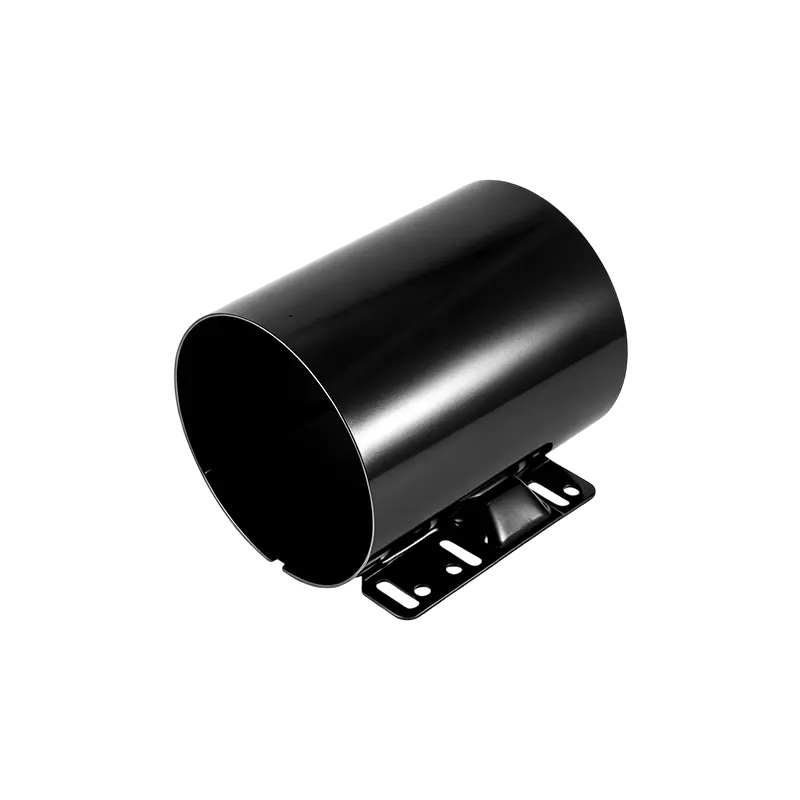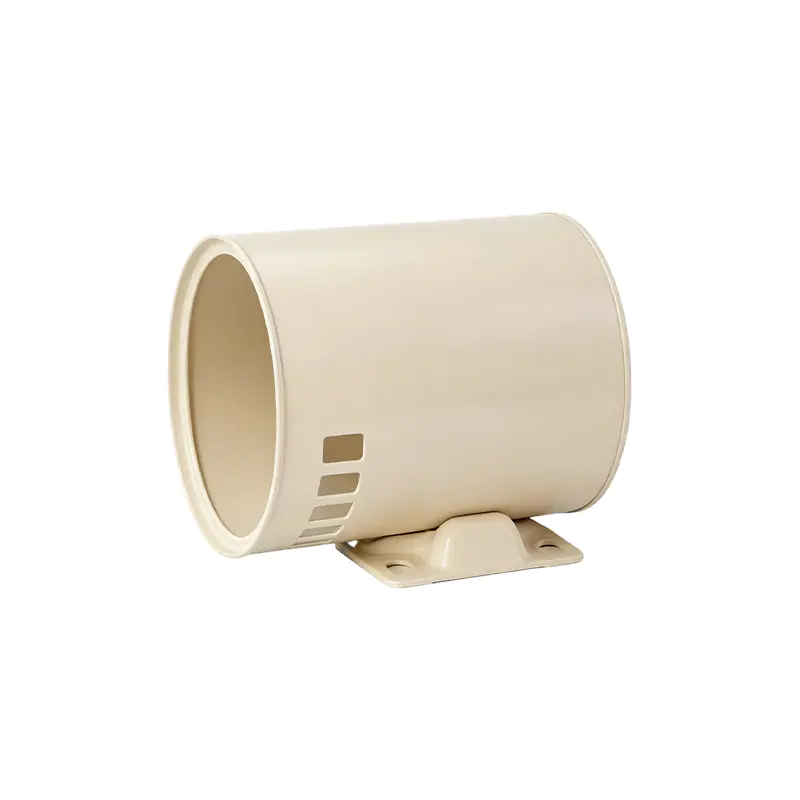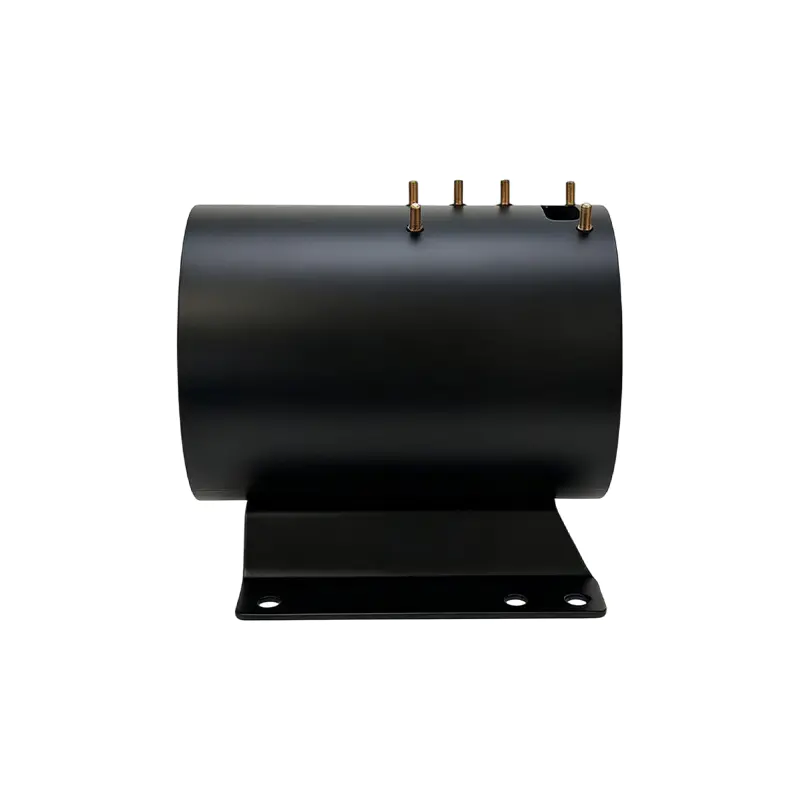


 English
 Español
Content
- 1 1. Product Overview and Core Specifications
- 2 2. The Advantages of 304 Stainless Steel
- 3 3. Structural Benefits of the 3 mm Thickened Wall
- 4 4. Welded Base Design and Mounting Reliability
- 5 5. Mirror-Polished Surface for Cleanability and Appearance
- 6 6. Permanent Laser-Engraved Identification
- 7 7. Manufacturing Process and Quality Control
- 8 8. Why Integrated Production Benefits Customers
- 9 9. Competitive Advantages Compared with Conventional Motor Housings
- 10 10. Application Areas
- 11 11. Engineering and Purchasing Considerations
- 12 12. Packaging, Handling, and Maintenance
- 13 13. Company Manufacturing Strengths
- 14 14. Frequently Asked Questions
- 14.1 Q1: What is the inner diameter of this motor housing?
- 14.2 Q2: What is the height of the housing?
- 14.3 Q3: How thick is the housing wall?
- 14.4 Q4: What material is used?
- 14.5 Q5: Does the housing include a mounting base?
- 14.6 Q6: Is the base detachable?
- 14.7 Q7: What is the surface finish?
- 14.8 Q8: Is the product suitable for food or pharmaceutical equipment?
- 14.9 Q9: How is the product identified?
- 14.10 Q10: Can the motor housing be customized?
- 14.11 Q11: What manufacturing processes are available?
- 14.12 Q12: How should customers confirm whether the product is suitable?
- 15 15. Conclusion
- 16 References
- 17 Product: Inner Diameter 160 304SS Motor Housing With Base
Motor housings are essential structural and protective components in electric motor assemblies. They safeguard internal components, support accurate installation, help maintain mechanical stability, and contribute to the service life of the complete motor. In demanding environments, however, a standard enclosure may not provide sufficient resistance to corrosion, impact, vibration, contamination, or long-term deformation. The Inner Diameter 160 304SS Motor Housing With Base is designed to address these challenges through a combination of high-quality stainless steel, reinforced wall construction, precision-oriented fabrication, welded structural integration, and a hygienic mirror-polished finish.
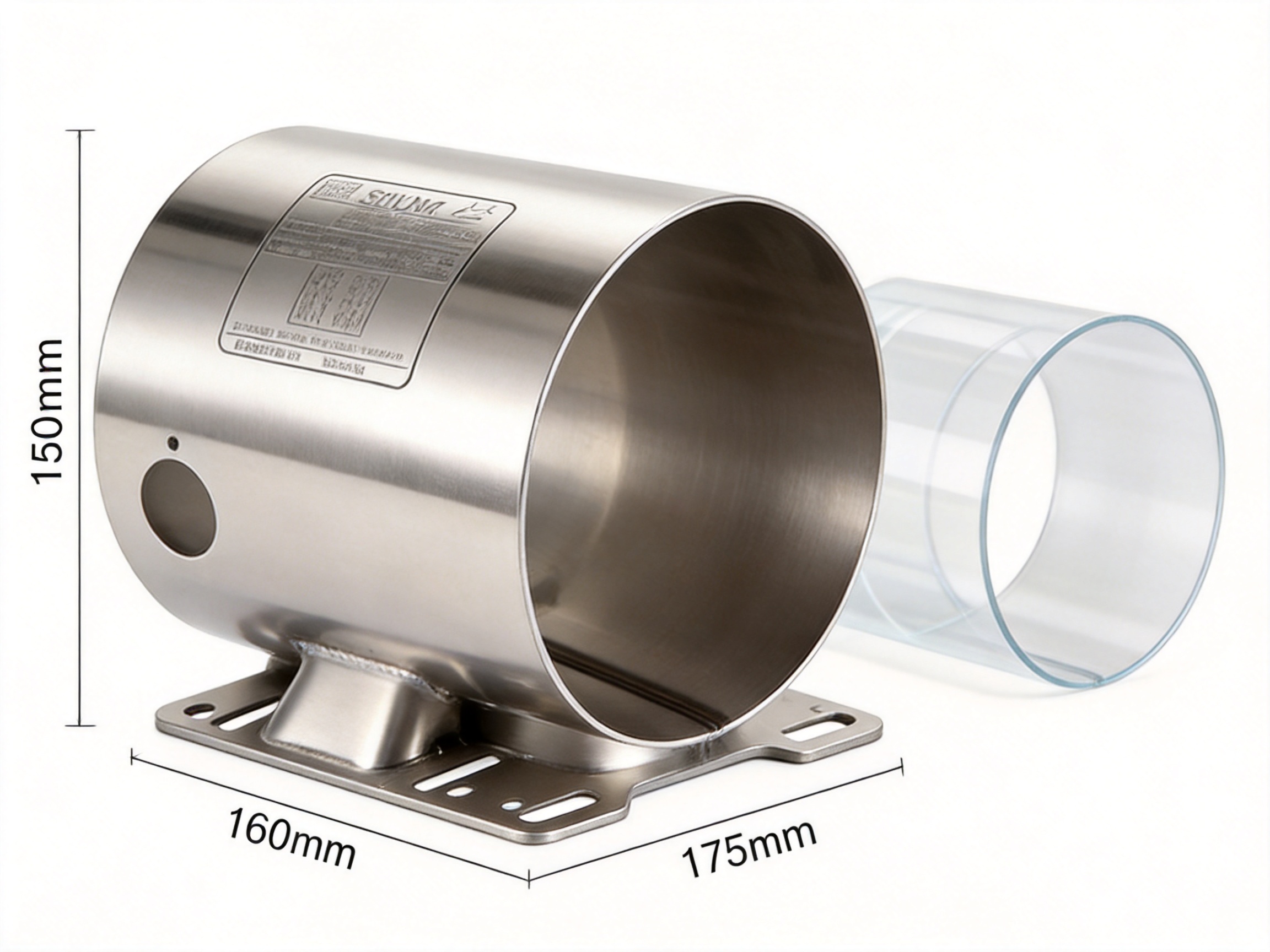
With an inner diameter of 160 mm, a height of 175 mm, and a wall thickness of 3 mm, this motor housing provides a strong and stable enclosure for compatible motor assemblies. Its 304 stainless steel construction offers resistance to moisture, oxidation, acids, alkalis, and salt spray. The thickened wall improves compression resistance and impact resistance, while the welded base supplies a stable mounting platform for the complete motor unit. Together, these characteristics make the housing suitable for applications requiring reliable mechanical protection and a clean, durable surface.
This product is manufactured by Jiangsu Yufeng Electric Co., Ltd., a professional motor housing manufacturer with integrated capabilities covering stamping, welding, machining, assembly, and surface treatment. The company’s full-process production model allows it to maintain closer control over material handling, fabrication accuracy, welding quality, finishing, inspection, and delivery. Its experience in motor housing manufacturing, supported by engineering personnel and dedicated production equipment, enables the development of practical solutions for household appliances, industrial drives, new energy vehicles, and special equipment.
The following article explains the product’s structure, material advantages, manufacturing characteristics, application value, and comparison with more conventional motor housing solutions. It also outlines how integrated manufacturing can help customers achieve reliable quality, efficient communication, and consistent production results.
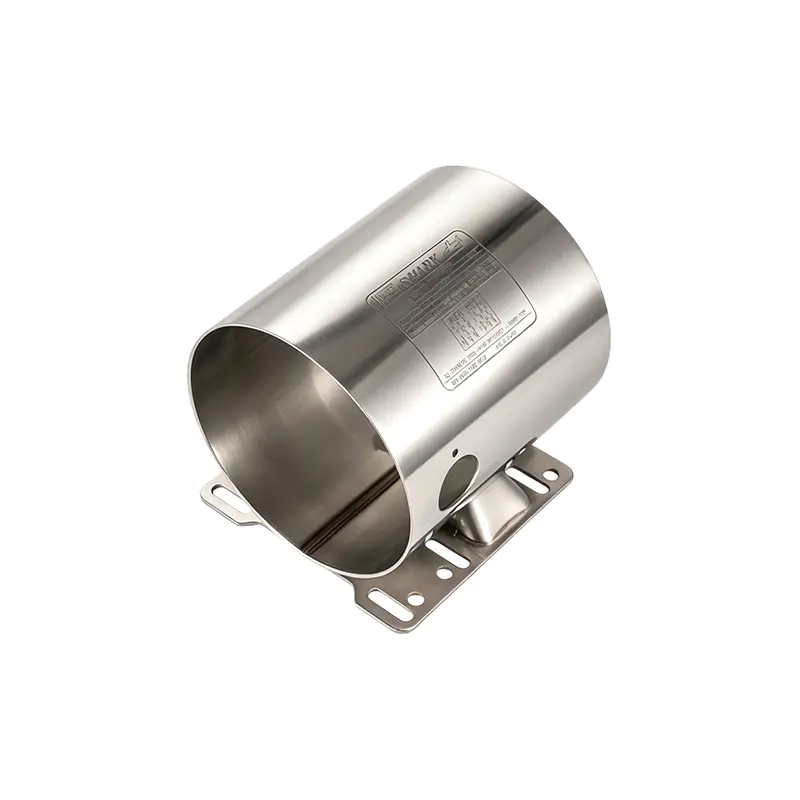
Inner Diameter 160 304SS Motor Housing With Base
1. Product Overview and Core Specifications
The Inner Diameter 160 304SS Motor Housing With Base is a stainless motor housing engineered for applications that require a durable enclosure and a firm mounting structure. It is not simply a thin protective shell. Its 3 mm wall thickness, integrated welded base, and stainless steel material provide a structural foundation that can help protect motor components while supporting installation and operation.
The housing has an inner diameter of 160 mm. This dimension is a key reference for compatibility with a motor assembly, internal mechanical components, insulation systems, and any required clearance. Before ordering, customers should confirm the required internal space, motor dimensions, shaft arrangement, end-cover requirements, ventilation provisions, and fastening details. The nominal inner diameter provides an important starting point for selection, but complete mechanical integration should always be assessed according to the customer’s motor design.
The product height is 175 mm, giving the housing a compact yet substantial vertical envelope. The height can influence the available internal space, the position of motor components, the overall center of gravity, and the relationship between the housing and connected equipment. A properly selected height helps prevent interference during assembly and supports a clean, stable installation.
The wall thickness is 3 mm. Compared with lighter-gauge housings, a 3 mm wall provides a more substantial structural barrier. It can improve resistance to compression, localized impact, handling damage, and deformation caused by external loads. The thicker construction is particularly valuable where the motor housing must withstand transportation, repeated installation, equipment vibration, or contact with other machinery.
A base is welded to the bottom of the housing. This feature gives the product a dedicated mounting structure instead of requiring the customer to design a separate support bracket or adapt a less stable cylindrical shell. The base and housing are joined through welding, creating an integrated assembly that can support the complete motor unit during installation and operation.
| Item | Specification or Feature | Practical Benefit |
|---|---|---|
| Product type | Stainless motor housing with base | Provides enclosure protection and integrated mounting support |
| Inner diameter | 160 mm | Supports compatibility planning for a corresponding motor assembly |
| Height | 175 mm | Defines the available vertical enclosure space and installation envelope |
| Wall thickness | 3 mm | Improves rigidity, impact resistance, and deformation resistance |
| Material | 304 stainless steel | Provides corrosion resistance, oxidation resistance, and high-temperature resistance |
| Base connection | Welded integrated base | Delivers stable mounting support and structural continuity |
| Surface finish | Mirror polish | Creates a bright, cleanable, stain-resistant exterior |
| Identification | Laser-engraved nameplate | Provides durable product identification without adhesive labels |
2. The Advantages of 304 Stainless Steel
Material selection is one of the most important factors in motor housing performance. The housing must withstand mechanical stress while remaining stable in the presence of moisture, airborne contaminants, cleaning agents, temperature changes, and handling conditions. 304 stainless steel is widely recognized as a versatile engineering material for environments where corrosion resistance and cleanability are important.
The 304 stainless steel used for this housing provides resistance to rust and oxidation under many common operating conditions. It is well suited to environments exposed to humidity, condensation, salt spray, and a variety of mildly aggressive substances. This makes it more suitable than ordinary carbon steel for applications where the housing may be exposed to water or corrosive atmospheres.
In a humid environment, an unprotected carbon steel housing may gradually develop surface corrosion. Corrosion can affect appearance, increase surface roughness, contaminate adjacent components, and eventually reduce structural reliability. Paint or other coatings can delay corrosion, but coatings may be damaged by impact, abrasion, or cleaning. A stainless steel construction provides corrosion resistance through the material itself, reducing dependence on a surface coating as the primary protective barrier.
304 stainless steel also offers good resistance to oxidation. This is valuable when the motor housing operates near heat sources or experiences repeated temperature changes. While the appropriate temperature range depends on the full system design, stainless steel can provide a more stable material platform than ordinary steel in many general industrial applications.
The material is also appropriate for applications where hygiene and cleanability are priorities. Stainless steel surfaces can be cleaned more easily than rough, corroded, or damaged painted surfaces. When combined with a mirror polish, the housing has a smooth exterior that helps reduce the retention of dirt and residue. This characteristic can be beneficial in food-related equipment, medical equipment, pharmaceutical machinery, and other applications where cleanliness is a major consideration.
Another important advantage is the balance between strength and workability. 304 stainless steel can be processed through forming, welding, machining, and finishing operations when suitable equipment and process controls are used. This allows the manufacturer to create a housing with an integrated base while maintaining an attractive and functional surface finish.
Resistance to Moisture, Acids, Alkalis, and Salt Spray
The product description identifies the housing as suitable for harsh working environments involving humidity, acids, alkalis, and salt spray. The actual performance will depend on the concentration of the chemicals, exposure time, temperature, cleaning procedure, and mechanical condition of the surface. Nevertheless, the 304 stainless steel material provides a strong foundation for these conditions.
For equipment installed near washing areas, coastal facilities, industrial processing zones, or environments with frequent condensation, material resistance can significantly influence maintenance requirements. A corrosion-resistant housing can help reduce repainting, surface repair, replacement, and unplanned downtime. It can also preserve a professional appearance over a longer service period.
Customers should evaluate the specific chemical environment before final material approval. Highly concentrated chemicals, aggressive chlorides, elevated temperatures, or continuous immersion may require a different stainless steel grade or additional engineering measures. For general moisture, oxidation, and moderate corrosive exposure, 304 stainless steel is a practical and widely used option.
3. Structural Benefits of the 3 mm Thickened Wall
The 3 mm wall thickness is a defining feature of this motor housing. A motor housing must resist more than environmental exposure. It may experience clamping forces, vibration, accidental impact, handling loads, installation stress, and localized pressure from connected components. A thickened wall can help the housing maintain its shape and protect internal parts under these conditions.
One major benefit is improved compression resistance. During assembly, the housing may be positioned against supports, covers, brackets, or other structural components. Excessive compression can distort a thin shell and interfere with alignment. The 3 mm wall gives the cylindrical body greater resistance to deformation and helps create a more stable foundation for the motor assembly.
Impact resistance is another important benefit. Motor housings can be exposed to contact during transportation, installation, maintenance, or operation near other equipment. A thicker wall is better able to absorb and distribute local impact energy than a very thin sheet. This does not make the housing immune to severe impact, but it provides a more robust protective barrier for internal components.
The thickened wall also improves resistance to deformation. Dimensional stability is important because excessive distortion may affect the position of internal motor components, the fit of end covers, sealing interfaces, bearing arrangements, and the alignment of connected equipment. By maintaining a more rigid body, the housing can contribute to more consistent assembly quality.
A robust wall can also improve the perceived and practical quality of the product. Customers often need a housing that feels substantial during handling and remains stable during installation. The combination of a 3 mm wall and a welded base creates a product that is more structurally complete than a lightweight cylindrical shell supplied without mounting support.
Support for Vibration and Operational Loads
Electric motors generate vibration during operation. The amount and frequency of vibration depend on rotor balance, bearing condition, speed, load, installation accuracy, and the design of the complete motor system. The housing must remain stable while transmitting and containing these operational forces.
The welded base provides a direct mounting platform, while the 3 mm wall supplies a rigid body for the base to support. The product description emphasizes uniform and firm welds with strong bonding force. When properly executed, this welded connection helps the base and housing function as one integrated structure rather than as loosely connected parts.
For customers, this integrated design can simplify equipment installation and reduce the need to fabricate an additional support structure. It may also help reduce the number of separate components in the bill of materials. Fewer individual parts can simplify procurement, assembly planning, inspection, and maintenance.
Final vibration performance depends on the complete motor assembly, including the rotor, bearings, fasteners, foundation, coupling, and operating conditions. The housing itself is one part of the overall mechanical system. Even so, a rigid housing with a properly welded base provides a stronger starting point for stable motor integration.
4. Welded Base Design and Mounting Reliability
The bottom base is one of the product’s most practical features. A motor housing that includes a factory-welded base can offer a more convenient and consistent solution than a housing that must be attached to a separate bracket after delivery. The base is designed to support the complete unit and provide a stable interface with the customer’s equipment.
High-standard welding is important because the joint between the cylindrical housing and the base must withstand the forces transferred during installation and operation. The product is described as having uniform, firm welds and strong bonding force. These characteristics indicate an emphasis on joint continuity, structural integration, and reliable load transfer.
A well-executed weld can provide several advantages. It can reduce movement between the base and housing, improve resistance to vibration, and support a more consistent relationship between the motor centerline and the mounting surface. It can also reduce the risk of gaps or loose interfaces that could collect contaminants or permit unwanted movement.
Welding stainless steel requires appropriate process control. Heat input, joint preparation, fixture stability, shielding, weld sequence, and post-weld finishing can all influence the final quality. Excessive heat may create distortion or discoloration, while insufficient fusion may weaken the joint. A manufacturer with dedicated welding equipment and experience in motor housing production is better positioned to manage these factors.
Integration Instead of Separate Adaptation
When a housing and base are supplied as one integrated assembly, customers may save time during equipment design and installation. A separate mounting component may require additional cutting, drilling, alignment, welding, coating, and inspection. An integrated base can reduce these tasks and provide a more direct path from product delivery to system assembly.
The integrated design may also improve repeatability in batch production. Each housing can be produced with the base positioned according to the approved design, helping the customer maintain consistent installation geometry across multiple units. This is especially valuable for equipment manufacturers producing repeated motor assemblies.
Customers should still confirm mounting hole dimensions, base thickness, allowable loads, flatness requirements, and installation orientation before placing an order. The standard product dimensions identify the main housing configuration, while the mounting interface may need to be reviewed according to the intended equipment.
5. Mirror-Polished Surface for Cleanability and Appearance
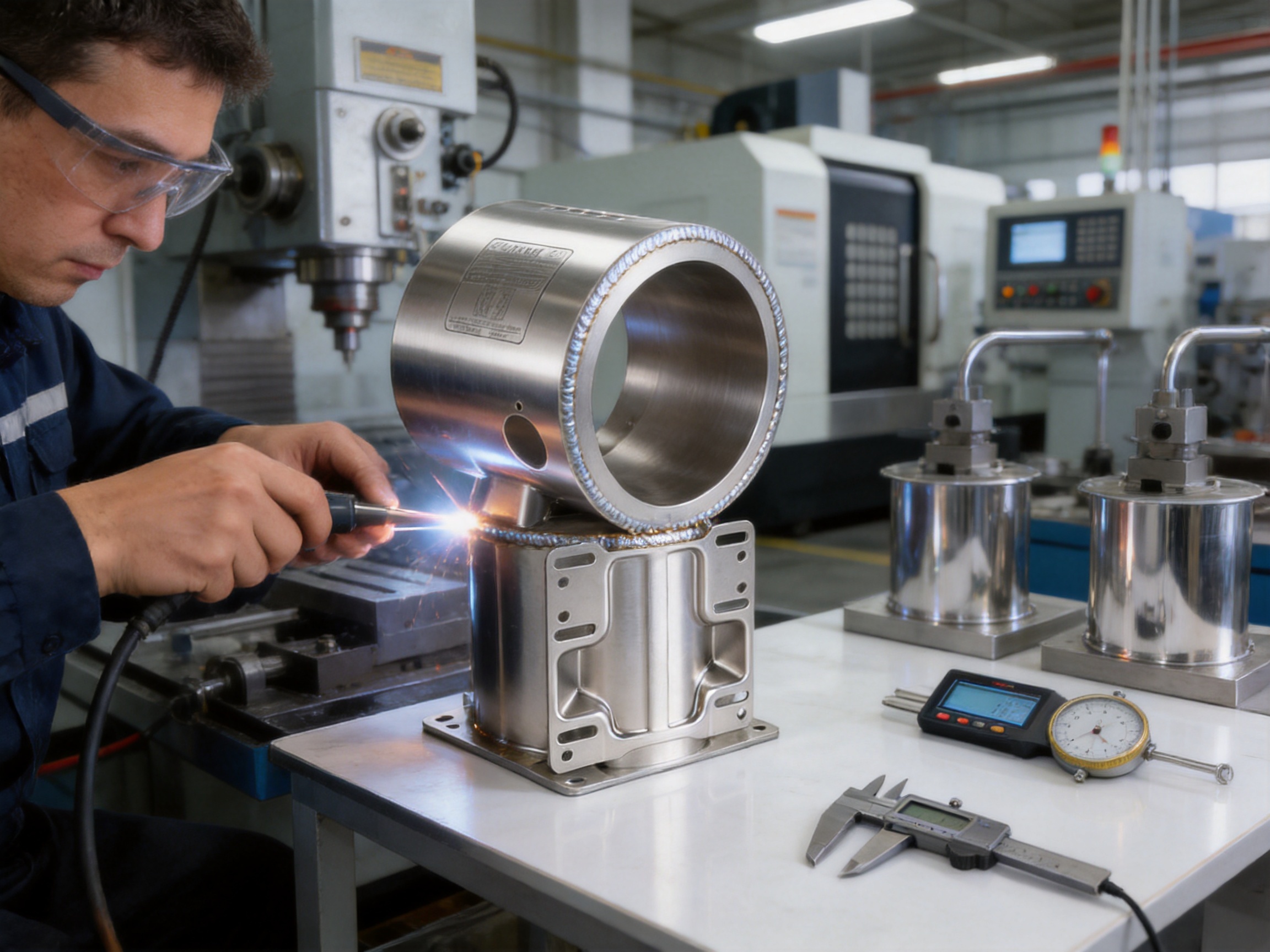
The housing surface receives a mirror polish treatment. This creates a bright, lustrous, mirror-like appearance with a premium visual texture. However, the finish is more than an aesthetic feature. A smooth stainless steel surface can also support cleaning, inspection, and resistance to residue accumulation.
In food, medical, and pharmaceutical environments, equipment surfaces are expected to meet strict hygiene expectations. Surface roughness, scratches, crevices, and corrosion can make cleaning more difficult. A polished stainless steel housing presents a smooth external surface that is easier to wipe, inspect, and maintain.
The mirror polish can also help preserve the product’s appearance during long-term use. Stainless steel naturally provides a clean and professional appearance, while polishing enhances brightness and surface uniformity. This may be particularly beneficial where equipment is installed in visible production areas, laboratories, commercial facilities, or high-end machinery.
Surface treatment quality depends on the preparation of the stainless steel, the polishing sequence, abrasive selection, operator skill, and protection during handling. A properly controlled finishing process can create a more consistent appearance and reduce visible surface irregularities.
The polished finish should nevertheless be handled appropriately. Abrasive contamination, harsh cleaning tools, and improper storage can create scratches. Customers should use cleaning procedures compatible with stainless steel and avoid materials that may damage the finish or transfer iron particles to the surface.
6. Permanent Laser-Engraved Identification
The housing includes a laser-engraved nameplate process for product identification. Unlike adhesive labels, laser engraving does not rely on a separate label that can peel, fade, or become detached. This makes it suitable for environments involving moisture, cleaning, handling, vibration, and long-term operation.
Clear and permanent identification can support production traceability, maintenance, inventory management, and quality control. Depending on the approved marking content, the identification may include a product code, batch information, customer reference, specification, or other manufacturing data.
Laser engraving also contributes to a clean appearance. It avoids the raised edges and adhesive residue associated with some labels. The marking can remain legible while integrating neatly with the polished stainless steel surface.
For equipment manufacturers, durable identification is especially useful when multiple motor housings are installed in the same facility. Clear markings can help technicians distinguish models, follow maintenance instructions, and match components with technical records. Customers should confirm the required marking content, character size, position, and format during the engineering approval stage.
7. Manufacturing Process and Quality Control
The quality of a motor housing depends on more than the material specification. Manufacturing control across forming, welding, machining, finishing, assembly, and inspection is essential to achieving a consistent result. Jiangsu Yufeng Electric Co., Ltd. operates with full in-house production capabilities that cover stamping, welding assembly, machining, and surface treatment.
An integrated manufacturing structure allows the manufacturer to manage multiple operations within one coordinated production system. This can reduce dependence on unrelated outside suppliers, shorten communication paths, and make it easier to trace a product from raw material processing to finished delivery.
Material Preparation
Production begins with the selection and preparation of stainless steel material. Material grade, thickness, surface condition, and dimensions must be checked before processing. Proper material control helps ensure that the finished housing provides the expected combination of corrosion resistance, structural strength, and surface quality.
Material handling is also important. Stainless steel should be protected from contamination by carbon steel particles and other materials that could affect surface appearance or corrosion behavior. Clean storage, suitable tooling, and controlled processing practices contribute to a better final finish.
Forming and Stamping
Stamping and forming operations shape the stainless steel into the required housing geometry. These processes must be controlled to achieve the specified diameter, height, roundness, and overall profile. Forming stainless steel requires attention to work hardening, springback, tooling condition, and dimensional recovery after processing.
Accurate forming helps ensure that the housing will accept the corresponding internal components and mating parts. It also supports consistent welding and finishing. If the cylindrical body is uneven or distorted, later operations may become more difficult and the final assembly may require additional adjustment.
Welding Assembly
After forming, the base is welded to the housing. Fixtures can help maintain the correct position and reduce movement during welding. Process parameters must be selected to achieve suitable penetration and bonding while controlling distortion and surface discoloration.
Weld inspection may include visual examination of weld continuity, surface condition, joint alignment, and signs of incomplete fusion or excessive spatter. Depending on the customer’s quality requirements, additional inspection methods may be discussed for critical production programs.
Machining and Dimensional Adjustment
Machining capabilities enable the manufacturer to refine critical areas and achieve the dimensional relationships required by the assembly. Machining may be used for interfaces, mounting features, openings, edge preparation, or other customer-specific details.
The value of integrated machining is that forming and welding results can be considered together. Instead of treating the housing as an isolated shell, the manufacturer can evaluate the complete assembly and apply the appropriate finishing operations to improve fit and installation accuracy.
Surface Treatment
After structural fabrication, the housing receives surface treatment, including mirror polishing. Surface treatment must be performed carefully to preserve the stainless steel substrate, produce the required visual quality, and avoid introducing scratches or contamination.
Edges, weld areas, and transitions between the housing and base require particular attention. A consistent finish across these areas improves the overall appearance and supports easier cleaning. The product’s polished surface is therefore the result of coordinated preparation, welding cleanup, grinding where required, and final polishing.
Inspection and Final Delivery
Inspection is used to verify that the completed housing meets the approved specifications. Typical inspection considerations may include material confirmation, inner diameter, height, wall thickness, base position, weld appearance, surface finish, marking quality, and overall cleanliness.
Inspection instruments and experienced personnel help support reliable production. The company’s stated capabilities include inspection equipment and an engineering team with an average of more than 20 years of experience. This combination of equipment and practical knowledge can help identify production risks and improve response to customer requirements.
8. Why Integrated Production Benefits Customers
Customers purchasing motor housings often need more than a component supplier. They need a manufacturing partner capable of understanding drawings, reviewing design requirements, controlling quality, managing production changes, and delivering consistent batches. Full in-house production can provide several advantages in this relationship.
First, integrated production can simplify communication. Technical questions about forming, welding, machining, and finishing can be coordinated through one manufacturing organization. This can reduce the risk of contradictory instructions between separate suppliers.
Second, integrated production can improve accountability. When multiple operations are completed within one coordinated system, it is easier to identify where a dimensional or surface issue occurred and to establish corrective action. A single supplier can take responsibility for the complete product rather than only one operation.
Third, in-house capabilities can support faster engineering feedback. If a customer requests a change to the base, marking, finish, or structural details, the manufacturer can evaluate the effect across the entire process chain. This is useful during prototype development and design optimization.
Fourth, integrated production can support more consistent mass production. Once the process has been validated, the same manufacturing route can be applied across repeated batches. Jiangsu Yufeng Electric reports an annual production capacity of more than 5 million units, providing a basis for supporting both regular programs and larger-volume requirements.
Finally, a full-process manufacturer may be better prepared to provide custom solutions. Motor housing requirements can vary according to motor size, mounting method, surface finish, material grade, openings, tolerances, and application environment. A supplier with stamping, welding, machining, assembly, and finishing capabilities can evaluate these needs more comprehensively.
9. Competitive Advantages Compared with Conventional Motor Housings
The Inner Diameter 160 304SS Motor Housing With Base offers several advantages over more basic motor housing designs. These advantages do not mean that every application requires stainless steel or a 3 mm wall. Instead, they show why this product is valuable when reliability, durability, and appearance are important selection criteria.
Compared with Ordinary Carbon Steel Housings
Ordinary carbon steel housings may be economical and suitable for dry indoor environments. However, they generally require painting, plating, or another protective coating to resist corrosion. If the coating is scratched or damaged, corrosion may begin at the exposed area. The 304 stainless steel construction of this product provides corrosion resistance through the base material and reduces dependence on a separate coating system.
Stainless steel can also be easier to clean and maintain in applications where paint flaking, rust staining, or surface residue is unacceptable. The mirror-polished finish adds further value by presenting a smooth and visually consistent surface.
Compared with Thin-Wall Housings
Thin-wall housings may reduce material usage and initial weight, but they can be more vulnerable to denting, compression, vibration-induced deformation, and handling damage. The 3 mm wall provides a more substantial structure and can offer greater dimensional stability during installation and operation.
The appropriate wall thickness depends on the motor’s load, size, operating environment, and cost objectives. Where ruggedness is prioritized, the thicker wall provides a clear functional advantage.
Compared with Housings Without an Integrated Base
A housing without a base may require a separate mounting bracket or support frame. This can increase the number of parts and create additional alignment and assembly work. The welded base of this product is integrated at the factory, helping provide a more complete and installation-ready housing solution.
Compared with Label-Based Identification
Adhesive labels can peel, fade, or become unreadable as a result of moisture, heat, cleaning, abrasion, or age. Laser-engraved identification is more permanent and better suited to long-term equipment service. It supports traceability without compromising the clean appearance of the stainless steel surface.
Compared with Multi-Supplier Manufacturing
When forming, welding, machining, and finishing are divided among several suppliers, customers may face longer communication chains, variable process standards, and more complex quality coordination. An integrated manufacturer can manage these operations through one system, helping improve consistency and simplify supplier management.
10. Application Areas
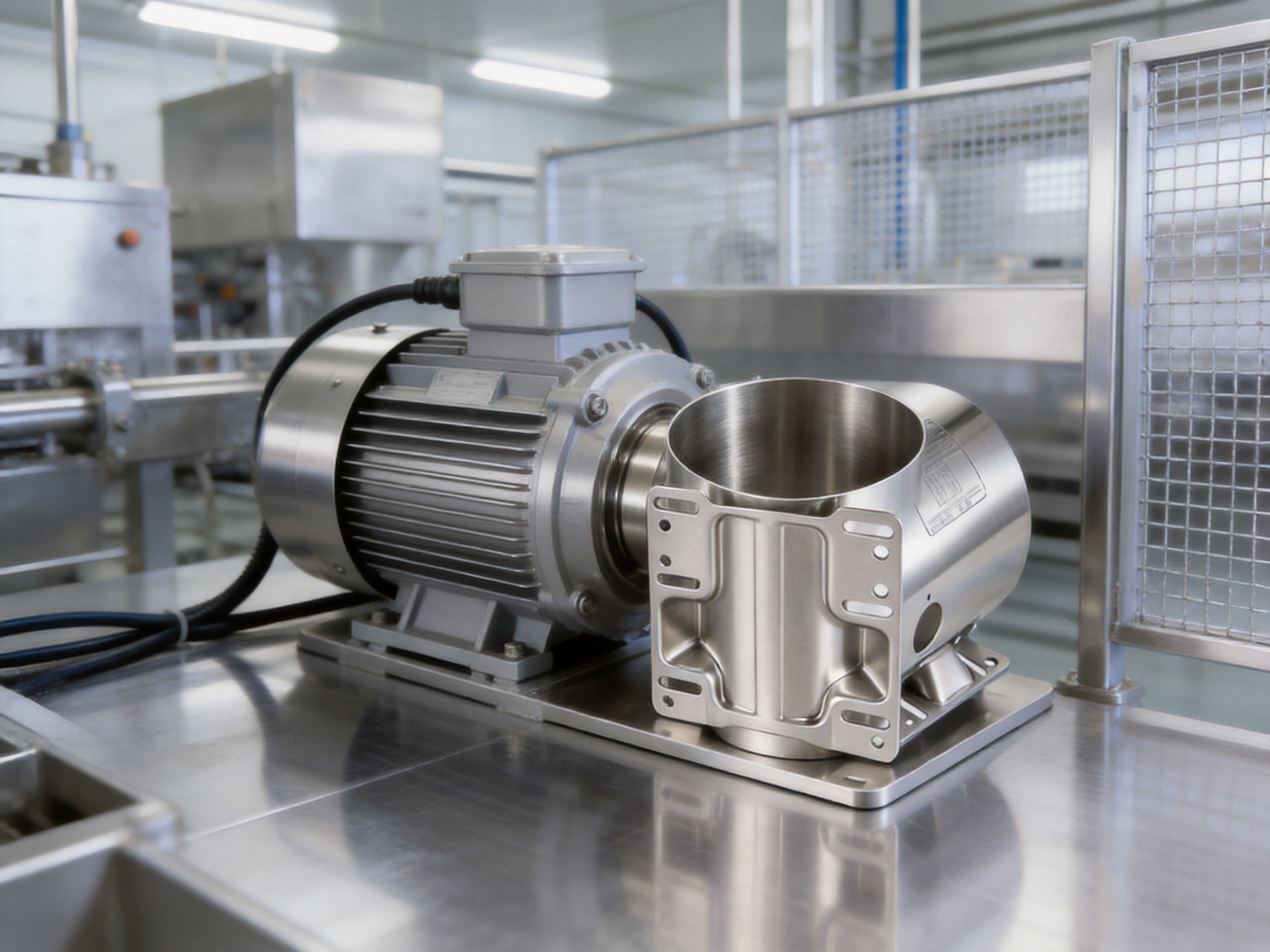
The housing is suitable for a range of motor-related applications where corrosion resistance, structural stability, and cleanability are required. Its potential application areas include household appliances, industrial drives, new energy vehicle systems, special equipment, and other machinery incorporating compatible motor assemblies.
Household Appliances
Household appliances may expose motor components to humidity, cleaning agents, vibration, and frequent operation. A stainless steel housing can provide a durable and visually clean enclosure for equipment used in kitchens, washing areas, ventilation systems, and other domestic or commercial environments.
Industrial Drives
Industrial drives often operate continuously and may be installed in environments containing dust, moisture, oil mist, or process chemicals. The rigid structure and corrosion-resistant material can help support reliable motor integration in industrial machinery.
New Energy Vehicle Systems
New energy vehicles and related equipment require lightweight optimization, durability, thermal management, and resistance to environmental exposure. The suitability of this housing for a specific vehicle or drive system must be confirmed through detailed engineering review, including vibration, temperature, sealing, electromagnetic, and dimensional requirements.
Food and Pharmaceutical Equipment
The mirror-polished 304 stainless steel surface is particularly attractive for equipment where cleanability and hygiene are important. The smooth surface, corrosion resistance, and absence of a conventional painted coating can support equipment designs that require frequent cleaning and a professional appearance.
Special Equipment
Special equipment often requires custom dimensions, unusual mounting arrangements, or specific surface treatments. The manufacturer’s integrated production capabilities allow customers to discuss custom housing requirements from design development through mass production.
11. Engineering and Purchasing Considerations
Before selecting the housing, customers should review the complete mechanical and environmental requirements of the intended motor system. The 160 mm inner diameter, 175 mm height, 3 mm wall thickness, and integrated base define the main product configuration, but additional interfaces may require confirmation.
Customers should check the motor body dimensions, internal clearance, end-cover arrangement, bearing location, shaft extension, cable routing, ventilation requirements, and sealing method. They should also confirm whether the housing needs holes, slots, threaded features, brackets, inspection openings, or other modifications.
Mounting requirements should include the base footprint, hole pattern, hole size, flatness, allowable load, and orientation. If the housing will be attached to a vibrating machine, the customer should provide information about operating speed, vibration level, shock loads, and installation conditions.
Environmental information is equally important. Customers should identify humidity, salt exposure, cleaning chemicals, temperature range, outdoor installation, dust, oil, and possible immersion. This information helps determine whether 304 stainless steel is suitable or whether a different grade, sealing strategy, or surface treatment should be considered.
Surface appearance requirements should be discussed before production. Mirror polishing may be specified according to a customer’s visual standard, sample approval, or inspection criteria. The customer should also define acceptable marks, polishing direction, weld appearance, protective packaging, and handling requirements.
Laser marking details should be confirmed early. Marking location, font, size, content, serial numbering, and customer coding can affect the production process. Clear approval prevents confusion and supports traceability throughout the customer’s assembly and service operations.
12. Packaging, Handling, and Maintenance
A polished stainless steel housing should be protected during storage and transportation. Packaging should prevent contact between the polished surface and abrasive materials. Protective film, separators, suitable wrapping, and stable positioning can help reduce scratches and impact damage.
During handling, lifting and support should be applied to appropriate structural areas. The housing should not be dragged across rough surfaces, and tools should not contact the mirror-polished exterior unnecessarily. If the base is used for lifting, the load capacity and lifting method should be confirmed in advance.
Routine maintenance is generally straightforward. The surface can be cleaned with suitable materials that do not contain abrasive particles capable of scratching the polish. Chloride-rich cleaners and contaminated steel brushes should be avoided where they may affect the stainless steel surface. After cleaning, the housing should be dried if standing moisture could remain around joints or mounting areas.
Periodic inspection should include the base weld, mounting fasteners, surface condition, nameplate legibility, and any signs of impact or deformation. In applications with significant vibration, fasteners and support interfaces should be checked according to the equipment maintenance schedule.
13. Company Manufacturing Strengths
Jiangsu Yufeng Electric Co., Ltd. specializes in the research, development, and production of motor housings. Its capabilities include stamping, welding assembly, machining, surface treatment, and final delivery. This range of processes supports the manufacture of complete motor housing solutions rather than isolated metal parts.
The company serves markets including household appliances, industrial drives, new energy vehicles, and special equipment. This broad application experience gives the manufacturer exposure to different requirements involving material selection, structural design, production repeatability, surface treatment, and quality control.
The company reports 40 years of experience in motor housing manufacturing and service to more than 50 customers. These figures indicate a long-term focus on the motor housing field rather than a temporary expansion into the product category. An annual production capacity of more than 5 million units provides production resources for programs requiring stable volume and repeatability.
Engineering support is another important strength. The company’s engineering team has an average of more than 20 years of experience. Experienced engineers can contribute during design review, material selection, process planning, fixture development, tolerance evaluation, welding analysis, finishing decisions, and production troubleshooting.
The company’s stated operating principles emphasize quality, efficiency, and fast response. These priorities are important for customers developing new motor assemblies or managing ongoing production. A capable supplier should be able to respond not only with a quotation, but also with practical technical feedback and a realistic manufacturing plan.
For buyers, the combination of product expertise, in-house processing, inspection resources, and application experience can reduce supplier coordination and support a more stable procurement relationship. It can also create opportunities for design optimization, cost control, and custom development without sacrificing the requirements of the finished motor housing.
14. Frequently Asked Questions
Q1: What is the inner diameter of this motor housing?
The inner diameter is 160 mm. Customers should compare this dimension with the motor body and required internal clearances before confirming compatibility.
Q2: What is the height of the housing?
The housing height is 175 mm. The total system height may be greater after adding end covers, shafts, mounting components, or other motor parts.
Q3: How thick is the housing wall?
The wall thickness is 3 mm. This thickened wall helps improve compression resistance, impact resistance, rigidity, and resistance to deformation.
Q4: What material is used?
The product is made from 304 stainless steel. This material provides resistance to corrosion, oxidation, moisture, and many common environmental contaminants. Suitability should be verified for highly concentrated or unusually aggressive chemicals.
Q5: Does the housing include a mounting base?
Yes. A base is welded to the bottom of the housing. It provides integrated mounting support for the complete motor unit and can reduce the need for a separate support bracket.
Q6: Is the base detachable?
The base is described as a welded integrated component. It is not presented as a detachable accessory. Customers requiring a different base design should discuss their drawings and mounting requirements before production.
Q7: What is the surface finish?
The housing features a mirror polish. This creates a bright appearance and supports easier cleaning and residue removal when handled with suitable maintenance procedures.
Q8: Is the product suitable for food or pharmaceutical equipment?
The 304 stainless steel material and mirror-polished surface are suitable characteristics for applications that prioritize cleanability and hygiene. Final suitability depends on the complete equipment design, applicable standards, cleaning chemicals, and customer validation requirements.
Q9: How is the product identified?
The housing uses laser-engraved identification. Laser engraving provides clear, permanent, fade-resistant, corrosion-resistant, and wear-resistant marking without relying on an adhesive label.
Q10: Can the motor housing be customized?
Customization can be discussed according to the customer’s drawings and technical requirements. Potential considerations may include dimensions, mounting features, openings, marking, finish, wall thickness, material, and production quantities.
Q11: What manufacturing processes are available?
The manufacturer provides integrated capabilities including stamping, welding assembly, machining, assembly, surface treatment, and inspection. These processes support development from formed stainless steel material to finished motor housing delivery.
Q12: How should customers confirm whether the product is suitable?
Customers should provide the motor dimensions, mounting drawings, operating environment, temperature range, vibration conditions, surface requirements, and expected production quantity. These details allow the manufacturer to review compatibility and recommend the correct production configuration.
15. Conclusion
The Inner Diameter 160 304SS Motor Housing With Base is a robust stainless motor housing designed for applications that require reliable structural protection, corrosion resistance, stable mounting, and a clean exterior. Its 160 mm inner diameter and 175 mm height provide a defined enclosure configuration, while the 3 mm wall improves resistance to compression, impact, vibration-related stress, and deformation.
The welded base adds practical value by integrating mounting support directly into the housing. The 304 stainless steel material helps the product withstand humidity, oxidation, salt spray, and many common corrosive conditions. The mirror-polished surface supports cleanability and provides a professional appearance, while laser-engraved identification contributes to long-term traceability.
Compared with ordinary carbon steel, thin-wall designs, housings without bases, and label-based identification, this product offers a more complete solution for demanding applications. Its value is further strengthened by the manufacturer’s full-process capabilities in stamping, welding, machining, assembly, finishing, and inspection.
With decades of motor housing manufacturing experience, an experienced engineering team, extensive customer service history, and substantial annual production capacity, Jiangsu Yufeng Electric Co., Ltd. is positioned to support both standard and customized motor housing programs. For customers seeking a durable stainless enclosure with integrated mounting and professional surface treatment, this housing provides a practical foundation for reliable motor assembly development.
References
1. International Stainless Steel Forum, Stainless Steel Selection and General Corrosion Resistance Principles.
2. ASTM International, Standard Practices for Visual Examination and Fabrication Quality of Welded Components.
3. ASM International, Stainless Steels: Processing, Properties, and Applications.
4. International Organization for Standardization, Quality Management Systems and Manufacturing Process Control Principles.
5. Technical product information supplied for the Inner Diameter 160 304SS Motor Housing With Base.
6. Manufacturer information supplied by Jiangsu Yufeng Electric Co., Ltd., including production capabilities, application areas, engineering experience, and annual capacity.

 Previous