

 English
 Español
Content
- 1 Product Overview
- 2 Structural Design for Water Pump Applications
- 3 Ventilation and Heat Dissipation Performance
- 4 Pressure Resistance and Vibration Stability
- 5 Application Range
- 6 Manufacturing Process and Quality Advantages
- 7 Why This Housing Can Offer an Advantage
- 8 Customization and Engineering Support
- 9 Production Capacity and Supply Reliability
- 10 Installation and Integration Considerations
- 11 Maintenance and Service-Life Considerations
- 12 Environmental and Economic Benefits
- 13 Recommended Customer Evaluation Process
- 14 Q&A
- 14.1 What is the main purpose of this steel motor housing?
- 14.2 What are the key dimensions?
- 14.3 Why is the 2.0 mm wall thickness important?
- 14.4 How does the housing support motor cooling?
- 14.5 Which pump types can use this product?
- 14.6 What materials are specified for the housing?
- 14.7 Can the housing be customized?
- 14.8 What manufacturing processes are available?
- 14.9 How does integrated manufacturing benefit customers?
- 14.10 Is this housing suitable for humid environments?
- 14.11 What should be checked before assembly?
- 14.12 What is the company’s production experience?
- 14.13 How should customers begin a project inquiry?
- 15 Conclusion
- 16 References
- 17 Product: Inner Diameter 140 Steel Motor Housing
Reliable motor protection is fundamental to the performance, efficiency, and service life of water pumps. In demanding applications, the motor housing must do much more than simply enclose the stator and rotor. It must maintain structural integrity under pressure, support effective heat dissipation, resist vibration, protect internal electrical components, and remain dimensionally stable throughout continuous operation. The Inner Diameter 140 Steel Motor Housing is designed to meet these requirements through a reinforced steel structure, carefully controlled dimensions, ventilation openings, and a practical balance between strength and weight.
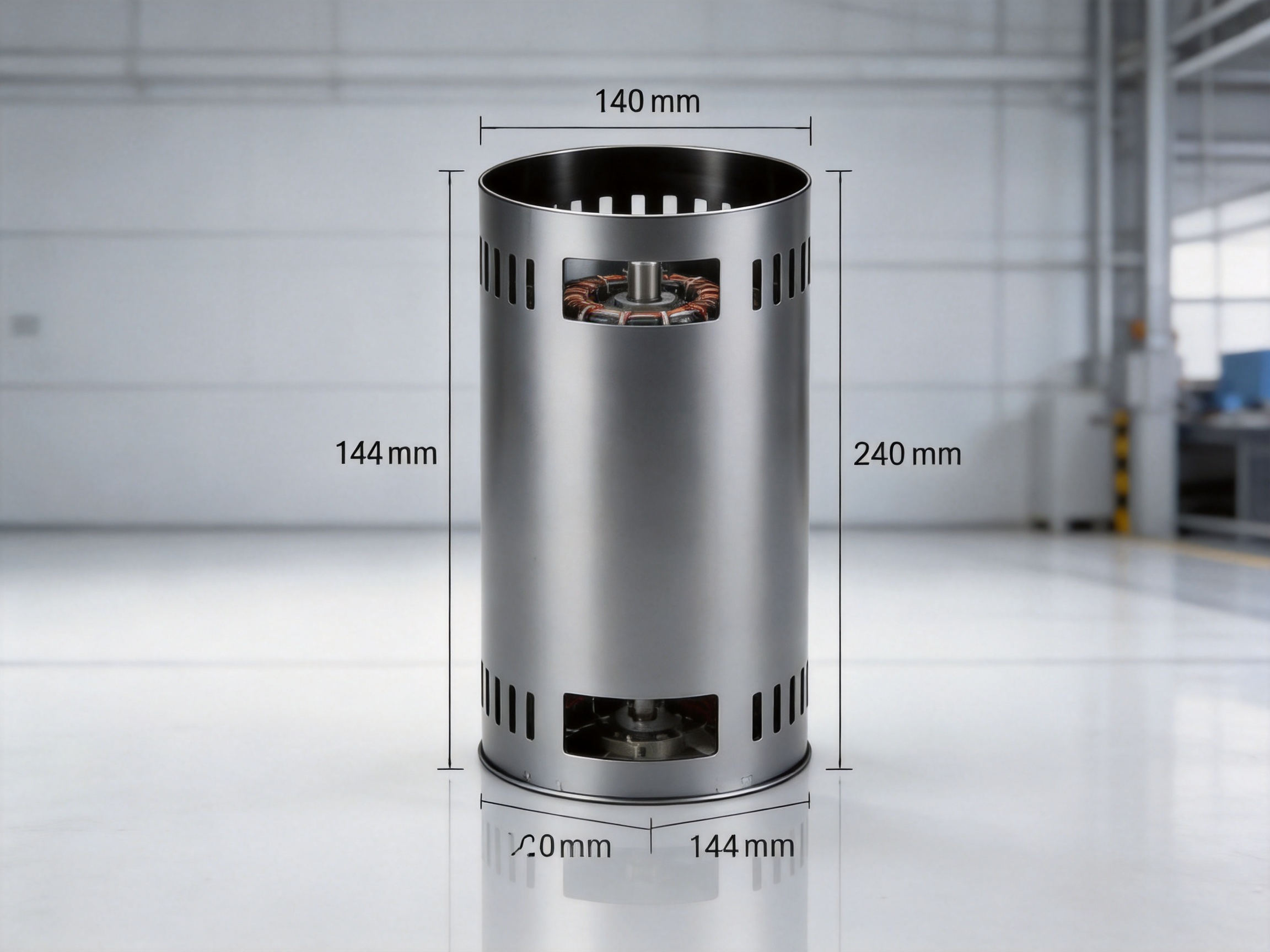
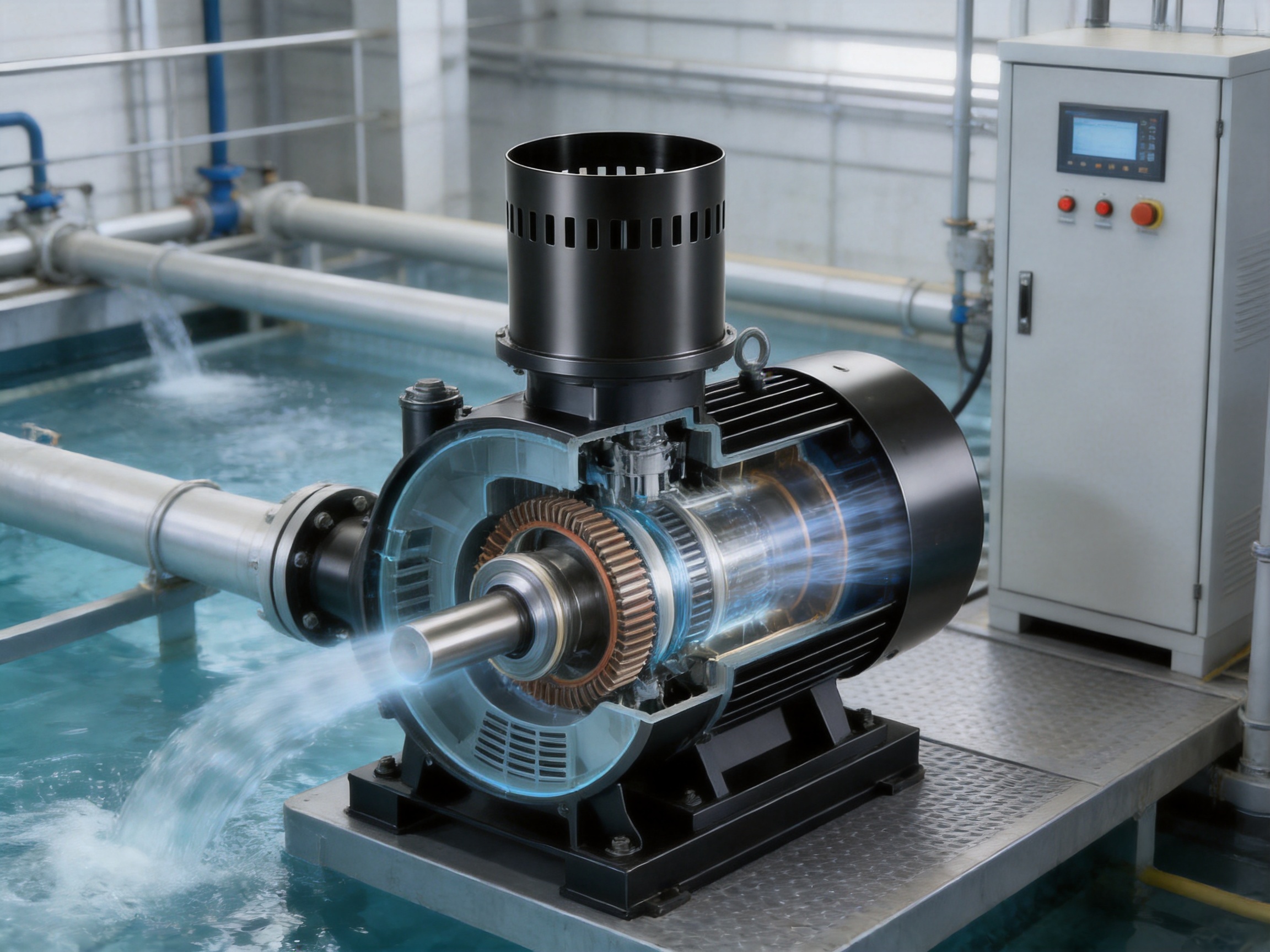
With an inner diameter of 140 mm, an overall height of 240 mm, a wall thickness of 2.0 mm, and an outer diameter of 144 mm, this motor housing is developed for water pump motors that operate in humid, high-load, and vibration-prone environments. Its SPCC/ST12/DC01 material specification provides a dependable steel foundation for fabrication, welding, machining, finishing, and final assembly. The result is a durable motor enclosure suitable for centrifugal pumps, submersible pumps, booster pumps, circulation pumps, industrial drainage pumps, and related water treatment equipment.
The product is manufactured by Jiangsu Yufeng Electric Co., Ltd., a specialist motor housing manufacturer with capabilities covering stamping, welding assembly, machining, surface treatment, inspection, and finished-product delivery. This full-process approach gives customers a consistent manufacturing partner for both development projects and volume production. Instead of relying on fragmented outsourcing, the company can coordinate key production stages internally, helping improve dimensional consistency, response speed, quality control, and production efficiency.
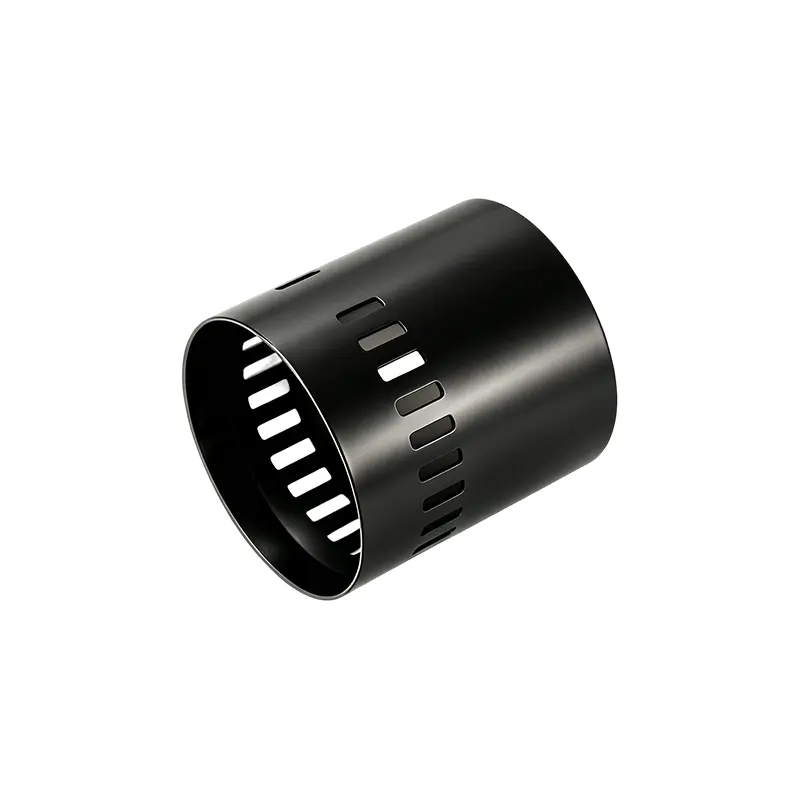
Inner Diameter 140 Steel Motor Housing
Product Overview
The Inner Diameter 140 Steel Motor Housing is a cylindrical steel enclosure engineered for water pump motor assemblies. Its principal function is to provide a rigid and protective outer structure around the motor’s active components. At the same time, the housing contributes to thermal management by allowing air to move through designated ventilation openings at both ends.
The internal diameter of 140 mm provides the dimensional space required for the corresponding motor components, while the 240 mm height supports the length of the stator and rotor assembly. The 2.0 mm wall thickness is a particularly important design feature. It is thick enough to improve resistance to deformation, vibration, impact, and water pressure, while remaining reasonable for applications where excessive mass could increase handling difficulty or affect overall equipment weight.
The outer diameter is 144 mm, which corresponds directly to the 140 mm internal diameter plus the 2.0 mm wall thickness on each side. This dimensional relationship demonstrates a straightforward and practical cylindrical design. For customers integrating the housing into a pump assembly, the defined inner and outer dimensions simplify preliminary mechanical design, component matching, fixture planning, and assembly verification.
Key Product Specifications
| Item | Specification | Engineering Significance |
|---|---|---|
| Product type | Steel motor housing | Protective structural enclosure for water pump motors |
| Inner diameter | 140 mm | Defines the available internal motor installation space |
| Height | 240 mm | Supports the axial length of the motor assembly |
| Wall thickness | 2.0 mm | Improves rigidity, impact resistance, and pressure resistance |
| Outer diameter | 144 mm | Provides a defined external installation envelope |
| Material specification | SPCC/ST12/DC01 | Cold-rolled steel grades suitable for forming and fabrication |
| Primary application | Water pump motors | Suitable for humid, continuous-duty, and high-load equipment |
Although dimensions are essential, a motor housing should not be evaluated by size alone. Its practical value depends on how accurately it is formed, how consistently it performs in production, and how well it interacts with the complete motor and pump system. For that reason, the manufacturing process, material control, welding quality, surface treatment, and inspection system are as important as the nominal specifications.
Structural Design for Water Pump Applications
Water pump motors are exposed to a combination of mechanical and environmental stresses. During operation, the motor generates heat, the rotor produces rotational vibration, the pump may create pressure fluctuations, and the surrounding environment can contain moisture, condensation, dust, chemicals, or abrasive particles. A housing that is too thin or poorly formed may deform, transmit excessive vibration, or provide inadequate protection to internal components.
The 2.0 mm steel wall of this product provides a useful structural margin for demanding operating conditions. Compared with a very thin enclosure, a thickened wall can improve resistance to local denting and deformation during transportation, assembly, and operation. It can also provide greater stability when the housing is exposed to vibration or external contact. This is particularly valuable for pumps installed in industrial facilities, drainage systems, workshops, agricultural environments, and other locations where the equipment may not operate under ideal conditions.
The cylindrical form is also structurally efficient. A round housing distributes circumferential loads more evenly than many irregular or flat-sided shapes. When internal and external forces act on the enclosure, the cylindrical wall can help spread those forces around the body. This contributes to rigidity and supports more stable alignment of the motor’s internal components, provided that the housing is manufactured within the required dimensional tolerances.
In water pump equipment, motor alignment is closely related to reliability. Excessive distortion can affect the relationship between the stator, rotor, bearings, end covers, seals, and shaft. Even a small dimensional problem may increase noise, create friction, raise vibration, or accelerate bearing wear. A properly manufactured steel housing helps provide a stable reference structure for the complete motor assembly.
Balanced Strength and Practical Weight
One of the advantages of the Inner Diameter 140 Steel Motor Housing is its balance between strength and weight. Increasing wall thickness generally improves structural performance, but excessive material can add unnecessary mass, increase material cost, and make installation more difficult. The selected 2.0 mm wall offers reinforced protection without turning the housing into an unnecessarily heavy component.
This balance is important for water pump manufacturers that need a product capable of repeated handling during assembly and maintenance. A housing that combines reasonable weight with adequate rigidity can improve operator convenience, reduce the burden on supporting brackets, and simplify equipment transportation. It may also help pump manufacturers optimize the total weight of packaged equipment without compromising motor protection.
The material specification of SPCC, ST12, or DC01 represents commonly used cold-rolled steel designations in different standards and supply markets. These steels are generally valued for their smooth surface, consistent thickness, forming suitability, and compatibility with fabrication processes. The specific grade and supply condition should be confirmed according to the customer’s technical requirements, production environment, and applicable standards.
Ventilation and Heat Dissipation Performance
Thermal management is a critical consideration in motor housing design. During operation, electrical resistance in the windings, magnetic losses in the core, bearing friction, and other mechanical losses generate heat. If that heat remains trapped inside the housing, the motor temperature may continue to rise. Excessive temperature can reduce efficiency, accelerate insulation aging, deteriorate lubricants, and shorten the service life of electrical and mechanical components.
The Inner Diameter 140 Steel Motor Housing uses ventilation holes at both ends to establish an axial air cooling path. This arrangement allows air to move through the housing interior, helping carry heat away from the stator and rotor area. The airflow path is especially valuable in applications where the motor operates continuously or under high load for extended periods.
By supporting smoother air circulation, the ventilation design helps reduce the risk of localized heat accumulation. It can also support more stable motor operating temperatures when the pump is correctly matched to the application and installed with appropriate external airflow conditions. The housing itself does not replace a complete thermal design, but it provides an important structural foundation for the motor’s cooling strategy.
Effective heat dissipation can deliver several practical benefits. Lower operating temperatures may help preserve insulation performance, reduce thermal stress on winding materials, maintain lubricant properties, and support more stable electrical performance. In continuous-duty water pumps, these factors can have a direct influence on maintenance intervals and total operating cost.
Ventilation Design Considerations
Ventilation openings must be designed as part of the complete motor system. Their number, size, position, and shape can influence airflow, structural strength, noise, contamination risk, and ease of manufacturing. The openings should provide an efficient cooling path while retaining sufficient material around the housing ends to maintain rigidity.
For pump manufacturers, the ventilation arrangement should be evaluated together with end covers, fan components, seals, filters, and installation clearances. In environments containing dust, sand, fibers, or corrosive vapor, additional protection may be required to prevent contaminants from entering the motor. The housing can be adapted or integrated with other protective components according to the customer’s design requirements.
Jiangsu Yufeng Electric’s combined stamping, welding, machining, and inspection capabilities support the controlled production of such structural features. By coordinating the forming and finishing stages, the manufacturer can help ensure that ventilation openings, end interfaces, and other critical details are produced consistently from batch to batch.
Pressure Resistance and Vibration Stability
Water pump motors may operate in conditions involving internal pressure, fluid movement, start-stop cycles, and mechanical vibration. Submersible and drainage pumps can be exposed to particularly demanding environments, while booster and circulation pumps may run continuously with frequent changes in system load. The motor housing must therefore contribute to the stability of the complete pump assembly.
The 2.0 mm thickened wall is designed to provide improved resistance to water pressure and external impact. It helps the enclosure retain its shape when exposed to mechanical forces that could otherwise cause denting or local distortion. This characteristic is important not only for the protection of the steel shell but also for maintaining the correct position of internal motor components.
A rigid housing can also help reduce unwanted vibration transmission. It does not eliminate vibration generated by an unbalanced rotor, misaligned shaft, worn bearing, or improperly installed pump. However, a structurally stable enclosure is less likely to amplify deformation-related vibration or allow the motor assembly to shift under operating loads.
For industrial users, vibration stability can support quieter operation and reduce stress on adjacent components. It may help protect mounting brackets, couplings, fasteners, seals, and piping connections from excessive dynamic loads. As with all motor components, actual results depend on complete system design, balancing, bearing selection, installation accuracy, and operating conditions.
Protection in Humid Environments
Water pump motors often operate near water, condensation, splashing, wet floors, or high humidity. A motor housing provides a first level of mechanical and environmental protection for the internal assembly. Its role is especially important when the motor is installed in locations where accidental impact, water exposure, or repeated temperature changes may occur.
Steel provides a strong base material for this application, but corrosion protection must be considered. Depending on the customer’s requirements, the housing may be paired with suitable surface treatment, coating, plating, painting, or other finishing methods. The choice should reflect the intended environment, exposure time, cleaning chemicals, temperature, and required service life.
Surface treatment is not merely an aesthetic step. It can influence corrosion resistance, dimensional stability, electrical continuity, coating adhesion, and compatibility with seals or adjacent parts. Jiangsu Yufeng Electric provides surface treatment as part of its broader manufacturing capability, allowing customers to coordinate the housing body and finishing requirements through one manufacturing source.
Application Range
Centrifugal Pumps
Centrifugal pumps use rotating impellers to transfer fluid and are widely used in water supply, circulation, industrial processing, irrigation, and building services. Their motors may operate for long periods and can experience vibration from rotating equipment and changing hydraulic loads. The Inner Diameter 140 Steel Motor Housing provides a rigid enclosure that supports motor alignment, cooling, and mechanical protection in these applications.
Submersible Pumps
Submersible pumps operate partially or fully below the fluid surface. Their motor housings must be designed with particular attention to pressure, sealing, corrosion, and thermal conditions. The reinforced steel structure can contribute to mechanical protection, while the final pump design must incorporate appropriate sealing systems and material treatments for the intended depth and fluid.
Booster Pumps
Booster pumps are used to increase water pressure in residential, commercial, agricultural, and industrial systems. They may experience repeated starting, pressure fluctuations, and variable demand. A stable motor housing helps support dependable operation by protecting internal components and maintaining the structural relationship between the motor and pump assembly.
Circulation Pumps
Circulation pumps are commonly used in heating, cooling, hot-water, and process-fluid systems. Some operate continuously for long periods, making thermal control particularly important. The axial ventilation path supported by openings at both ends can help promote heat removal from the motor interior, subject to the final assembly’s airflow design.
Industrial Drainage Pumps
Industrial drainage pumps may encounter muddy water, suspended particles, impact, vibration, and irregular operating cycles. A thickened steel housing offers a practical level of mechanical robustness for equipment used in demanding locations. Additional sealing and corrosion protection should be selected according to the fluid and site conditions.
Water Treatment Equipment
Water treatment systems often require reliable pumps for filtration, transfer, dosing support, wastewater handling, and process circulation. The motor housing can serve as a core protective component in these systems. Its defined dimensions and material options make it suitable for integration into customized pump platforms and equipment assemblies.
Manufacturing Process and Quality Advantages
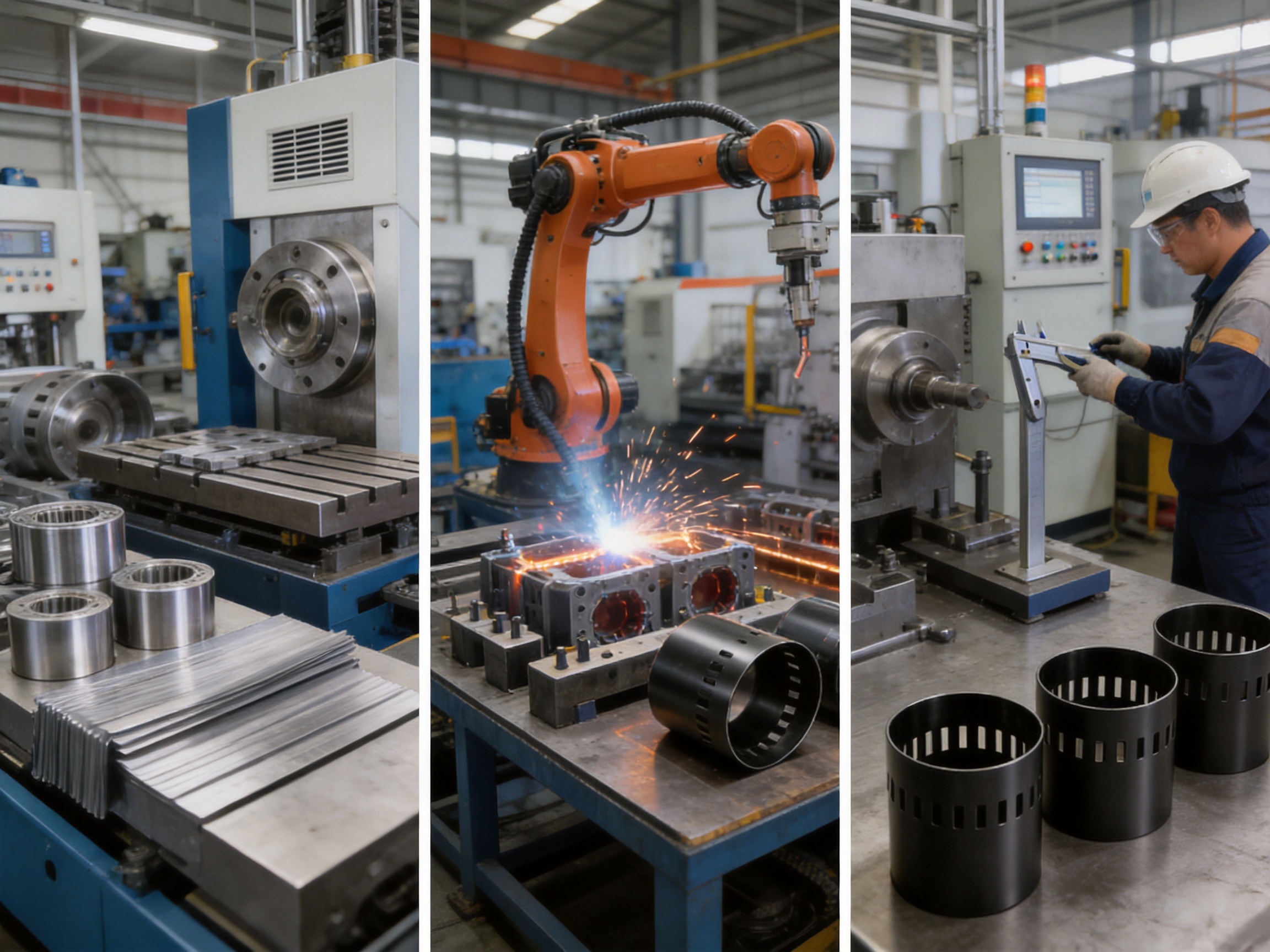
The performance of a motor housing is strongly influenced by the consistency of its manufacturing process. A design may specify an inner diameter of 140 mm and a wall thickness of 2.0 mm, but the finished part must also maintain roundness, height, end geometry, hole positions, surface condition, and assembly compatibility. Jiangsu Yufeng Electric approaches motor housing production through a full-process manufacturing model that covers steel processing, stamping, welding, machining, surface treatment, inspection, and assembly support.
Material Preparation
Production begins with the selection and preparation of steel material corresponding to the required SPCC, ST12, or DC01 specification. Material control is important because thickness variation, surface defects, inconsistent hardness, or unsuitable forming characteristics can affect the finished housing. Proper material preparation supports stable forming, predictable welding, and reliable surface treatment.
For customers with specific material certificates, traceability requirements, or performance expectations, material documentation and incoming inspection can be integrated into the quality process. This is especially useful for industrial pump manufacturers that need to manage supplier qualification and product consistency across multiple production batches.
Stamping and Forming
Stamping and forming convert flat steel material into the required cylindrical or shaped components. The tooling must be designed to control the housing profile, end geometry, ventilation features, mounting details, and other critical characteristics. Proper forming reduces the risk of wrinkles, cracks, excessive springback, uneven edges, or out-of-round conditions.
Accurate tooling and process control are particularly important for a cylindrical motor housing. If the diameter varies excessively around the circumference, the stator may not fit correctly or the rotor clearance may be affected. Stable forming also supports reliable welding and reduces the amount of corrective machining required later in the process.
Jiangsu Yufeng Electric’s stamping capability provides an internal foundation for producing repeatable metal components. In-house control of stamping can help shorten communication cycles between product engineering and production, support faster tooling adjustments, and improve coordination when customers request design modifications.
Welding Assembly
After forming, selected components may require welding to create the completed housing structure or attach supporting features. Welding quality influences strength, dimensional stability, appearance, and leak resistance where applicable. Poorly controlled welding can introduce distortion, incomplete fusion, excessive spatter, or residual stress.
Automated welding equipment can improve repeatability by controlling torch movement, welding speed, positioning, and process parameters. It can also help reduce variation between operators and production batches. Jiangsu Yufeng Electric’s automated welding capabilities support consistent assembly of motor housing components and help provide a more stable foundation for subsequent machining and finishing.
Welding fixtures are equally important. A suitable fixture holds the components in the intended position during welding and helps limit thermal distortion. Fixture design should account for the housing’s cylindrical geometry, end interfaces, ventilation openings, and any customer-specific mounting features.
Machining and Dimensional Refinement
Machining may be used to refine end faces, mounting interfaces, locating surfaces, holes, grooves, or other features requiring close dimensional control. It can also help prepare the housing for assembly with end covers, bearings, seals, brackets, or other motor components.
The combination of forming and machining offers flexibility. Forming provides production efficiency for the main body, while machining delivers precision where it is most needed. This approach is useful for customers that require repeatable interfaces without making the entire housing excessively complex or costly to manufacture.
During machining, the manufacturer can verify key dimensions such as inner diameter, outer diameter, height, concentricity, flatness, and hole location. The actual inspection plan should be based on the customer’s drawings, tolerances, function requirements, and applicable quality standards.
Surface Treatment and Finishing
Surface treatment helps prepare the housing for its operating environment and final appearance. Depending on the product specification, possible finishing requirements may include cleaning, deburring, painting, coating, plating, or other protective treatment. Edges and openings should be properly processed to reduce sharp points and support safe handling.
Finishing quality affects corrosion protection, coating adhesion, visual consistency, and compatibility with assembly components. A controlled surface treatment process can help reduce premature corrosion and improve the housing’s suitability for humid or industrial environments.
Inspection and Testing
Inspection is integrated into the manufacturing process rather than being treated only as a final step. Dimensional inspection may include diameter measurement, height verification, wall thickness checks, hole position measurement, roundness evaluation, and visual examination of welded areas. Depending on the customer’s requirements, additional tests may be applied to coatings, weld strength, pressure performance, or assembly fit.
Inspection instruments and documented procedures help identify process variation early. When measurement results are connected to production records, the manufacturer can better analyze recurring issues, improve tooling, and maintain consistent output. Jiangsu Yufeng Electric’s inspection capabilities support its objective of delivering high-precision and high-reliability motor housing solutions.
Why This Housing Can Offer an Advantage
Customers comparing motor housings often evaluate price first, but the lowest initial purchase price does not always produce the lowest total cost. A housing that is inconsistent, difficult to assemble, vulnerable to deformation, or poorly protected against corrosion may create additional costs through rework, delays, warranty claims, and field maintenance.
The Inner Diameter 140 Steel Motor Housing offers several characteristics that support dependable value over the product life cycle. Its reinforced 2.0 mm wall improves structural stability. Its defined 140 mm internal diameter and 144 mm external diameter simplify component matching. Its 240 mm height provides a clear installation envelope. Its ventilation openings support an axial cooling path. Its steel construction is suitable for forming, welding, machining, and surface treatment.
Another important advantage is manufacturing integration. When stamping, welding, machining, finishing, and inspection are managed by one experienced supplier, the customer can reduce the coordination burden associated with multiple subcontractors. Production problems can be traced more directly to a specific process, and engineering changes can be communicated through a single technical channel.
This integrated model may also support faster sampling and product development. A motor manufacturer can submit drawings or samples, review manufacturability with the engineering team, validate prototypes, and then proceed toward mass production under the same supplier relationship. Such continuity is especially valuable when the housing must be customized for a new pump platform.
Compared with housings designed only for light-duty applications, the reinforced structure of this product is better suited to environments involving vibration, impact, continuous operation, and water-related exposure. Compared with unnecessarily heavy designs, the 2.0 mm wall provides a more balanced approach to strength and handling efficiency. Compared with suppliers limited to a single process, a full-process manufacturer can provide broader support from raw material to finished assembly.
Customization and Engineering Support
Although the standard configuration is defined by a 140 mm inner diameter, 240 mm height, 2.0 mm wall thickness, and 144 mm outer diameter, motor housing requirements vary between pump manufacturers. Customers may require changes to ventilation openings, end shapes, mounting points, connection details, surface treatment, tolerances, or packaging.
Customization should begin with a review of the motor assembly and its operating environment. Important technical information may include the stator dimensions, rotor clearance, shaft arrangement, bearing positions, end-cover interface, sealing method, expected temperature, vibration level, fluid exposure, installation orientation, and target production volume.
Jiangsu Yufeng Electric’s engineering team can support product development from initial design through mass production. Its average engineering experience of more than 20 years provides a strong foundation for evaluating forming feasibility, welding sequence, machining requirements, tooling design, and inspection methods.
Information Customers Should Provide
| Requested Information | Purpose |
|---|---|
| 2D drawings or 3D models | Defines dimensions, tolerances, interfaces, and geometry |
| Motor and stator dimensions | Confirms internal fit and clearance requirements |
| Operating environment | Supports material, coating, and corrosion-protection selection |
| Expected load and duty cycle | Helps evaluate structural and thermal requirements |
| Ventilation requirements | Supports cooling-path and contamination-risk analysis |
| Annual or batch volume | Guides tooling, process planning, and production scheduling |
| Inspection standards | Defines measurement, documentation, and acceptance criteria |
Early technical communication can reduce the risk of costly revisions after tooling has been completed. It also allows the supplier to identify opportunities for improved manufacturability, simplified assembly, reduced material waste, or stronger dimensional control.
Production Capacity and Supply Reliability
For pump manufacturers, supply reliability is as important as individual component quality. A housing supplier must be able to provide stable production, consistent lead times, responsive communication, and sufficient capacity for both trial orders and scaled programs.
Jiangsu Yufeng Electric has approximately 40 years of experience in motor housing manufacturing and has served more than 50 customers. Its annual production capacity exceeds 5 million units. This experience supports the company’s ability to manage recurring production programs while also responding to customer-specific requirements.
A production capacity of this scale can be valuable for customers that are moving from prototype quantities to regular mass production. The supplier can help coordinate tooling, raw material planning, process scheduling, inspection, packaging, and delivery. Consistent production planning also reduces the risk that a successful product development project will face supply limitations during commercial expansion.
Capacity alone does not guarantee quality, so it must be supported by production controls and inspection. The combination of experienced personnel, manufacturing equipment, internal process coordination, and inspection instruments helps Jiangsu Yufeng Electric pursue stable and repeatable output.
Installation and Integration Considerations
Before installing the housing, customers should verify that the stator, rotor, bearings, end covers, seals, and mounting components correspond to the specified dimensions. The internal diameter should be checked against the stator or liner requirements, while the external diameter should be considered in relation to brackets, clamps, pump bodies, and surrounding clearances.
During assembly, excessive force should be avoided. Pressing or inserting components with improper tools may deform the housing or damage machined surfaces. Assembly fixtures should support the cylindrical body evenly and avoid applying concentrated loads near ventilation openings or thin edge areas.
The housing should also be stored in a clean and dry area before assembly. If the product receives a special coating or surface treatment, packaging should prevent scratching, moisture accumulation, and contact with incompatible materials. Proper handling helps preserve the dimensional and surface condition achieved during manufacturing.
Final pump assembly should include verification of rotor rotation, clearance, bearing seating, end-cover alignment, ventilation access, and mounting stability. If the pump is intended for submersible or wet environments, the complete sealing and insulation system must be tested according to the application requirements. The housing is a critical component, but reliable operation depends on the performance of the complete motor and pump system.
Maintenance and Service-Life Considerations
A durable motor housing can help protect the equipment, but regular maintenance remains necessary. Operators should inspect the pump for unusual noise, excessive vibration, overheating, corrosion, loose fasteners, blocked ventilation openings, and signs of water ingress. Early detection can prevent a minor issue from developing into a major motor failure.
Ventilation openings should be kept clear when the motor design depends on free airflow. Dust, fibers, mud, or accumulated debris can restrict cooling and increase operating temperature. In outdoor or industrial locations, inspection frequency should reflect the level of contamination and the duty cycle of the pump.
Surface damage should also be reviewed. Scratches, dents, coating failure, and exposed steel may create pathways for corrosion, particularly in humid environments. Repair procedures should be compatible with the original surface treatment and should not obstruct ventilation or interfere with assembly interfaces.
In the event of motor disassembly, the housing should be checked for roundness, deformation, weld condition, and dimensional changes. A housing that has suffered severe impact or overheating may no longer provide the required alignment or protection. Replacement decisions should be based on the manufacturer’s maintenance criteria and the measured condition of the component.
Environmental and Economic Benefits
Reliable motor housing design can contribute to more efficient use of materials and energy over the product life cycle. A 2.0 mm wall provides structural reinforcement without requiring an unnecessarily heavy shell. Durable construction can reduce premature replacement and help extend the service life of the complete pump.
When a motor operates at a stable temperature, its insulation and mechanical components may experience less thermal stress. This can support longer service intervals and reduce resource consumption associated with repairs, transportation, and replacement parts. The economic benefit is especially significant in industrial facilities where pump downtime can interrupt production or increase maintenance labor.
Efficient manufacturing also supports cost control. Stamping can provide repeatable production for formed steel components, while machining is reserved for areas that require precision. Automated welding can reduce process variation, and integrated inspection can identify problems before large quantities are completed. Together, these methods help balance quality, productivity, and material utilization.
Recommended Customer Evaluation Process
Customers evaluating this motor housing should begin by comparing the product’s key dimensions with their motor and pump design. The 140 mm inner diameter, 144 mm outer diameter, 240 mm height, and 2.0 mm wall thickness should be checked against the required clearances, mounting arrangement, and enclosure space.
The next step is to evaluate the operating environment. Consider whether the pump will operate indoors or outdoors, continuously or intermittently, in clean water or contaminated fluid, at normal pressure or increased pressure, and in a dry or humid location. These factors affect the required coating, sealing, ventilation protection, and inspection plan.
Customers should then review the manufacturing and quality requirements. Questions may include whether the supplier can provide material documentation, dimensional reports, welding controls, surface treatment records, sample approvals, and batch traceability. The ability to coordinate these requirements through one manufacturer can simplify supplier management.
Finally, production volume and customization needs should be discussed. A standard housing may be suitable for immediate integration, while a modified version may be developed for a specific motor platform. Early communication allows tooling, sampling, validation, and mass production to be planned efficiently.
Q&A
What is the main purpose of this steel motor housing?
The housing protects the internal motor assembly, provides structural support, helps maintain alignment, and contributes to heat dissipation through ventilation openings at both ends. It is designed for water pump motors operating in demanding environments.
What are the key dimensions?
The housing has a 140 mm inner diameter, 240 mm height, 2.0 mm wall thickness, and 144 mm outer diameter. These dimensions should be matched with the customer’s stator, rotor, end covers, bearings, mounting components, and overall pump design.
Why is the 2.0 mm wall thickness important?
The 2.0 mm wall provides a balance between structural strength and practical weight. It improves resistance to deformation, vibration, impact, and water pressure while avoiding the unnecessary mass of a much heavier design.
How does the housing support motor cooling?
Ventilation holes at both ends establish an axial airflow path through the housing interior. This allows air to move around the motor assembly and helps carry away heat generated by the stator, rotor, and other operating components.
Which pump types can use this product?
The product is suitable for centrifugal pumps, submersible pumps, booster pumps, circulation pumps, industrial drainage pumps, and other water treatment equipment, subject to dimensional and environmental compatibility.
What materials are specified for the housing?
The listed material specification is SPCC/ST12/DC01. These cold-rolled steel designations are commonly associated with forming, fabrication, and smooth surface requirements. The final material grade and supply condition should be confirmed for each project.
Can the housing be customized?
Customization may be possible for ventilation features, mounting details, end interfaces, dimensions, surface treatment, tolerances, and other requirements. Customers should provide drawings, 3D models, motor specifications, operating conditions, and expected production volume for technical evaluation.
What manufacturing processes are available?
Jiangsu Yufeng Electric provides stamping, welding assembly, machining, surface treatment, inspection, and assembly-related support. This full-process capability allows multiple important production stages to be coordinated through one manufacturer.
How does integrated manufacturing benefit customers?
Integrated manufacturing can reduce communication between multiple subcontractors, improve process coordination, support faster engineering changes, simplify quality tracking, and provide more consistent control from raw material preparation through finished-product delivery.
Is this housing suitable for humid environments?
The steel structure is designed for water pump applications and provides mechanical protection in humid, high-load environments. However, the appropriate coating, sealing system, and corrosion protection must be selected according to the specific fluid, exposure level, temperature, and installation conditions.
What should be checked before assembly?
Customers should verify the housing’s inner diameter, outer diameter, height, roundness, ventilation openings, end interfaces, surface condition, and compatibility with the stator, rotor, bearings, seals, end covers, and mounting parts.
What is the company’s production experience?
Jiangsu Yufeng Electric has approximately 40 years of motor housing manufacturing experience, has served more than 50 customers, and has an annual production capacity of more than 5 million units. Its engineering team has an average of more than 20 years of experience.
How should customers begin a project inquiry?
Customers should provide technical drawings or models, required dimensions, material expectations, surface treatment requirements, operating conditions, quality standards, forecast volume, and delivery expectations. This information allows the manufacturer to evaluate feasibility and propose an appropriate production plan.
Conclusion
The Inner Diameter 140 Steel Motor Housing is a practical structural component for water pump motors that require reliable protection, controlled heat dissipation, pressure resistance, and vibration stability. Its 140 mm internal diameter, 240 mm height, 2.0 mm wall thickness, and 144 mm external diameter provide a defined and useful configuration for a wide range of pump assemblies.
The product’s value comes from the combination of design and manufacturing. The reinforced steel wall supports mechanical durability, while ventilation holes at both ends create an axial cooling path. The SPCC/ST12/DC01 material specification supports forming and fabrication, and the cylindrical structure provides a stable enclosure for the motor assembly.
Jiangsu Yufeng Electric adds further value through its full in-house production capabilities. Stamping, automated welding, machining, surface treatment, inspection, and assembly support are coordinated under one manufacturing system. Supported by approximately 40 years of industry experience, more than 50 customers, an annual production capacity exceeding 5 million units, and an experienced engineering team, the company can support customers from product development through mass production.
For pump manufacturers seeking a dependable and customizable motor housing, this product provides a balanced solution that combines structural strength, practical weight, cooling support, manufacturing consistency, and application flexibility. Properly matched with the motor, sealing system, surface treatment, and pump design, it can help support long-term performance in humid, high-load, and industrial water management environments.
References
1. General principles of electric motor enclosure design and thermal management.
2. Engineering practices for cylindrical steel structures subjected to vibration and pressure.
3. Cold-rolled steel material specifications associated with SPCC, ST12, and DC01 grades.
4. Manufacturing guidelines for metal stamping, cylindrical forming, and dimensional control.
5. Welding process control and distortion-management practices for fabricated steel components.
6. Industrial pump maintenance principles for vibration, overheating, corrosion, and ventilation inspection.
7. General quality-control methods for motor housing dimensional inspection and surface treatment evaluation.

 Previous