

 English
 Español
Content
- 1 1. Product Overview
- 2 2. Heavy-Wall Construction and Structural Advantages
- 3 3. Heat Dissipation Thread Design
- 4 4. Material Selection: 20# Steel
- 5 5. Manufacturing Process and Quality Control
- 6 6. Competitive Advantages of the Product
- 7 7. Applications and Industry Suitability
- 8 8. Engineering Considerations for Motor Designers
- 9 9. Customization and Project Support
- 10 10. Production Capacity and Supplier Strength
- 11 11. Installation, Handling, and Maintenance Considerations
- 12 12. Why Choose a Heavy-Wall Steel Tube Housing?
- 13 13. Frequently Asked Questions
- 13.1 What is the inner diameter of this motor housing?
- 13.2 What are the overall height and outer diameter?
- 13.3 What is the wall thickness?
- 13.4 What material is used?
- 13.5 How does the housing help with heat dissipation?
- 13.6 Is this housing suitable for continuous-duty motors?
- 13.7 Can the housing be customized?
- 13.8 What industries can use this housing?
- 13.9 Does the heavy-wall structure increase motor weight?
- 13.10 What manufacturing processes are available?
- 13.11 How should the housing be evaluated before mass production?
- 13.12 How can customers request technical information?
- 14 14. Conclusion
- 15 References
- 16 Product: Inner Diameter 113 Heavy-Wall Motor Housing
Reliable motor performance depends on much more than the quality of the rotor, stator, bearings, or winding system. The motor housing is the structural foundation that holds these components in the correct position, protects them from external impact, supports heat transfer, and contributes to the long-term stability of the complete motor assembly. When a motor operates under high torque, repeated vibration, frequent starting and stopping, or demanding environmental conditions, the housing must deliver dimensional accuracy and mechanical strength without compromising production efficiency.
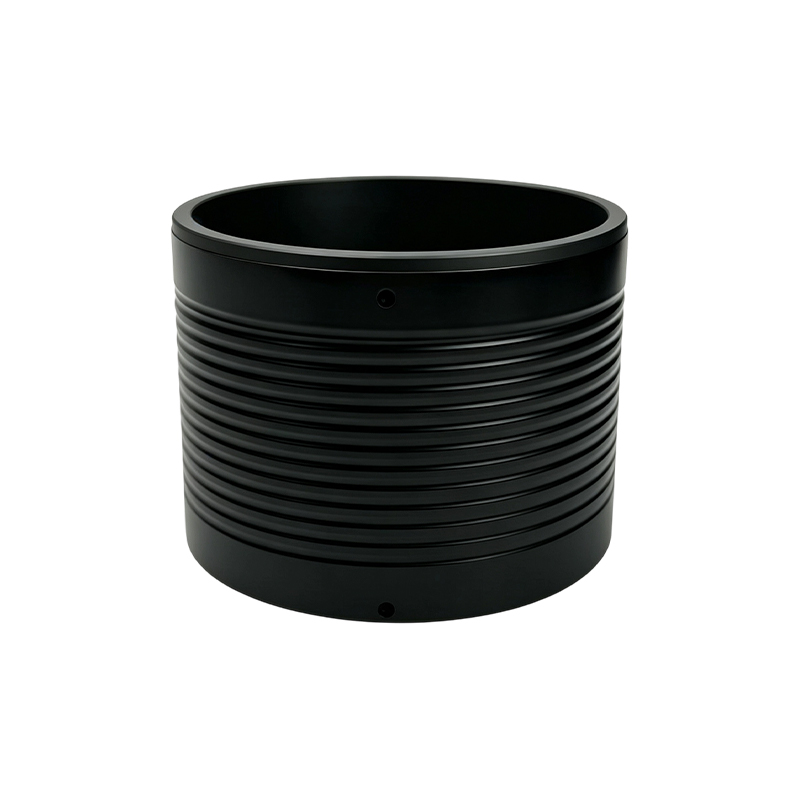
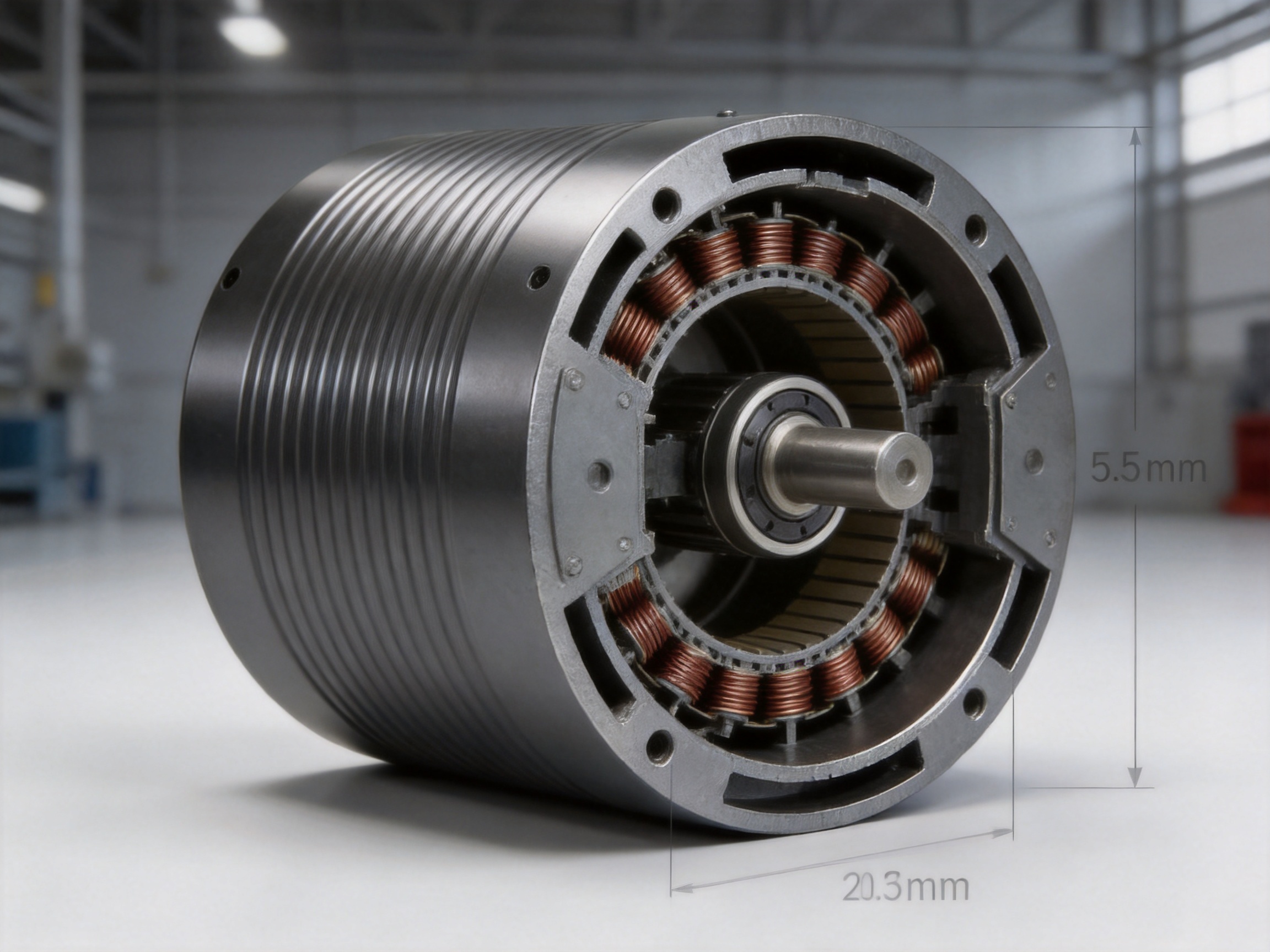
The Inner Diameter 113 Heavy-Wall Motor Housing is a steel tube motor housing designed for applications that require dependable structural rigidity, improved resistance to deformation, and enhanced thermal management. With an inner diameter of 113 mm, a height of 93 mm, an outer diameter of 124 mm, and a wall thickness of 5.5 mm, this housing provides a robust enclosure for internal motor components. Its heavy-wall construction offers a stronger protective barrier than thin-wall alternatives, while its dedicated external heat dissipation thread design increases the surface area available for cooling.
Manufactured from 20# steel, the housing combines practical material performance with suitability for stamping, forming, machining, welding, and surface treatment operations. The result is a component that can support both customized motor designs and repeatable mass production. It is suitable for motor systems used in household appliances, industrial drives, new energy equipment, special machinery, and other applications where compact dimensions must be combined with mechanical durability.
Jiangsu Yufeng Electric Co., Ltd. supports the production of this type of motor housing through integrated capabilities covering steel processing, stamping, welding assembly, machining, inspection, and finishing. This in-house production model enables better control over dimensional consistency, manufacturing coordination, quality assurance, and delivery response.
Inner Diameter 113 Heavy-Wall Motor Housing
1. Product Overview
The Inner Diameter 113 Heavy-Wall Motor Housing is a cylindrical steel enclosure engineered to support and protect the internal components of an electric motor. Its primary function is to maintain a stable mechanical environment for the stator, rotor, end covers, bearings, and associated electrical components. The housing also helps contain operating noise, resist external forces, and transfer heat away from the internal motor assembly.
The housing has an inner diameter of 113 mm and a height of 93 mm. These dimensions define the available internal installation space and the axial envelope of the component. An outer diameter of 124 mm and a wall thickness of 5.5 mm create a substantial steel wall capable of resisting deformation during assembly and service. The dimensional relationship between the internal and external diameters provides a practical balance between internal clearance, overall motor size, structural strength, and material utilization.
The product description identifies the component as ID113021. This designation can be used for product identification, technical communication, quotation management, production planning, and customer-specific project coordination. For applications requiring changes to the diameter, height, mounting features, surface treatment, or heat dissipation profile, the standard structure can serve as a basis for engineering evaluation and customization.
| Specification | Value | Engineering Significance |
|---|---|---|
| Product type | Steel tube motor housing | Provides a cylindrical protective and structural enclosure for motor assemblies |
| Product designation | ID113021 | Supports product identification and manufacturing communication |
| Inner diameter | 113 mm | Defines the internal installation space for motor components |
| Height | 93 mm | Defines the axial housing length and assembly envelope |
| Outer diameter | 124 mm | Determines the external dimensional envelope |
| Wall thickness | 5.5 mm | Improves rigidity, impact resistance, and dimensional stability |
| Material specification | 20# steel | Offers a practical combination of strength, workability, and production suitability |
| External design | Heat dissipation threads | Increases cooling surface area and promotes air movement around the housing |
Although the housing is compact compared with many industrial motor enclosures, the heavy-wall design gives it a substantial structural profile. The 5.5 mm wall thickness is especially valuable when the motor is exposed to vibration, impact, installation force, or repeated thermal cycling. Instead of functioning only as a cover, the housing acts as a load-bearing and heat-transfer component within the motor system.
2. Heavy-Wall Construction and Structural Advantages
A motor housing must maintain its shape throughout manufacturing, assembly, transportation, installation, and operation. Any significant distortion can affect the alignment of the stator and rotor, alter bearing seating conditions, create uneven air gaps, or increase vibration and noise. A heavy-wall steel construction helps reduce these risks by providing greater resistance to local buckling, denting, ovalization, and deformation under external force.
The 5.5 mm wall thickness gives the housing a strong mechanical foundation. Compared with a thinner tube made from similar material, the heavy-wall structure can better withstand clamping pressure, handling impacts, fixture loading, and assembly interference. It also provides additional stiffness around the cylindrical body, reducing the likelihood that the housing will lose its roundness during production or service.
Structural rigidity is particularly important in high-torque motors. Torque generated by the rotor is transferred through the motor assembly and ultimately interacts with the housing through the stator, bearings, end covers, and mounting interfaces. If the housing flexes excessively, the internal geometry may shift under load. This can result in greater vibration, inconsistent bearing loads, or localized stress in the motor assembly. A rigid housing helps keep the motor components in their intended positions.
The heavy-wall configuration also offers advantages during machining and secondary processing. A stable steel body can be clamped more securely, reducing movement during turning, drilling, facing, or precision finishing. It can provide sufficient material allowance for dimensional correction and feature creation while preserving the required mechanical strength. This is valuable for customers who require additional mounting holes, grooves, steps, bearing seats, or positioning features.
Another benefit is improved resistance to installation-related damage. During motor assembly, the housing may be exposed to pressing forces, fastening loads, alignment adjustments, and contact with production tools. A light-gauge enclosure may be more vulnerable to dents or permanent deformation. The 5.5 mm wall offers a more forgiving structure, helping preserve the cylindrical form throughout the assembly process.
For applications involving vibration, the housing must withstand not only a single impact but also the cumulative effect of repeated dynamic loads. Household appliances, industrial drives, pumps, fans, and special equipment can operate for extended periods with continuous or intermittent vibration. The heavy-wall steel body helps provide a stable enclosure that is less susceptible to fatigue-related distortion caused by ordinary operating conditions.
Dimensional stability under operating loads
Dimensional stability is one of the most important characteristics of a motor housing. The inner diameter determines the radial relationship between the housing and the stator assembly, while the height affects axial positioning and overall motor integration. Maintaining these dimensions helps support an even air gap, proper magnetic performance, smooth rotor rotation, and consistent bearing alignment.
The 113 mm inner diameter provides a defined internal reference for the motor design. When combined with accurate forming, machining, and inspection, it can support repeatable assembly across production batches. The 93 mm height provides a compact axial structure suitable for motors where installation space is limited but a robust enclosure is still required.
Because steel can experience dimensional changes during forming, welding, machining, and heat exposure, manufacturing control is essential. A company with integrated processing capabilities can coordinate these operations more effectively. Tooling, forming parameters, welding procedures, machining allowances, and inspection standards can be managed as part of a connected production process rather than as isolated activities.
3. Heat Dissipation Thread Design
Electric motors generate heat through winding resistance, magnetic losses, bearing friction, switching activity, and mechanical load. If this heat is not transferred away efficiently, the motor temperature can rise beyond the preferred operating range. Excessive temperature can accelerate insulation aging, reduce lubricant life, affect bearing performance, and shorten the service life of electrical components.
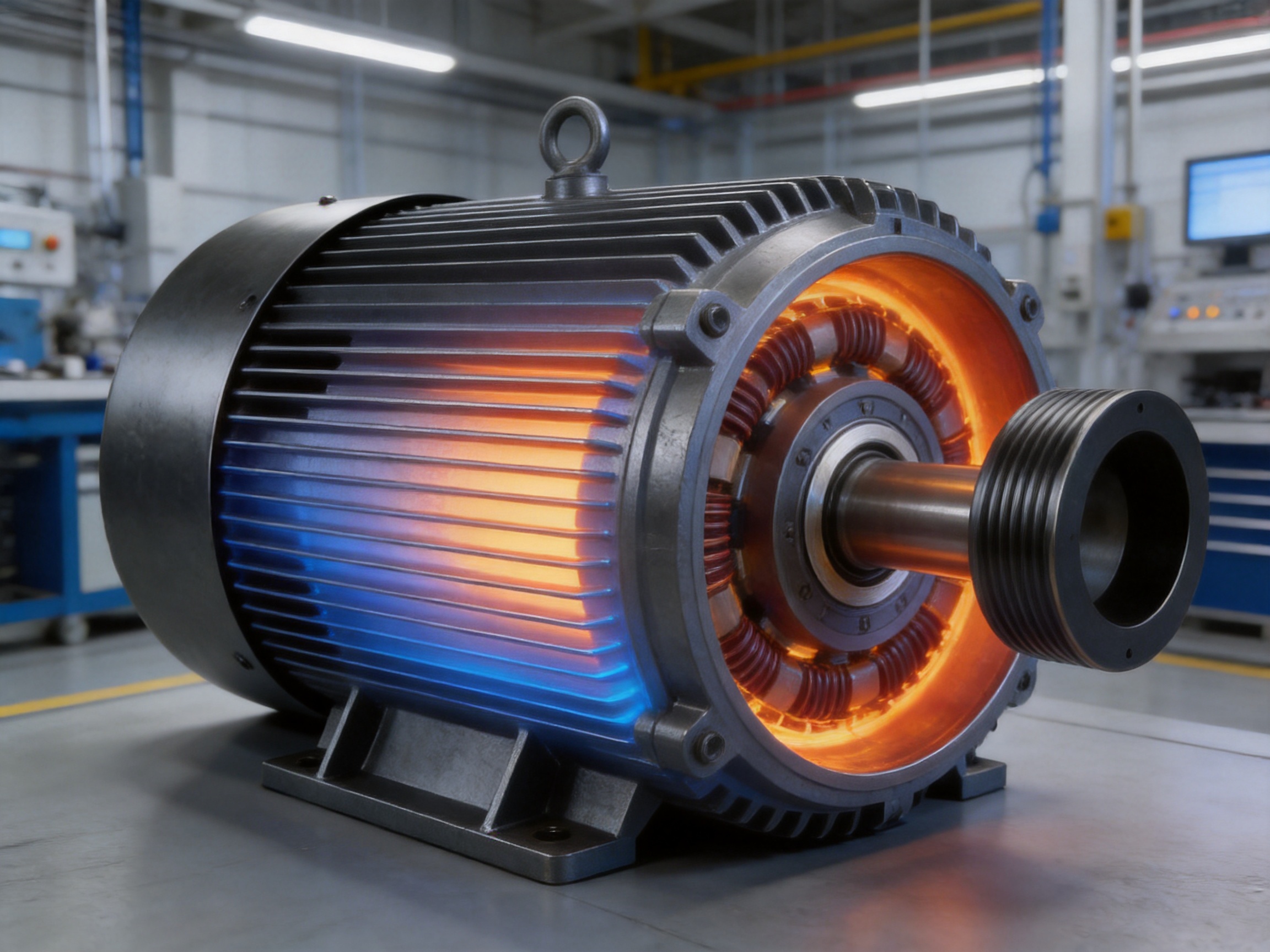
The exterior of this motor housing incorporates a dedicated heat dissipation thread design. These external threads increase the amount of steel surface exposed to the surrounding air. A larger effective surface area creates more opportunity for heat to move from the housing into the environment. This design can support natural cooling and may also improve the effectiveness of forced airflow when a fan or external ventilation system is used.
The thread grooves also form natural air guide channels along the exterior. As air moves around the motor, these channels can encourage flow across a greater portion of the housing surface. The result is a more active heat exchange interface than a smooth cylindrical surface of the same basic diameter. The grooves can help distribute airflow, reduce stagnant air zones, and promote more consistent heat transfer around the housing.
Improved heat dissipation does not replace correct motor design, electrical protection, ventilation, or load management. Instead, it complements these elements by helping the housing perform its role as a thermal pathway. Heat generated inside the motor can be conducted through the stator and housing wall, then released through the enlarged external surface. This can help reduce temperature rise during continuous operation.
Temperature control has a direct relationship with motor reliability. Insulation systems are generally sensitive to sustained high temperatures, and repeated overheating can accelerate deterioration. By supporting faster heat transfer, the threaded housing may help protect winding insulation and contribute to a longer continuous operating life when the motor is correctly designed and used within its rated conditions.
Advantages over smooth-wall housing designs
A smooth-wall housing is simple to manufacture and may be suitable for low-load or short-duration applications. However, its external surface offers fewer natural features for heat exchange. To achieve comparable cooling performance, a smooth housing may require a larger external diameter, additional cooling fins, a separate fan, or a more complex ventilation arrangement.
The heat dissipation thread design integrates the cooling function into the housing itself. This can reduce the need for separate external cooling components and may help maintain a compact motor envelope. It also offers a practical balance between thermal performance and manufacturability. The threaded exterior provides additional surface area without requiring a completely separate fin assembly.
Compared with lightweight housings, the heavy-wall threaded structure offers both thermal and mechanical advantages. The thick steel wall provides a stable conduction path, while the external profile increases the area available for heat release. Together, these features help the housing address two major motor design challenges: maintaining structural integrity and controlling operating temperature.
4. Material Selection: 20# Steel
The housing is manufactured from 20# steel, a commonly used low-carbon steel specification suitable for a wide range of formed and machined components. Its practical combination of strength, ductility, weldability, and process compatibility makes it appropriate for motor housing production where the material must support both structural performance and efficient manufacturing.
For a cylindrical housing, the material must tolerate forming forces without excessive cracking or surface damage. It must also support machining operations such as facing, boring, drilling, grooving, or dimensional correction. When welding is required for associated components, the material should be compatible with controlled welding procedures and subsequent inspection.
20# steel is also suitable for surface treatment and finishing processes selected according to the intended application. Depending on customer requirements, the finished housing may receive cleaning, coating, painting, plating, or other protective treatment. The appropriate finish depends on exposure conditions, corrosion requirements, appearance expectations, electrical integration, and cost targets.
Material selection should always be verified against the final application. Factors such as operating temperature, humidity, salt exposure, chemical contact, outdoor installation, and expected service life may require a specific surface treatment or an alternative material grade. Jiangsu Yufeng Electric can evaluate these requirements during product development and coordinate the corresponding manufacturing process.
Steel compared with alternative housing materials
Aluminum housings are often selected for their low weight and good thermal conductivity. They can be advantageous where weight reduction is the primary design objective. However, a steel housing can provide greater resistance to certain forms of impact, local deformation, and heavy mechanical loading. The appropriate choice depends on the balance between weight, strength, cost, thermal behavior, corrosion protection, and production requirements.
Plastic housings may provide electrical insulation, design flexibility, and low mass, but they can be more sensitive to temperature, creep, impact, and dimensional change under sustained load. For motors operating in demanding mechanical environments, a steel enclosure may offer a more dependable structural barrier.
Cast housings can integrate complex external shapes and mounting features, but they may involve different tooling, finishing, porosity, and dimensional control considerations. A steel tube housing can offer a more direct and efficient route for cylindrical motor designs, especially when the product requires a consistent wall profile and high resistance to impact.
The heavy-wall steel construction of this product is therefore particularly suitable for customers who prioritize ruggedness, stable geometry, and long-term mechanical reliability over the lowest possible enclosure weight.
5. Manufacturing Process and Quality Control
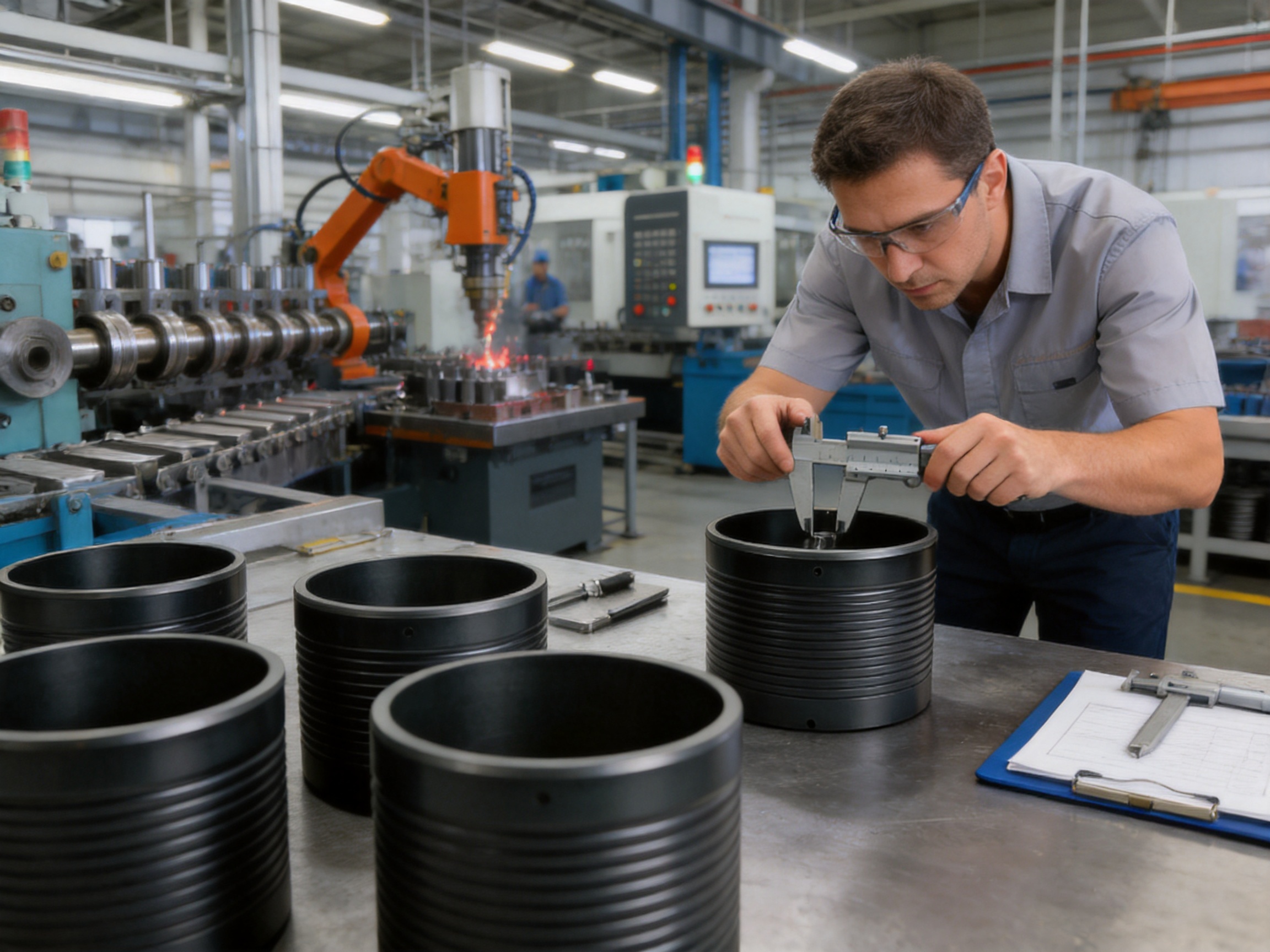
The quality of a motor housing depends not only on its design but also on the consistency of the manufacturing process. Dimensional accuracy, roundness, surface condition, wall thickness, thread profile, and feature position must be controlled from raw material preparation through final inspection. Jiangsu Yufeng Electric provides an integrated manufacturing structure covering stamping, welding assembly, machining, surface treatment, and inspection.
Raw material preparation
Production begins with the selection and preparation of steel that meets the required material specification. Incoming material control may include verification of dimensions, surface condition, identification, and documentation. Proper preparation helps ensure that the material enters the forming process with consistent characteristics.
Steel may be cut, leveled, cleaned, or otherwise prepared according to the selected production route. The objective is to establish a stable starting condition for forming and to reduce variation caused by irregular stock dimensions or surface contamination.
Forming and stamping
Stamping and forming operations shape the steel into the required cylindrical housing geometry. Production tooling must be designed to support the 113 mm inner diameter, 124 mm outer diameter, 93 mm height, and 5.5 mm wall thickness. Controlled forming parameters help reduce wrinkling, cracking, excessive springback, and dimensional distortion.
For mass production, tooling stability is essential. A properly maintained die and forming system can improve repeatability from one batch to the next. Process monitoring may focus on material positioning, forming force, component height, roundness, and surface quality. Consistent forming reduces the burden on later machining and improves overall production efficiency.
Welding assembly
Some motor housing configurations require welded components, mounting elements, end structures, reinforcement sections, or other attached parts. Automated welding equipment can improve repeatability by controlling welding speed, current, position, and sequence. A controlled welding process helps reduce inconsistent bead profiles, excessive spatter, burn-through, and heat-related distortion.
Welding sequence is especially important for cylindrical parts. Uneven heat input can cause the housing to lose roundness or shift from its intended position. Fixtures and automated equipment help stabilize the component during welding and maintain the required relationship between the housing body and attached features.
Machining and precision finishing
Machining is used to create or refine features that require tighter dimensional control than forming alone can provide. These may include end faces, internal diameters, mounting holes, locating steps, bearing-related surfaces, grooves, or customer-specific interfaces. Machining can also remove excess material and establish consistent reference surfaces for assembly.
A sufficiently rigid housing is beneficial during machining because it reduces workpiece movement and vibration. The heavy-wall construction provides a stable clamping base, allowing the process to achieve more consistent results. Production parameters can be adapted according to the required tolerance, material condition, tool selection, and surface finish.
Surface treatment and finishing
Surface treatment can improve corrosion resistance, appearance, cleanliness, or compatibility with the final motor assembly. The chosen treatment may vary according to the customer's operating environment. Indoor appliance applications may require a different finish from outdoor equipment, industrial machinery, or equipment exposed to moisture and chemical contamination.
Before finishing, the housing may undergo cleaning, deburring, edge treatment, and surface preparation. These steps help ensure that the final coating or treatment adheres properly and that the housing does not introduce sharp edges, loose particles, or contamination into the motor assembly.
Inspection and verification
Inspection is an essential part of the production system. Depending on the project, inspection may include checks of inner diameter, outer diameter, height, wall thickness, roundness, thread form, surface condition, weld integrity, and feature location. Measuring equipment and inspection procedures should be selected according to the dimensional and functional requirements of the product.
Process inspection can identify variation before a large quantity of parts is completed. Final inspection confirms that finished housings meet the agreed specifications before shipment. This combination of in-process and final control supports reliable delivery for both prototype development and high-volume production.
6. Competitive Advantages of the Product
The Inner Diameter 113 Heavy-Wall Motor Housing offers several advantages when compared with basic thin-wall steel tubes, smooth-wall housings, and less integrated manufacturing solutions.
Higher resistance to deformation
The 5.5 mm wall thickness provides greater structural support than many lightweight alternatives. This is beneficial during assembly, transportation, installation, and continuous operation. The housing is better prepared to resist dents, local distortion, vibration-related movement, and external impact.
Improved protection for internal components
A motor housing separates sensitive internal components from external hazards. The heavy-wall steel body provides a durable barrier against mechanical contact and operating vibration. It can also help protect the stator, winding system, and other parts from damage caused by handling or environmental exposure when combined with suitable finishing and sealing methods.
Enhanced heat exchange
The external thread design increases the available cooling surface and forms natural air channels. This is a functional improvement over a basic smooth cylindrical surface. Better heat exchange can help reduce temperature rise and support the service life of insulation, bearings, lubricants, and other motor components.
Compact but robust geometry
The 93 mm height and 124 mm outer diameter define a relatively compact external package, while the heavy-wall construction maintains a strong structural profile. This combination can help equipment designers fit a reliable motor into limited installation space without immediately resorting to a much larger enclosure.
Process compatibility
The 20# steel material supports a broad range of manufacturing operations, including forming, machining, welding, and surface treatment. This compatibility makes it easier to adapt the housing to different motor configurations and production volumes.
Integrated supplier capability
A supplier that manages stamping, welding, machining, finishing, assembly support, and inspection in-house can provide a more coordinated development process. Customers can reduce the need to manage multiple subcontractors and may benefit from faster technical communication, clearer accountability, and improved production scheduling.
Customization potential
Although the product has defined standard dimensions, motor housing projects frequently require application-specific changes. These may include mounting holes, cable openings, locating features, ventilation details, end-cover interfaces, coatings, labels, or special tolerances. The existing manufacturing platform can support engineering evaluation for such modifications.
7. Applications and Industry Suitability
The housing is suitable for a range of motor applications where mechanical strength and heat management are important. The final suitability depends on the complete motor design, load profile, environmental conditions, insulation system, speed, control method, and required service life.
Household appliances
Household appliances often require motors that operate quietly, efficiently, and reliably within compact spaces. Washing equipment, ventilation systems, refrigeration-related machinery, pumps, and other appliances may subject the motor to repeated starts, vibration, or continuous duty. A rigid housing can help preserve internal alignment, while the threaded exterior can support heat dissipation in enclosed equipment spaces.
Industrial drives
Industrial drive systems may operate under higher torque, longer duty cycles, and more demanding mechanical conditions than typical consumer products. The heavy-wall design can provide a stronger enclosure for motors used in conveyors, fans, pumps, material-handling equipment, and production machinery.
New energy equipment
New energy systems frequently use compact electric motors and auxiliary drives. Thermal management is important because equipment may operate for extended periods within enclosed or space-constrained installations. A housing that combines structural rigidity with an enlarged cooling surface can support the design objectives of these systems.
Special equipment
Special-purpose machinery may require customized motor dimensions, reinforced structures, or particular mounting interfaces. The standard 113 mm inner diameter platform can be evaluated for adaptation to different equipment layouts. Engineering coordination is important when the motor must meet special vibration, temperature, sealing, or installation requirements.
Pumps and fans
Pumps and fans can generate continuous vibration and may operate for long periods without interruption. The housing must therefore maintain its geometry while transferring heat away from the motor. The heavy-wall body and heat dissipation thread design are well aligned with these general requirements.
8. Engineering Considerations for Motor Designers
When integrating the housing into a motor assembly, designers should evaluate the complete dimensional chain rather than considering the housing as an isolated part. The 113 mm inner diameter should be matched with the stator outer diameter, insulation system, assembly method, and required clearance. The 93 mm height should be evaluated against the axial length of the stator and the interfaces of the end covers.
Designers should also confirm the relationship between the housing, bearings, rotor shaft, and air gap. Proper alignment is necessary for efficient electromagnetic performance and low vibration. Housing tolerances should be established according to the requirements of the complete assembly, including the capability of the customer's production line.
The external thread profile should be considered in relation to surrounding components. Adequate clearance may be needed for mounting brackets, guards, wiring, ventilation paths, and adjacent equipment. If the motor is installed inside a close-fitting enclosure, the cooling benefit of the external threads will depend on the available airflow and the distance between the housing and neighboring surfaces.
Thermal testing should be performed under representative load and environmental conditions. Designers may assess housing temperature, winding temperature, bearing temperature, continuous operating behavior, and temperature distribution across the external surface. The threaded design can contribute to cooling performance, but the result will depend on motor losses, airflow, ambient temperature, installation orientation, and duty cycle.
Corrosion protection should also be selected according to the operating environment. Indoor dry applications may require only basic finishing, while humid, outdoor, coastal, or chemically exposed environments may need enhanced coating or surface treatment. The finish should be compatible with assembly requirements and should not interfere with electrical grounding, sealing, or dimensional interfaces.
9. Customization and Project Support
Motor housing requirements vary significantly between industries and customers. Even when the basic inner diameter and height are fixed, customers may request changes to the outer profile, thread configuration, end geometry, mounting details, material treatment, or inspection standard. A manufacturer with engineering and production capabilities can evaluate these requirements before tooling or mass production begins.
Potential customization areas include inner diameter adjustments, alternative heights, modified outer diameters, additional mounting holes, locating grooves, cable passages, ventilation openings, end-face machining, welded brackets, and special surface treatments. The feasibility of each change depends on the required production volume, dimensional tolerances, motor design, and available tooling.
Technical communication is particularly important during the transition from drawing to production. Clear specifications should define critical dimensions, reference datums, tolerance requirements, material grade, surface finish, inspection methods, packaging expectations, and acceptance criteria. Early clarification reduces the risk of rework and helps ensure that the finished housing performs correctly in the intended motor assembly.
Jiangsu Yufeng Electric provides technical support from product development through mass production. Its engineering team has an average of more than 20 years of experience, supporting practical decision-making during design review, process planning, tooling development, sample production, and production ramp-up.
10. Production Capacity and Supplier Strength
Supplier capability is an important factor when selecting a motor housing manufacturer. A technically suitable sample is only the beginning of a successful project. The supplier must also be able to maintain quality during repeated production, respond to engineering changes, coordinate material supply, manage delivery schedules, and provide consistent technical communication.
Jiangsu Yufeng Electric has approximately 40 years of experience in motor housing manufacturing. The company has served more than 50 customers and has an annual production capacity of more than 5 million units. This experience provides a foundation for managing both standard products and customized motor housing programs.
Its production system integrates stamping lines, automated welding equipment, machining facilities, surface treatment capabilities, and inspection instruments. By keeping major operations within an integrated manufacturing structure, the company can coordinate process adjustments more efficiently than a supply chain that relies entirely on separate external vendors.
In-house production also improves traceability. Material preparation, forming, welding, machining, finishing, and inspection can be connected through internal procedures and production records. When an issue occurs, the responsible process can be investigated more directly, supporting corrective action and continuous improvement.
The company's focus on quality, efficiency, and fast response is relevant to customers who need stable supply and practical engineering support. For motor manufacturers, these factors can reduce project delays and improve confidence when moving from initial samples to recurring production.
11. Installation, Handling, and Maintenance Considerations
Proper handling helps preserve the dimensional accuracy and surface condition of the housing. Although the heavy-wall structure provides strong resistance to impact, finished components should still be protected from unnecessary dropping, stacking pressure, contamination, and contact with sharp objects. Protective packaging can reduce the risk of scratches, dents, and corrosion during storage and transportation.
During assembly, tools and fixtures should apply force to appropriate reference areas. Excessive point loading on the cylindrical wall may create local distortion even in a heavy-wall housing. Pressing, clamping, and alignment procedures should be selected according to the motor design and the tolerance requirements of the housing.
The external heat dissipation threads should remain free from excessive dirt, coating buildup, or obstruction. In equipment exposed to dust, fibers, oil mist, or other contaminants, periodic cleaning may help preserve airflow and heat exchange performance. Maintenance requirements will depend on the motor's operating environment and the accessibility of the installed housing.
Fasteners, brackets, and adjacent parts should be checked to ensure that they do not interfere with the threaded cooling surface. Unintended contact may reduce airflow or transmit excessive vibration into the housing. Installation instructions should identify the permitted mounting locations and any required clearance around the external profile.
12. Why Choose a Heavy-Wall Steel Tube Housing?
The correct housing design depends on the application, but a heavy-wall steel tube offers a compelling combination of strength, durability, manufacturability, and cost control. It is a practical choice when the motor must withstand vibration, impact, repeated operation, and thermal stress while maintaining a compact shape.
The Inner Diameter 113 Heavy-Wall Motor Housing goes beyond the basic function of enclosing motor components. Its dimensions create a stable installation space, its 5.5 mm wall supports mechanical rigidity, and its external threads contribute to heat dissipation. The use of 20# steel supports forming and machining, while the integrated manufacturing system helps deliver repeatable quality.
Compared with thin-wall alternatives, it provides a stronger barrier against deformation. Compared with smooth-wall designs, it offers a larger cooling surface. Compared with fragmented supply chains, integrated production can simplify communication and improve control of the manufacturing process. These combined benefits make it suitable for customers seeking a reliable and adaptable motor housing platform.
13. Frequently Asked Questions
What is the inner diameter of this motor housing?
The inner diameter is 113 mm. This dimension defines the primary internal installation space for the stator and associated motor components.
What are the overall height and outer diameter?
The housing height is 93 mm, and the outer diameter is 124 mm. These dimensions define the principal external installation envelope.
What is the wall thickness?
The wall thickness is 5.5 mm. This heavy-wall construction helps improve resistance to deformation, vibration, impact, and assembly-related loading.
What material is used?
The specified material is 20# steel. This material is suitable for forming, machining, welding, and surface treatment when the processing conditions are properly controlled.
How does the housing help with heat dissipation?
The external heat dissipation thread design increases the housing's effective surface area. The grooves also form natural air channels that can improve airflow and heat exchange around the motor exterior.
Is this housing suitable for continuous-duty motors?
It can be suitable for continuous-duty applications when the complete motor is correctly designed and operated within its rated electrical, mechanical, and thermal conditions. Thermal testing should be conducted for the final motor assembly.
Can the housing be customized?
Customization may be possible for dimensions, mounting features, machining details, surface treatment, thread configuration, and other requirements. Feasibility should be reviewed against the customer's drawings, performance requirements, tooling needs, and expected production volume.
What industries can use this housing?
Potential applications include household appliances, industrial drives, new energy equipment, pumps, fans, special machinery, and other motor-driven systems requiring a strong steel enclosure and effective heat management.
Does the heavy-wall structure increase motor weight?
A thicker steel wall can increase housing weight compared with a thin-wall or aluminum design. However, this additional material contributes to improved rigidity, impact resistance, and dimensional stability. The final choice should balance weight targets against mechanical and thermal requirements.
What manufacturing processes are available?
The manufacturing capabilities include stamping, welding assembly, machining, surface treatment, inspection, and related production support. These processes can be coordinated for standard products and customized motor housing programs.
How should the housing be evaluated before mass production?
Customers should review dimensional compatibility, material requirements, mounting interfaces, thread clearance, surface treatment, thermal performance, vibration behavior, and assembly fit. Prototype or pilot samples can be evaluated before production quantities are released.
How can customers request technical information?
Customers can contact Jiangsu Yufeng Electric Co., Ltd. to discuss drawings, application conditions, sample requirements, production volumes, customization options, and inspection standards. Technical details should be confirmed before final production approval.
14. Conclusion
The Inner Diameter 113 Heavy-Wall Motor Housing is a robust steel tube solution for motor applications that require structural reliability, dimensional stability, and improved heat dissipation. Its 113 mm inner diameter, 93 mm height, 124 mm outer diameter, and 5.5 mm wall thickness provide a strong and practical foundation for compact motor assemblies.
The product's most significant advantages are its heavy-wall resistance to deformation and its external heat dissipation thread design. The first supports mechanical protection and stable internal alignment. The second increases cooling surface area and promotes air movement along the housing exterior. Together, these features help address the mechanical and thermal challenges commonly encountered in high-load and continuous-operation motor systems.
Manufactured from 20# steel, the housing is compatible with forming, stamping, welding, machining, and surface treatment processes. Jiangsu Yufeng Electric's integrated production capabilities, experienced engineering team, inspection resources, and established production capacity support consistent delivery from development through mass production.
For customers seeking a durable, customizable, and production-ready motor housing, this heavy-wall steel design provides a strong balance between performance and manufacturability. It is a suitable platform for household appliances, industrial drives, new energy equipment, special machinery, pumps, fans, and other demanding motor applications.
References
1. Jiangsu Yufeng Electric Co., Ltd., Product Specification: Inner Diameter 113 Heavy-Wall Motor Housing, Product Designation ID113021.
2. Jiangsu Yufeng Electric Co., Ltd., Manufacturing Capability Overview: Stamping, Welding Assembly, Machining, Surface Treatment, and Inspection.
3. General principles of electric motor enclosure design, including structural rigidity, dimensional stability, vibration resistance, and thermal management.
4. General engineering guidance for low-carbon steel forming, machining, welding, corrosion protection, and industrial component inspection.
5. General motor reliability principles relating to temperature rise, winding insulation durability, bearing operation, and continuous-duty performance.

 Previous