

 English
 Español
Content
- 1 Product Overview and Main Design Purpose
- 2 Structural Strength for Demanding Motor Operation
- 3 Material Selection and Dimensional Consistency
- 4 Manufacturing Process: From Steel Sheet to Finished Housing
- 5 Corrosion Protection for Harsh Environments
- 6 Advantages Over Basic or Less Robust Motor Housing Designs
- 6.1 More Substantial Structural Design
- 6.2 Integrated Base Rather Than a Minimal Support Arrangement
- 6.3 Defined Mounting Geometry
- 6.4 Improved Environmental Protection
- 6.5 Coordinated In-House Manufacturing
- 6.6 Support for High-Volume Production
- 6.7 Engineering Experience from Development to Mass Production
- 7 Application Suitability
- 8 Customization and Engineering Collaboration
- 9 Quality, Reliability, and Production Efficiency
- 10 Installation and Use Considerations
- 11 Procurement Guidance for OEM Customers
- 12 Q&A
- 12.1 What is the inner diameter of this motor housing?
- 12.2 What is the outside diameter?
- 12.3 What is the height of the housing?
- 12.4 What material is used?
- 12.5 Does the product include a mounting base?
- 12.6 How strong is the welded base?
- 12.7 What surface treatment is used?
- 12.8 What salt spray performance is specified?
- 12.9 What applications are suitable for this housing?
- 12.10 Can the housing be customized?
- 12.11 What manufacturing capabilities does the supplier provide?
- 12.12 Why is in-house production valuable?
- 12.13 What should be checked before ordering?
- 13 Why This Housing Represents a Practical Long-Term Choice
- 14 Conclusion
- 15 References
- 16 Product: Inner Diameter 160 Steel Motor Housing With Base
Motor housing is a fundamental structural component in any electric motor. It protects internal components, supports accurate alignment, helps manage operating loads, and provides the mounting interface between the motor and the equipment that drives or receives power from it. When a motor operates under high torque, vibration, repeated impact, moisture, or corrosive environmental conditions, the housing must do much more than simply enclose the stator and rotor. It must maintain dimensional stability, resist deformation, secure the mounting structure, and continue performing reliably throughout the service life of the complete motor assembly.
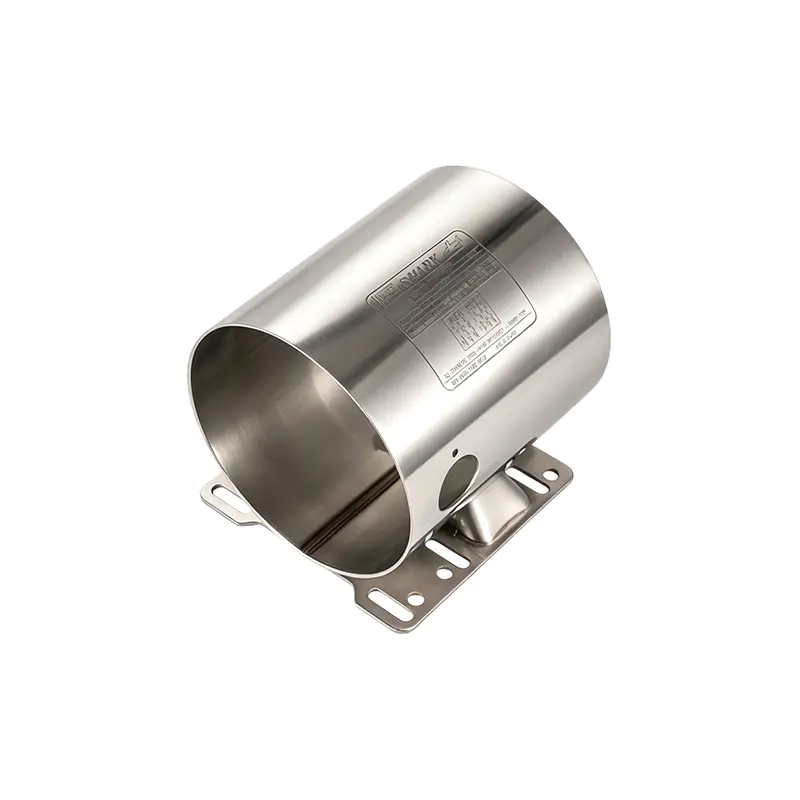
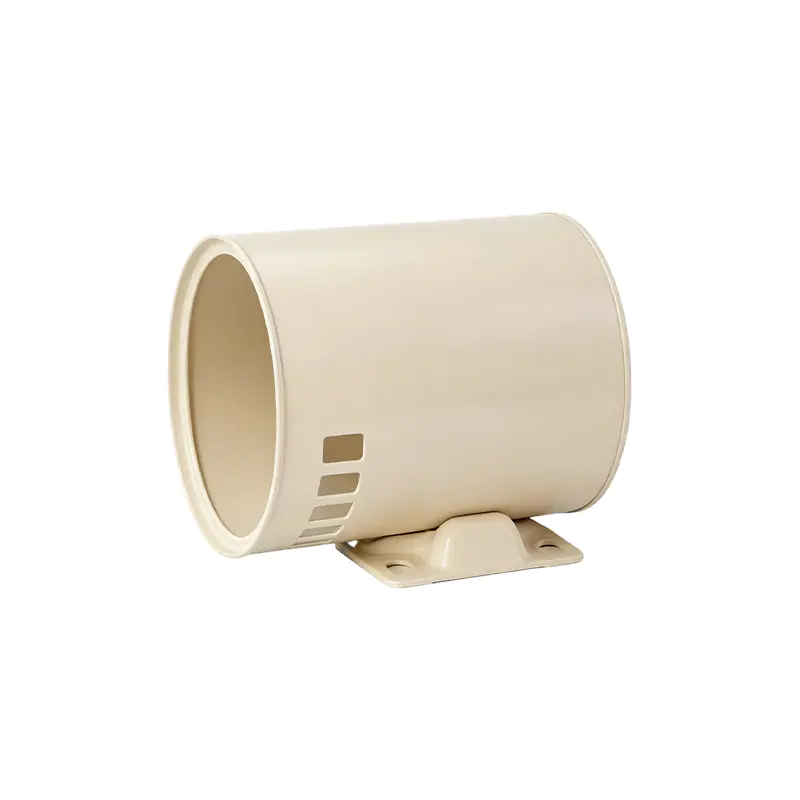
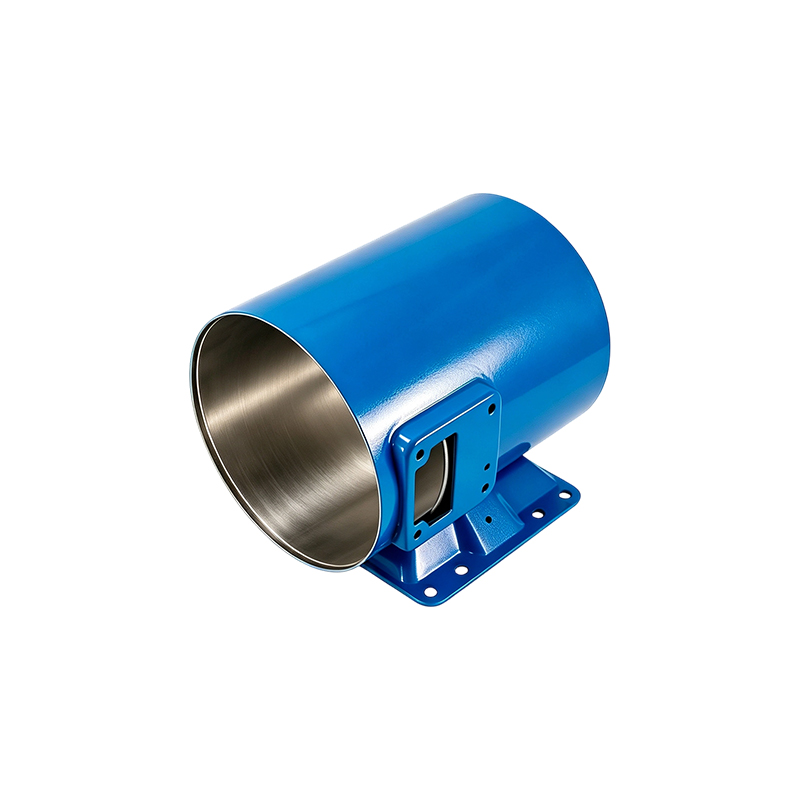
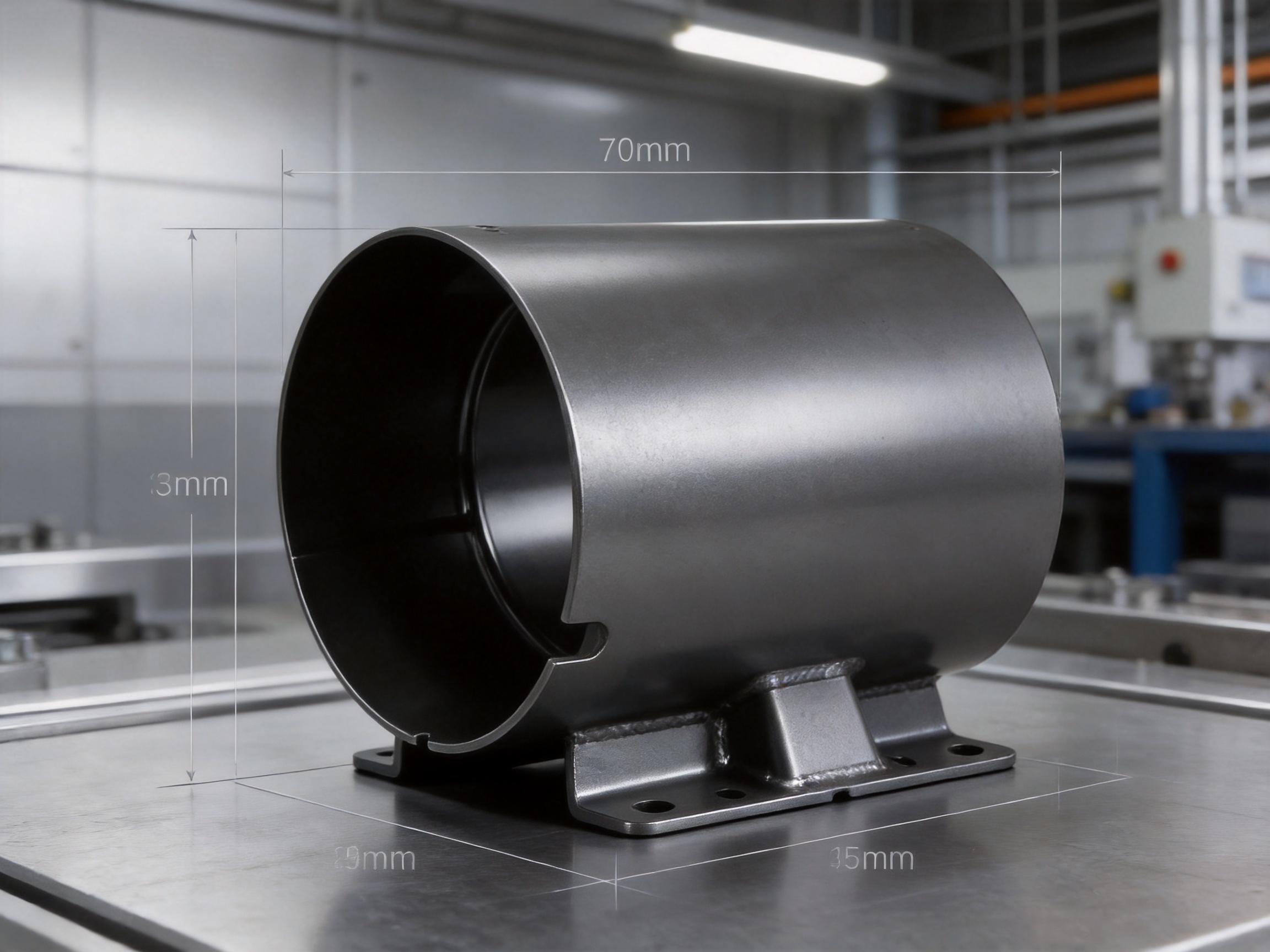
The Inner Diameter 160 Steel Motor Housing with Base is designed for applications that require a combination of structural strength, reliable mounting, corrosion protection, and production consistency. Identified by product description ID160010, this housing has a 160 mm inner diameter, a 203 mm height, a 2 mm wall thickness, and a 164 mm outside diameter. Its integrated welded base has a center distance of 88.9 mm, providing a practical and stable mounting arrangement for motors used in industrial equipment, sports equipment, and other demanding applications.
Unlike a basic thin-wall enclosure, this product is developed as a reinforced motor housing solution. Its steel construction provides a strong foundation for motor assembly, while the welded base helps transfer operating loads into the supporting structure. The combination of carefully selected steel material, controlled forming, high-standard welding, machining capability, inspection, and powder coating creates a component intended for reliable performance in demanding working environments.
This article examines the product’s construction, dimensions, manufacturing advantages, surface protection, mounting performance, application suitability, and the production strengths of Jiangsu Yufeng Electric Co., Ltd. It also explains why a purpose-built steel housing can offer important advantages over less robust alternatives when the application involves high power, high torque, vibration, impact, or harsh environmental exposure.
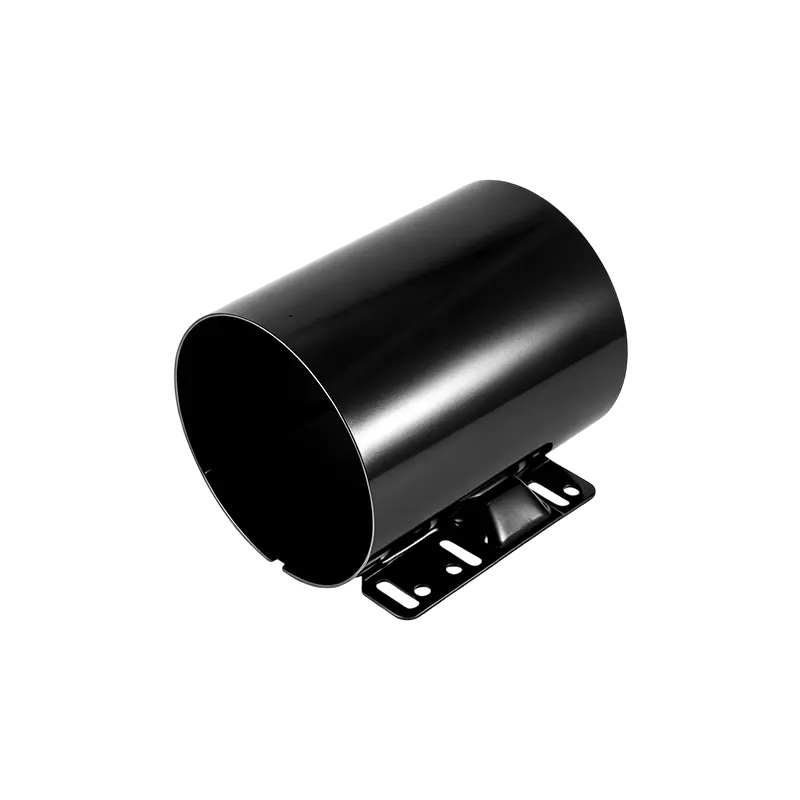
Inner Diameter 160 Steel Motor Housing With Base
Product Overview and Main Design Purpose
The primary purpose of the Inner Diameter 160 Steel Motor Housing with Base is to provide a rigid and durable enclosure for a motor assembly while also offering a dependable external mounting structure. The housing is formed from steel specified as SPCC, ST12, or DC01, material designations commonly associated with cold-rolled low-carbon steel used for formed and fabricated components. These materials can provide a useful combination of formability, consistency, surface quality, and structural performance when processed correctly.
The 160 mm inner diameter is the defining dimensional feature of the product. This internal dimension establishes the available space for the motor’s active and supporting components, including the stator assembly and associated insulation or fitment requirements. A controlled inner diameter is important because excessive clearance may reduce assembly accuracy, while insufficient clearance can create installation difficulties or unwanted interference. Dimensional control during stamping, forming, welding, and finishing is therefore essential to producing a housing that integrates smoothly into the customer’s motor design.
The housing height is 203 mm. This dimension determines the axial enclosure length and influences the amount of internal motor assembly that can be accommodated. In combination with the inner diameter, it provides the basic envelope for the motor structure. The 2 mm wall thickness is intended to balance material efficiency with practical rigidity. It is thick enough to create a more substantial enclosure than a lightweight sheet-metal cover while remaining suitable for efficient forming and production at scale.
The outside diameter is listed as 164 mm. The difference between the 160 mm inner diameter and the 164 mm outside diameter corresponds to a nominal wall thickness of 2 mm, confirming the consistency of the dimensional design. Maintaining this relationship throughout production is important for assembly fit, structural balance, and repeatability between batches.
A welded base is integrated into the bottom of the housing. This feature distinguishes the product from cylindrical housings that require a separate mounting bracket or an additional support frame. By incorporating the base into the housing assembly, the design can reduce the number of separate components, simplify installation, and provide a direct load path from the motor body to the mounting surface.
Key Technical Specifications
| Specification | Value | Functional Significance |
|---|---|---|
| Product type | Steel motor housing with base | Provides enclosure and integrated mounting support |
| Product description | ID160010 | Product identification for quotation and production reference |
| Inner diameter | 160 mm | Defines the internal motor assembly space |
| Outside diameter | 164 mm | Establishes the external cylindrical envelope |
| Height | 203 mm | Defines the axial housing dimension |
| Wall thickness | 2 mm | Supports rigidity while enabling efficient fabrication |
| Material specification | SPCC/ST12/DC01 | Cold-rolled steel options for formed and fabricated components |
| Base center distance | 88.9 mm | Supports compatibility with the intended mounting arrangement |
| Surface treatment | Powder coating | Provides adhesion, impact resistance, and corrosion protection |
These dimensions provide a clear starting point for motor designers, equipment manufacturers, and purchasing teams evaluating compatibility. Before production, customers should confirm all interface details, including mounting-hole dimensions, shaft centerline requirements, internal clearances, tolerances, electrical insulation arrangements, and any special machining or coating specifications.
Structural Strength for Demanding Motor Operation
Motor housings are exposed to a combination of static and dynamic forces. Static forces may include the weight of the motor, attached equipment, and mounting hardware. Dynamic forces can result from starting torque, stopping torque, rotating imbalance, vibration, belt tension, gear loads, shock, and repeated changes in operating speed. A housing that is adequate under light-duty conditions may not provide sufficient stability when the motor is used in a high-power or high-cycle application.
The 2 mm steel wall of this housing provides a stronger structural basis than many lightweight enclosures. Steel offers useful resistance to localized impact and deformation, especially when the housing geometry is properly formed and supported. The cylindrical body also contributes to rigidity because curved sheet structures can distribute certain loads more effectively than flat unsupported panels.
Structural performance does not depend on wall thickness alone. The quality of forming, the roundness of the body, the accuracy of the end features, the connection between the cylinder and base, and the consistency of the weld all contribute to the behavior of the finished housing. A well-controlled manufacturing process can therefore produce a more reliable result than simply increasing material thickness without controlling geometry or joining quality.
The integrated base is particularly important in applications where the motor is subjected to high torque. Torque creates a reaction force that must be transferred through the housing and mounting feet into the machine frame. If the base is weak, poorly aligned, or inadequately attached, the motor may move, vibrate, or gradually loosen during operation. Such movement can place additional stress on bearings, couplings, fasteners, cables, and connected equipment.
According to the product specification, the base is welded using high-standard welding technology and has a tensile strength exceeding 2,000 kg of force. This stated capability indicates that the base is intended to withstand substantial tensile and impact loading. The exact suitability of the housing should always be assessed against the customer’s actual load cases, but the specification demonstrates a clear focus on robust base attachment rather than minimal-cost construction.
Advantages of the Integrated Welded Base
The welded base provides several practical advantages over a housing that relies on a loosely attached or separately supplied support bracket. First, the base is produced as part of the housing assembly, allowing the manufacturer to control its position and attachment during production. Second, a welded joint can create a continuous and rigid connection when the joint design, welding parameters, and inspection procedures are properly managed. Third, an integrated base can reduce assembly time for the customer because fewer components need to be positioned and fastened during motor production.
The base center distance of 88.9 mm gives the customer a defined mounting reference. Consistent center distance is important because mounting misalignment can make installation difficult or introduce stress into the motor frame. A repeatable base position also helps the housing integrate into standardized equipment platforms, test fixtures, and production lines.
For motors used in sports equipment, the base can help maintain stable attachment during repeated acceleration, deceleration, vibration, and user-generated impact. For industrial motors, it can provide a firmer interface with machinery frames, pumps, fans, conveyors, or other driven equipment. In both cases, the value of the base is not only its nominal strength but also its ability to maintain alignment and resist loosening throughout repeated operation.
Material Selection and Dimensional Consistency
The listed material specifications are SPCC, ST12, and DC01. These designations represent commonly used low-carbon cold-rolled steel grades in different standards and supply systems. The selection of an appropriate steel grade affects forming behavior, weldability, surface quality, dimensional stability, and coating performance. For a motor housing, the material must be sufficiently formable to create the cylindrical body and base-related features while retaining adequate strength after fabrication.
Cold-rolled steel is often selected for housings because it can provide a relatively smooth surface, predictable thickness, and suitable dimensional control. These qualities support the subsequent powder coating process. A clean and consistent steel surface can improve coating adhesion, reduce visual defects, and contribute to more uniform protection across the housing.
Material control begins before production. A professional manufacturer should identify the required material grade, thickness, supplier documentation, and batch information. Material receiving inspection can help confirm that the incoming steel is consistent with the design requirements. During production, the manufacturer can monitor forming behavior and adjust tooling or process parameters if variations are detected.
Dimensional consistency is equally important. The stated dimensions of 160 mm inner diameter, 164 mm outside diameter, and 203 mm height establish the main geometry, but practical production also requires control of roundness, straightness, end-face condition, base position, weld distortion, and hole location. Even when the nominal dimensions are correct, excessive distortion can affect stator insertion, bearing alignment, or final motor assembly.
Why Dimensional Control Matters in Motor Housing Production
The motor housing is part of a precision assembly. The stator must be positioned correctly within the housing, and the rotor must maintain the intended air gap relative to the stator. If the housing is not sufficiently round or if its axis is not aligned with the rest of the motor, the air gap may vary. This can influence noise, vibration, efficiency, heat generation, and bearing loading.
Accurate housing dimensions also support efficient assembly. A housing that consistently meets specification can move through production with fewer manual corrections. This helps reduce rework, shorten assembly time, and improve the predictability of the finished motor. For customers purchasing large quantities, dimensional repeatability can be just as important as the performance of an individual sample.
A manufacturer with stamping, welding, machining, assembly, and inspection capabilities under one organization can coordinate these stages more effectively. Feedback from final assembly and inspection can be used to improve earlier forming and welding operations. This integrated approach can be more efficient than distributing the housing across multiple unrelated suppliers with limited process communication.
Manufacturing Process: From Steel Sheet to Finished Housing
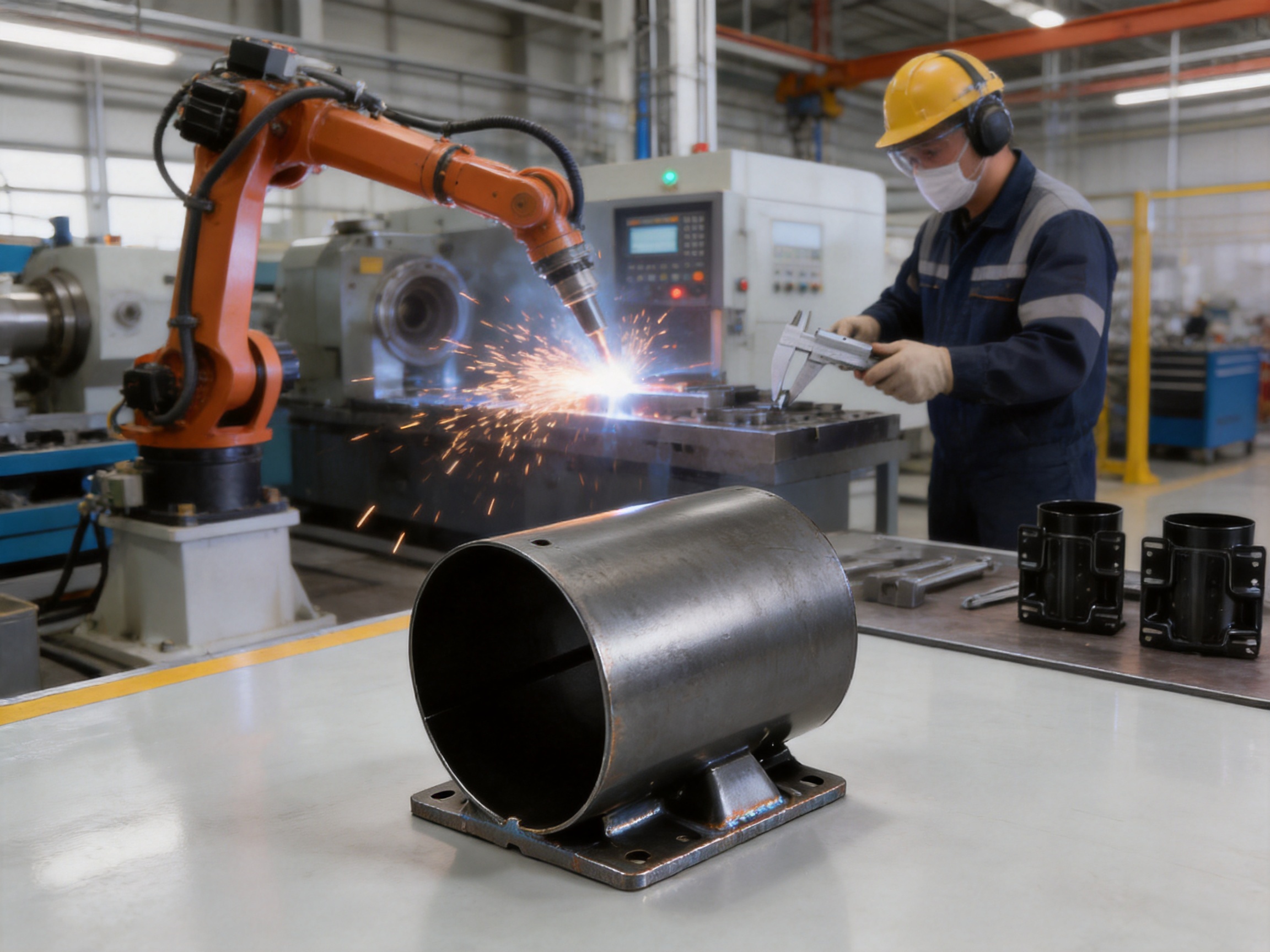
The manufacturing process for a steel motor housing typically involves multiple controlled stages. Each stage affects the performance of the final component. Jiangsu Yufeng Electric is described as having in-house capabilities covering stamping, welding assembly, machining, surface treatment, and inspection. This full-process structure is an important advantage for customers seeking coordinated production and consistent quality.
Material Preparation
Production begins with the preparation of suitable steel sheet. The material is inspected, cut, and organized according to the housing design. Proper material preparation helps minimize dimensional variation and supports efficient use of the steel. It also enables the production team to identify surface defects, burrs, or inconsistencies before forming begins.
Stamping and Forming
Stamping and forming operations create the basic housing geometry. Depending on the specific tooling arrangement, the steel may be blanked, rolled, drawn, bent, or formed into a cylindrical body. The tooling must be designed to achieve the required diameter and height without creating excessive wrinkling, cracking, springback, or distortion.
Controlled forming is especially important for a housing with a 160 mm inner diameter. The final motor assembly depends on a stable internal cylindrical surface. Process engineers may evaluate material behavior, tooling clearance, forming force, and springback compensation to achieve repeatable results. Properly maintained stamping equipment can also support high-volume production while maintaining consistent dimensions.
Welding Assembly
After forming, the housing body and base are joined through welding. The welding process must provide sufficient penetration and joint strength while controlling heat input and distortion. Excessive heat can affect roundness or create localized deformation, while insufficient heat can produce a weak or incomplete joint.
Automated welding equipment can improve repeatability by controlling torch movement, welding speed, current, voltage, and positioning. Skilled technicians and engineers remain important because welding fixtures, joint preparation, part fit-up, and inspection all influence the final result. A reliable process combines automation with appropriate human supervision and verification.
The welded base is one of the product’s key performance features. Its connection must resist tensile forces, impact, vibration, and torque reaction. The stated tensile strength exceeding 2,000 kg of force reflects the intended robustness of this joint. In production, the manufacturer may use fixture control, visual inspection, dimensional checks, and other quality methods to ensure that the base is correctly positioned and securely attached.
Machining and Finishing Operations
Some motor housing applications require machining after welding. Machining may be used to improve the accuracy of mounting surfaces, holes, locating features, end faces, or other interfaces. Post-weld machining can help compensate for minor fabrication variation and establish the final reference surfaces required by the motor assembly.
Machining also provides flexibility for customer-specific requirements. Although the standard product includes the listed dimensions and base center distance, different motor designs may require additional holes, grooves, locating steps, or tolerance adjustments. A manufacturer with internal machining capabilities can evaluate such requirements and incorporate them into the production plan more efficiently.
Inspection and Quality Verification
Inspection should be performed throughout the manufacturing process rather than only at the end. Incoming material inspection helps verify the steel. In-process checks can monitor diameter, height, base position, weld appearance, and part distortion. Final inspection confirms that the completed housing meets the agreed technical requirements before shipment.
Inspection instruments are particularly valuable when production volumes are high. Jiangsu Yufeng Electric is described as having inspection instruments supporting its manufacturing operation. A structured inspection system can help identify process trends, reduce variation, and provide customers with greater confidence in batch consistency.
Powder Coating
After fabrication and inspection, the housing receives powder coating. The coating process normally includes surface preparation, powder application, and curing. Surface preparation is essential because oil, dust, scale, moisture, and other contaminants can reduce adhesion. Proper curing allows the powder to form a durable protective film.
The product specification emphasizes strong adhesion, impact resistance, and aging resistance. It is also described as capable of meeting at least 500 hours of salt spray test requirements. This performance level is significant for a steel component because the coating forms the primary barrier between the steel substrate and moisture or corrosive contaminants.
Corrosion Protection for Harsh Environments
Motor housings are often used in environments where moisture, condensation, salt, cleaning chemicals, airborne contaminants, or temperature changes may accelerate corrosion. Corrosion can weaken the housing, damage mounting surfaces, create unsightly surface deterioration, and eventually affect the reliability of the motor assembly. A durable surface treatment is therefore an important part of the product design rather than a purely cosmetic feature.
Powder coating provides a continuous protective layer over the steel surface when applied correctly. Compared with an untreated or lightly painted surface, a properly cured powder coating can provide improved resistance to impact, abrasion, aging, and environmental exposure. It can also create a more consistent finish over the cylindrical body and welded base.
The stated salt spray performance of at least 500 hours indicates that the coating system is intended for meaningful corrosion resistance. Salt spray testing is a comparative laboratory method used to evaluate how a coated sample withstands a controlled corrosive atmosphere. Actual field performance depends on many factors, including coating thickness, surface preparation, edge coverage, weld condition, mechanical damage, humidity, temperature, chemical exposure, and maintenance. Nevertheless, the stated test requirement provides a useful quality reference for product selection.
Corrosion protection is especially valuable for outdoor equipment, industrial workshops, coastal regions, sports equipment exposed to perspiration or cleaning fluids, and machinery installed in humid locations. It may also help reduce maintenance requirements by delaying the appearance of rust and preserving the condition of mounting interfaces.
Coating Benefits Compared with Uncoated Steel
An uncoated steel housing may be suitable for a controlled indoor environment, but it is more vulnerable to surface rust when exposed to moisture or salts. Rust at the base or around welds can be especially undesirable because these areas may experience concentrated loads and mechanical contact. Powder coating creates an additional barrier that helps protect these vulnerable areas, provided the coating process reaches them effectively.
Compared with a basic liquid paint process, powder coating can offer strong adhesion and a durable finish when the substrate is properly prepared and the powder is correctly cured. It also supports a clean, uniform appearance that can be valuable for equipment manufacturers seeking consistent product presentation.
Advantages Over Basic or Less Robust Motor Housing Designs
When evaluating motor housings, competitors may offer products with similar general dimensions but important differences in material thickness, base construction, joining method, surface protection, or manufacturing control. The Inner Diameter 160 Steel Motor Housing with Base offers several advantages for customers whose applications prioritize reliability and structural performance.
More Substantial Structural Design
A 2 mm steel wall provides a practical balance between weight and rigidity. Very thin housings may reduce initial material cost, but they can be more susceptible to denting, deformation, vibration, and damage during transport or installation. A more substantial wall can provide better protection for the internal motor components and a stronger platform for mounting-related loads.
Integrated Base Rather Than a Minimal Support Arrangement
The welded base is designed to be an integral part of the housing. This can be more dependable than relying on a loosely fitted bracket or a support arrangement that requires numerous additional components. The stated tensile strength exceeding 2,000 kg of force demonstrates that the base connection is engineered with high-load conditions in mind.
Defined Mounting Geometry
The 88.9 mm base center distance provides a clear reference for equipment integration. Repeatable mounting geometry simplifies fixture design and helps reduce installation adjustments. A consistent base position also supports better alignment between the motor and driven equipment.
Improved Environmental Protection
The powder-coated surface is intended to resist impact, aging, moisture, salt spray, and corrosion. This gives the product an advantage over untreated steel or products using a less durable surface finish, especially in humid or contaminated environments.
Coordinated In-House Manufacturing
Jiangsu Yufeng Electric integrates stamping, welding assembly, machining, inspection, and surface treatment. Coordinating these processes within one manufacturing organization can reduce communication gaps and improve production traceability. It can also make it easier to implement design changes, manage quality feedback, and respond to customer-specific requirements.
Support for High-Volume Production
The company reports an annual production capacity of more than 5 million units and experience serving more than 50 customers. This production background suggests familiarity with repeat orders, process standardization, delivery planning, and quality consistency. High-volume capability is valuable for customers who need a stable supply of motor housings rather than occasional prototype quantities only.
Engineering Experience from Development to Mass Production
The company’s engineering team is described as having an average of more than 20 years of experience. This type of experience can support practical design review, manufacturability analysis, tooling decisions, welding evaluation, tolerance planning, and production problem-solving. A supplier that can participate from product development through mass production may help customers avoid avoidable design and process issues.
Application Suitability
The Inner Diameter 160 Steel Motor Housing with Base is particularly suited to motor applications that need a strong enclosure and reliable mounting interface. Its dimensions should be matched to the customer’s motor design, but the overall construction makes it relevant to several categories of equipment.
High-Power Industrial Motors
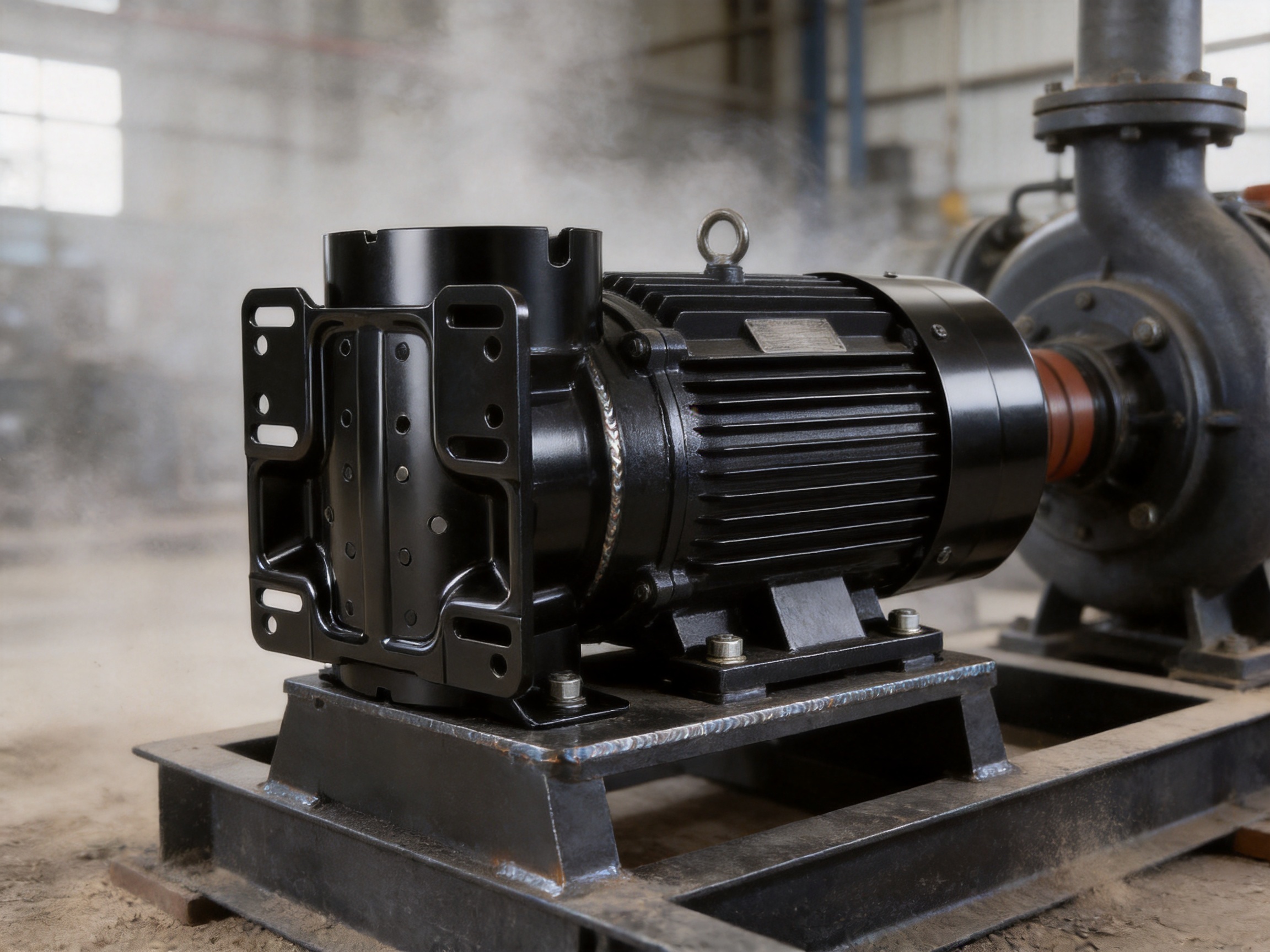
Industrial motors can operate for long periods under demanding load conditions. Pumps, fans, conveyors, compressors, machine tools, and processing equipment may expose the motor to vibration, torque reaction, heat, dust, and repeated starting cycles. A rigid housing with a firmly welded base can help provide stable support and reduce the risk of structural movement.
In industrial installations, the housing may also be exposed to lubricants, cleaning agents, humidity, and airborne particles. The powder-coated surface can provide an additional level of protection against environmental deterioration. Customers should still select the coating system according to the actual chemical and temperature conditions of the installation.
Sports Equipment Motors
Sports equipment motors may experience frequent speed changes, repeated user cycles, vibration, and impact. Exercise machines, training systems, and other powered equipment can require a compact motor enclosure that remains securely attached during repetitive operation. The integrated base and steel construction can support a stable installation while the coated surface helps protect the component from moisture and regular cleaning.
Special Equipment
Special-purpose equipment often has unique space, mounting, and environmental requirements. A standard 160 mm inner diameter housing can serve as a starting point for integration, while machining and manufacturing customization may allow additional features to be added. Customers can discuss hole patterns, surface requirements, tolerances, and assembly details with the manufacturer during the engineering stage.
Equipment Used in Humid or Salt-Exposed Areas
Coastal facilities, outdoor machinery, agricultural equipment, and certain food or cleaning environments may expose motor housings to moisture and salt. The powder coating and welded steel construction are beneficial in these conditions, although installation design should also prevent water accumulation and protect damaged coating areas.
Customization and Engineering Collaboration
Motor housings are rarely isolated components. They must work with stators, rotors, end covers, bearings, fans, terminal boxes, mounting frames, and electrical systems. For this reason, successful procurement depends on technical communication between the housing manufacturer and the motor designer.
Potential customization areas may include inner diameter tolerance, height, wall thickness, mounting-hole size, base center distance, base shape, welded features, machined reference surfaces, coating color, coating thickness, and packaging. Some applications may need ventilation openings, cable passages, locating steps, or additional reinforcement. The feasibility of each modification should be reviewed against tooling, production volume, structural requirements, and cost.
Early engineering collaboration can help confirm whether the housing will accommodate the stator and insulation system, whether the base can withstand the expected torque reaction, and whether the coating will be compatible with the operating environment. It can also help establish inspection criteria before mass production begins.
A supplier with in-house stamping, welding, machining, assembly, and finishing can support a more complete evaluation. Instead of treating each operation as an isolated service, the manufacturer can consider how a change in one process affects later operations. For example, a change in wall thickness may influence forming force, weld distortion, machining allowance, and coating coverage. Integrated process knowledge helps reduce unintended consequences.
Quality, Reliability, and Production Efficiency
Reliability is created through the combination of design, material, process control, and verification. A strong steel grade alone cannot compensate for poor welding. A durable coating cannot correct a housing that is badly distorted. A precise diameter is not sufficient if the mounting base is weak. The value of this product lies in the way these elements are combined.
Production efficiency is also important for customers. Efficient stamping reduces material waste and supports competitive pricing. Automated welding can improve repeatability and throughput. Machining capability can reduce dependence on external suppliers. In-house surface treatment can shorten the production chain and provide better control over the final finish. Coordinated inspection can identify problems earlier, reducing the risk of defective parts reaching the assembly line.
Jiangsu Yufeng Electric’s reported annual capacity of more than 5 million units indicates that its facilities are organized to support significant production volumes. Its stated 40 years of experience in motor housing manufacturing also suggests a long-term understanding of the practical requirements associated with formed steel components, welded assemblies, and motor integration.
For a customer, supplier reliability includes more than product quality. It also includes communication speed, engineering support, production scheduling, response to nonconformities, packaging quality, and the ability to maintain supply during demand changes. A company focused on fast response and full-process manufacturing can provide value across the entire procurement relationship.
Installation and Use Considerations
Before installing the housing into a motor assembly, the customer should verify that the internal diameter, height, wall thickness, and end conditions match the motor design. The stator and any insulation components should fit without forced interference. Clearance should also be checked under expected thermal expansion conditions.
The mounting base should be installed on a sufficiently rigid and level support surface. Uneven mounting can cause the housing to twist or place additional stress on the base and fasteners. The mounting bolts should be selected according to the motor weight, torque reaction, vibration level, and applicable equipment standards. Proper tightening procedures are important to prevent loosening during operation.
Customers should inspect the powder-coated surface after transport and installation. Scratches, cuts, or exposed steel should be repaired using a suitable corrosion-protection method. The coating should not be treated as a substitute for good drainage, proper sealing, or routine maintenance. Water and chemicals should not be allowed to collect around the base or welds for extended periods.
During commissioning, operators should check for abnormal vibration, movement, noise, or heating. If the motor is coupled to another machine, shaft alignment and coupling condition should be verified. Excessive vibration may arise from the motor, driven equipment, bearing system, foundation, or installation alignment, so early inspection can help prevent damage to the housing and other components.
Procurement Guidance for OEM Customers
OEM customers evaluating this housing should provide a complete technical package whenever possible. Useful information includes the motor drawing, stator dimensions, rotor air-gap requirements, mounting pattern, operating speed, rated power, starting torque, maximum torque, vibration conditions, environmental exposure, coating expectations, annual demand, and packaging requirements.
The product’s standard dimensions provide a defined starting point, but the actual fit should be confirmed against the complete motor assembly. The 160 mm inner diameter and 203 mm height may be suitable for a specific design, but tolerances and interface features must be reviewed before release to production.
Customers should also discuss sampling and approval procedures. A first-article sample can be measured and assembled before mass production. Functional checks may include stator insertion, base installation, dimensional inspection, weld evaluation, coating inspection, and trial motor assembly. Establishing acceptance criteria in advance helps prevent disagreements during delivery.
For repeat production, customers may request batch inspection records, material certificates, coating test results, dimensional reports, or other documentation according to their quality system. The appropriate documentation level depends on the application’s risk, regulatory requirements, and production volume.
Q&A
What is the inner diameter of this motor housing?
The inner diameter is 160 mm. This dimension defines the primary internal space available for the motor assembly and should be confirmed against the customer’s stator, insulation, and clearance requirements.
What is the outside diameter?
The listed outside diameter is 164 mm. Together with the 160 mm inner diameter, this corresponds to a nominal 2 mm wall thickness.
What is the height of the housing?
The housing height is 203 mm. The usable internal assembly length should be verified against the customer’s complete motor design and any end-cover or locating requirements.
What material is used?
The material specification is listed as SPCC, ST12, or DC01. These are low-carbon cold-rolled steel designations used for formed and fabricated components. The final material grade should be confirmed in the purchase specification and technical documentation.
Does the product include a mounting base?
Yes. The product includes a welded base integrated with the housing. The listed base center distance is 88.9 mm.
How strong is the welded base?
The product information states that the base has a tensile strength exceeding 2,000 kg of force. Actual performance depends on the applied load direction, mounting conditions, weld geometry, operating environment, and complete equipment design.
What surface treatment is used?
The housing receives powder coating. The coating is intended to provide strong adhesion, impact resistance, aging resistance, moisture resistance, salt spray resistance, and protection against rust and environmental erosion.
What salt spray performance is specified?
The product description states that the coating is capable of meeting at least 500 hours of salt spray test requirements. Customers with special environmental or regulatory needs should confirm the exact test method, coating system, sample preparation, and acceptance criteria with the manufacturer.
What applications are suitable for this housing?
The housing is particularly suitable for high-power industrial motors, sports equipment motors, and other heavy-duty applications requiring robust mounting, tensile performance, and corrosion protection. It may also be adapted for special equipment after engineering review.
Can the housing be customized?
Customization may be possible depending on the required change. Potential areas include dimensions, mounting features, machining, welded components, coating, and packaging. Customers should provide drawings or technical requirements for feasibility evaluation.
What manufacturing capabilities does the supplier provide?
The supplier is described as providing stamping, welding assembly, machining, surface treatment, inspection, and assembly capabilities. This full-process structure supports coordinated manufacturing from steel processing to finished product delivery.
Why is in-house production valuable?
In-house production can improve communication between engineering and manufacturing, reduce dependence on multiple external suppliers, support better process traceability, and simplify quality control. It can also make design changes and production problem-solving more efficient.
What should be checked before ordering?
Customers should confirm the inner diameter, height, wall thickness, outside diameter, base center distance, mounting-hole details, material grade, coating requirements, tolerances, load conditions, and delivery specifications. Trial assembly and first-article approval are recommended for new motor designs.
Why This Housing Represents a Practical Long-Term Choice
The Inner Diameter 160 Steel Motor Housing with Base is designed around the requirements of demanding motor applications rather than minimum enclosure functionality. Its 160 mm internal diameter and 203 mm height provide a defined motor envelope. Its 2 mm steel wall supports structural stability. Its welded base is designed for high tensile and impact loading, and the 88.9 mm base center distance provides a clear installation reference.
The powder-coated surface adds a layer of protection against moisture, impact, aging, salt spray, and corrosion. This is particularly important when the motor is used outside a clean, dry indoor environment. The product’s combination of steel construction and protective finishing can help reduce premature deterioration and support a longer service life when the housing is correctly installed and maintained.
The manufacturing capabilities behind the product are equally important. Stamping, welding, machining, assembly, surface treatment, and inspection are brought together within the supplier’s production system. This integrated model can support consistent quality, efficient communication, and responsive engineering. The company’s reported experience, customer base, production capacity, and engineering background further strengthen its position as a capable supplier for OEM and industrial motor programs.
For customers comparing motor housing suppliers, the key consideration should be total performance rather than initial purchase price alone. A housing that offers stable dimensions, a dependable mounting base, effective corrosion protection, consistent production, and responsive technical support can reduce assembly problems, maintenance issues, and supply risks over the life of the motor.
Conclusion
The Inner Diameter 160 Steel Motor Housing with Base is a robust component for motor applications requiring dependable structural support and environmental protection. With a 160 mm inner diameter, 203 mm height, 164 mm outside diameter, 2 mm wall thickness, and 88.9 mm base center distance, it offers a clearly defined mechanical configuration for OEM evaluation.
Its principal advantages include a reinforced steel body, an integrated welded base, stated tensile strength exceeding 2,000 kg of force, and powder coating designed to meet at least 500 hours of salt spray testing. These features make it more suitable for high-power industrial motors, sports equipment motors, and heavy-duty equipment than a basic uncoated or lightly supported enclosure.
Jiangsu Yufeng Electric Co., Ltd. supports the product with integrated stamping, welding, machining, assembly, inspection, and finishing capabilities. Its reported 40 years of motor housing experience, engineering resources, customer service history, and annual capacity of more than 5 million units provide a strong manufacturing foundation for both standard and customized requirements.
When correctly matched to the motor design and installed on a suitable foundation, this housing can provide a reliable combination of enclosure protection, mounting stability, dimensional consistency, and corrosion resistance. It is therefore a practical choice for customers seeking a durable steel motor housing manufactured through a coordinated and experienced production process.
References
1. Product specification for Inner Diameter 160 Steel Motor Housing with Base, product description ID160010.
2. Supplied dimensional information: inner diameter, outside diameter, height, wall thickness, material specification, and base center distance.
3. Supplied product information regarding welded-base tensile performance and powder-coating salt spray resistance.
4. General principles of steel sheet forming, welding fabrication, dimensional inspection, and powder-coating application for industrial components.
5. General engineering guidance for motor housing alignment, mounting stability, vibration control, and corrosion protection.

 Previous