

 English
 Español
Content
- 1 1. Product Overview
- 2 2. Why the 139 mm Inner Diameter Matters
- 3 3. Steel Construction for Structural Reliability
- 4 4. Integrated Welded Base Design
- 5 5. Welding Process and Structural Integration
- 6 6. Manufacturing Advantages Over Less Integrated Supply Models
- 7 7. Surface Appearance and Color Customization
- 8 8. Applications Across Multiple Industries
- 9 9. Engineering and Customization Support
- 10 10. Quality Management and Inspection Considerations
- 11 11. Production Capacity and Supply Reliability
- 12 12. Advantages Compared with Less Suitable Alternatives
- 13 13. Installation and Application Considerations
- 14 14. Packaging, Handling, and Storage
- 15 15. Recommended Customer Evaluation Procedure
- 16 16. Questions and Answers
- 16.1 Q1: What is the main purpose of this steel motor housing?
- 16.2 Q2: What is the inner diameter of the product?
- 16.3 Q3: Is the base supplied as part of the housing?
- 16.4 Q4: Why is a welded base useful?
- 16.5 Q5: What color is available as standard?
- 16.6 Q6: Can the housing be customized?
- 16.7 Q7: Which industries can use this housing?
- 16.8 Q8: What manufacturing processes are available?
- 16.9 Q9: How does in-house production benefit a customer?
- 16.10 Q10: What information should a customer provide for a quotation?
- 16.11 Q11: Is the product suitable for high-vibration equipment?
- 16.12 Q12: Does the housing provide corrosion resistance?
- 16.13 Q13: Can the housing be used in automated assembly?
- 16.14 Q14: What is the company’s production experience?
- 16.15 Q15: Can customers request inspection documentation?
- 17 17. Supplier Strength and Manufacturing Background
- 18 18. Conclusion
- 19 References
- 20 Product: Inner Diameter 139 Steel Motor Housing With Base
A motor housing is more than an external cover. It is a structural component that protects the motor’s internal parts, supports dimensional alignment, contributes to heat management, and helps the complete motor withstand vibration, impact, and long-term operating stress. For manufacturers of household appliances, industrial drives, new energy equipment, and special machinery, the quality of the housing can directly affect assembly efficiency, service life, noise performance, and overall product reliability.
The Inner Diameter 139 Steel Motor Housing with Base is designed for applications requiring a stable cylindrical enclosure and an integrated mounting structure. With a precision-engineered inner diameter of 139 mm, the housing provides a consistent internal space for motor components. Its welded base creates a practical and dependable foundation for mounting the complete motor assembly, while the steel construction delivers the strength and durability expected in demanding operating environments.
This product combines accurate forming, controlled welding, surface finishing, and flexible customization. Its standard almond white exterior provides a clean and warm appearance, while optional color spraying allows customers to match the housing with equipment colors, brand standards, or specific application environments. Behind the finished product is a complete manufacturing system covering stamping, welding, machining, assembly, inspection, and surface treatment.
1. Product Overview
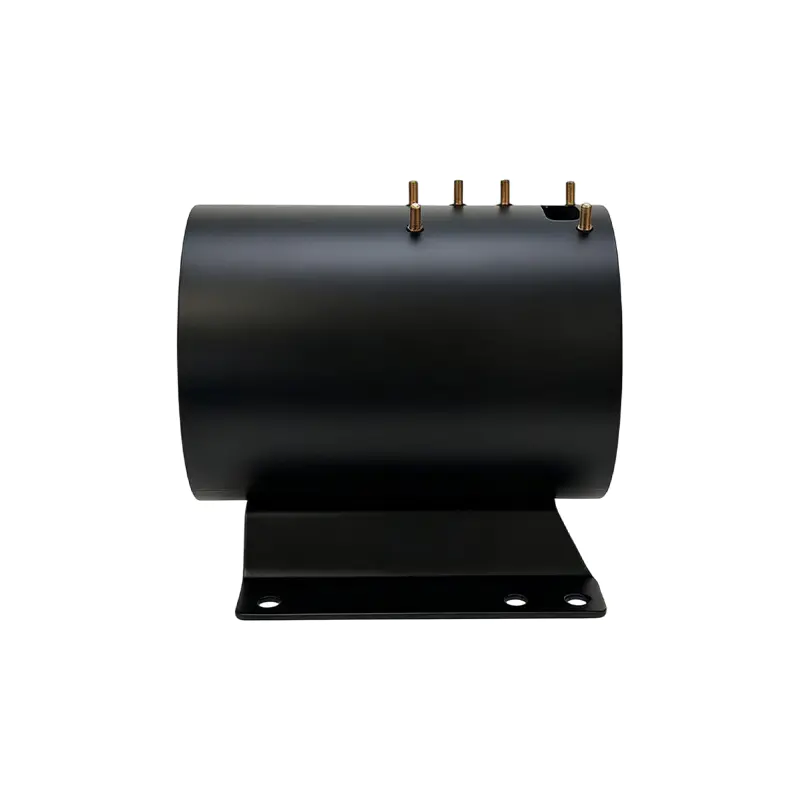
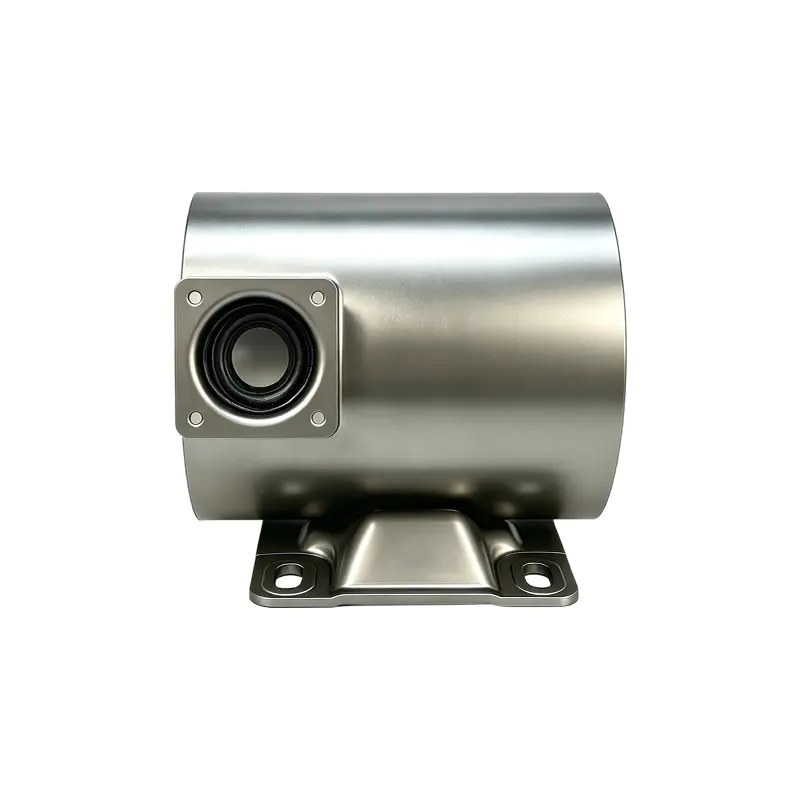
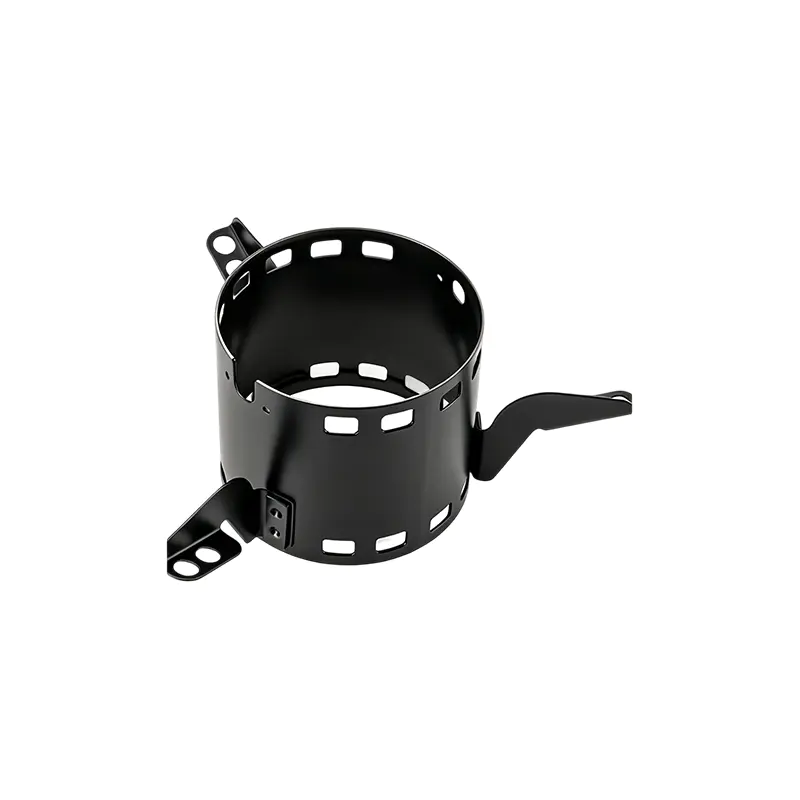
The Inner Diameter 139 Steel Motor Housing with Base is a cylindrical steel motor enclosure developed for motor assemblies that require an internal diameter of 139 mm and a fixed bottom support. The product description ID139013 identifies the housing configuration and provides a useful reference for product selection, engineering communication, and production management.
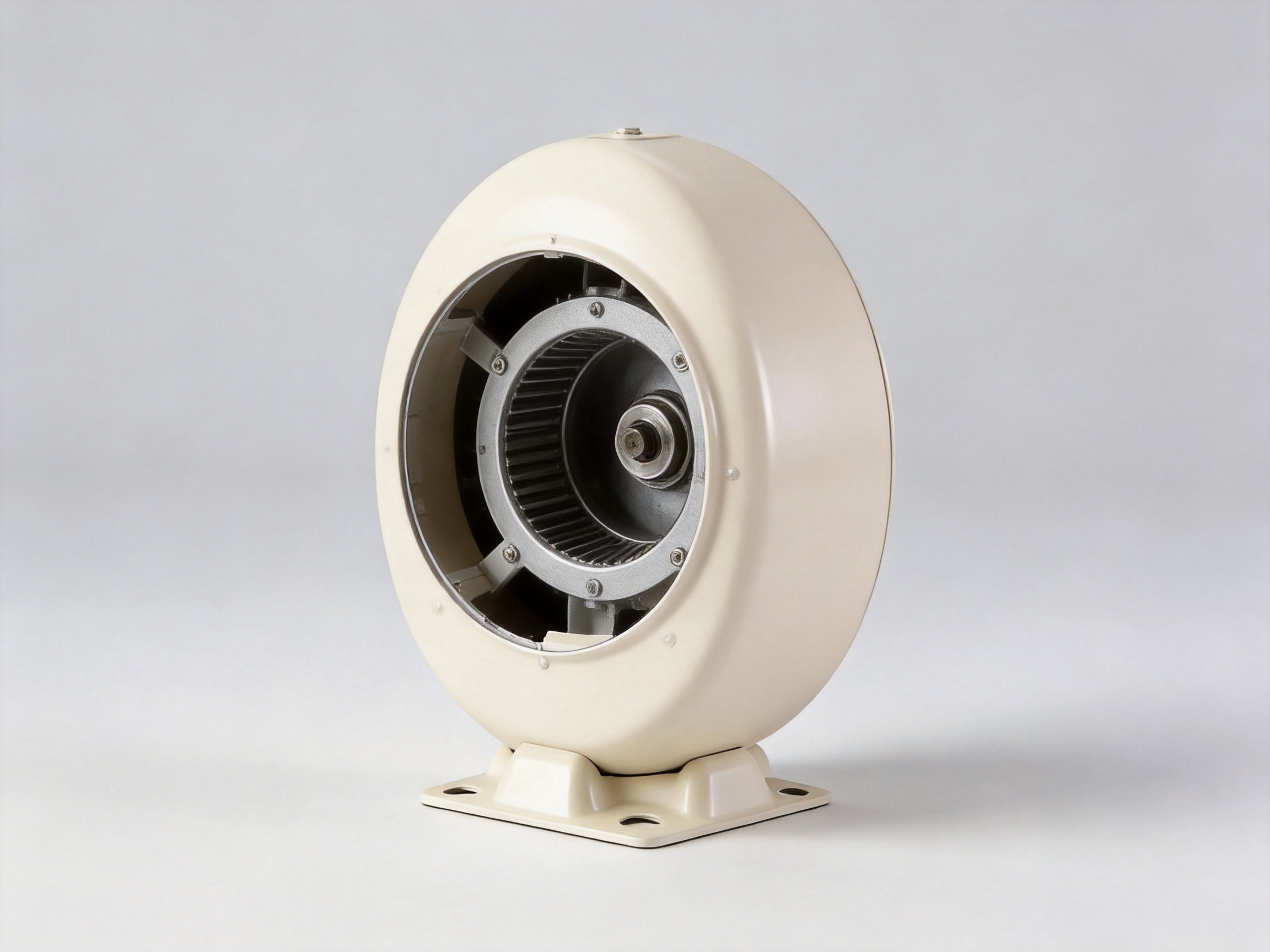
The housing body creates a protective space around the motor’s internal components. It helps isolate sensitive components from external contact, dust, accidental impact, and mechanical interference. At the same time, the steel shell provides structural stability during motor operation and transportation. The cylindrical form is well suited to motor designs in which the stator, rotor, end components, or related assemblies must remain concentrically positioned inside the body.
A dedicated base is welded to the bottom of the housing. The base is not a separate loose accessory that must be aligned and installed later. Instead, it forms an integrated part of the housing assembly. This configuration can simplify downstream assembly, reduce the number of separate components, and provide a stable mounting interface for the finished motor or motor-driven unit.
The housing is supplied with a standard almond white finish. This color offers a neutral and refined appearance that can fit household equipment, commercial machinery, and general industrial products. For customers with specific visual requirements, additional colors can be sprayed according to project needs, subject to technical evaluation and production confirmation.
Because the product is manufactured by a supplier with in-house capabilities across multiple processes, it can be adapted for customers requiring more than a standard enclosure. Depending on the project, the production team may support changes to dimensions, mounting details, openings, surface treatment, welding configurations, and other manufacturing features.
2. Why the 139 mm Inner Diameter Matters
Inner diameter is one of the most important dimensions in a motor housing. It determines how the housing relates to the motor’s internal assembly and influences clearance, alignment, installation, and operating performance. A nominally correct outside dimension is not enough if the internal diameter varies excessively from one piece to another. For this reason, the 139 mm inner diameter of this product is treated as a key engineering and inspection characteristic.
A controlled internal diameter helps create a predictable fit between the housing and the motor assembly. This can reduce unnecessary adjustment during assembly and make it easier to maintain consistent positioning of internal parts. When the housing is used with matching components, stable dimensions support repeatable production and help customers reduce variation across production batches.
Dimensional accuracy is also important when the motor housing interacts with other parts such as end covers, brackets, stator assemblies, sealing elements, or mounting structures. Excessive variation may create assembly difficulty, uneven contact, unwanted clearance, or increased stress during installation. A well-controlled internal surface supports a more orderly and repeatable assembly process.
The stated 139 mm inner diameter should be evaluated together with the customer’s complete drawing and tolerance requirements. Different applications may require particular circularity, straightness, surface condition, wall thickness, or local dimensional tolerances. The housing provides a strong foundation for customization, while final requirements should be confirmed during technical review.
Dimensional consistency for repeat production
For high-volume motor manufacturing, consistency is often as important as the nominal dimension itself. A component that measures correctly once but varies significantly between lots can cause problems in automated or semi-automated assembly. Stable process control helps improve fixture compatibility, reduce manual adjustment, and support predictable production planning.
The manufacturer’s integrated process chain allows forming, welding, machining, and inspection operations to be coordinated. This reduces the risk that each process is managed in isolation. Process feedback can be used to identify dimensional changes after welding or finishing and to improve control at the relevant production stages.
3. Steel Construction for Structural Reliability
Steel is widely used in motor housing applications because it offers a useful combination of strength, formability, durability, and production efficiency. A properly designed steel housing can protect internal motor components while maintaining a stable shape under mechanical loads. It can also be processed through stamping, forming, welding, machining, and surface treatment methods suited to both prototype development and mass production.
The steel body of this housing is intended to provide a robust protective enclosure. During normal motor operation, the housing may experience vibration, repeated thermal changes, handling loads, and forces transmitted from the mounting structure. A rigid body helps preserve the relationship between the internal motor assembly and the external mounting points.
Steel also supports efficient manufacturing. Sheet and tube-based steel components can be formed with repeatable tooling and processed through established production lines. This makes steel motor housings suitable for customers seeking a balance between mechanical performance, cost control, and scalable production.
Compared with a light but less rigid enclosure, a well-designed steel housing may offer stronger resistance to deformation during handling and installation. Compared with a more complex cast structure, a stamped or fabricated steel housing may provide greater flexibility for design changes, welding integration, and surface customization. The best material choice still depends on the motor’s operating conditions, weight requirements, corrosion environment, and thermal design.
The product’s steel construction is especially useful when the base and body must work together as a load-bearing assembly. The welded base transfers mounting forces into the cylindrical body, allowing the housing to function as both a protective enclosure and a structural support element.
4. Integrated Welded Base Design
One of the defining characteristics of this product is its integrated base. The base is welded onto the bottom of the housing using controlled welding methods. This creates a unified component rather than a housing body and base that must be joined by the customer during final assembly.
An integrated base can improve installation convenience. Customers receive a housing with the mounting structure already attached, reducing the need for additional positioning, fastening, or joining operations. This may shorten assembly time and reduce the number of components that must be managed on the production line.
The base also provides a stable support platform for the complete motor unit. During operation, motors can generate continuous vibration and impact loads. If the mounting structure is weak, poorly aligned, or insufficiently bonded, these loads may lead to movement, noise, fatigue, or premature failure of the connection. A properly executed weld helps the base and housing function as one structural assembly.
Welding quality depends on many factors, including joint design, material condition, equipment settings, operator or automation control, fixture stability, and inspection methods. The manufacturer uses high-standard welding technology intended to produce uniform and firm welds with strong bonding force. Consistent weld formation helps support the mechanical integrity of the housing and reduces variation between units.
The welded connection should be evaluated according to the customer’s application. For motors used in high-vibration environments, the engineering review may include weld location, weld length, local stress concentration, base thickness, mounting-hole arrangement, and fatigue considerations. When necessary, customers can provide operating data and drawings for a more detailed production assessment.
Benefits of the integrated base
The integrated base provides several practical benefits:
First, it reduces the number of loose parts in the customer’s supply chain. A housing and base combination can be stored, transported, and assembled as one item.
Second, it can improve positioning repeatability. The base is welded to the housing using dedicated fixtures or controlled production methods, helping maintain a consistent relationship between the cylindrical body and the mounting surface.
Third, it can reduce downstream joining operations. Customers may not need to perform separate welding or complex alignment work after receiving the housing.
Fourth, it creates a more compact product structure. This can be helpful where the motor assembly must fit into a defined equipment envelope.
Finally, an integrated base allows the housing supplier to take responsibility for a larger portion of the finished component. This simplifies communication and can make it easier to identify the source of a dimensional or structural issue.
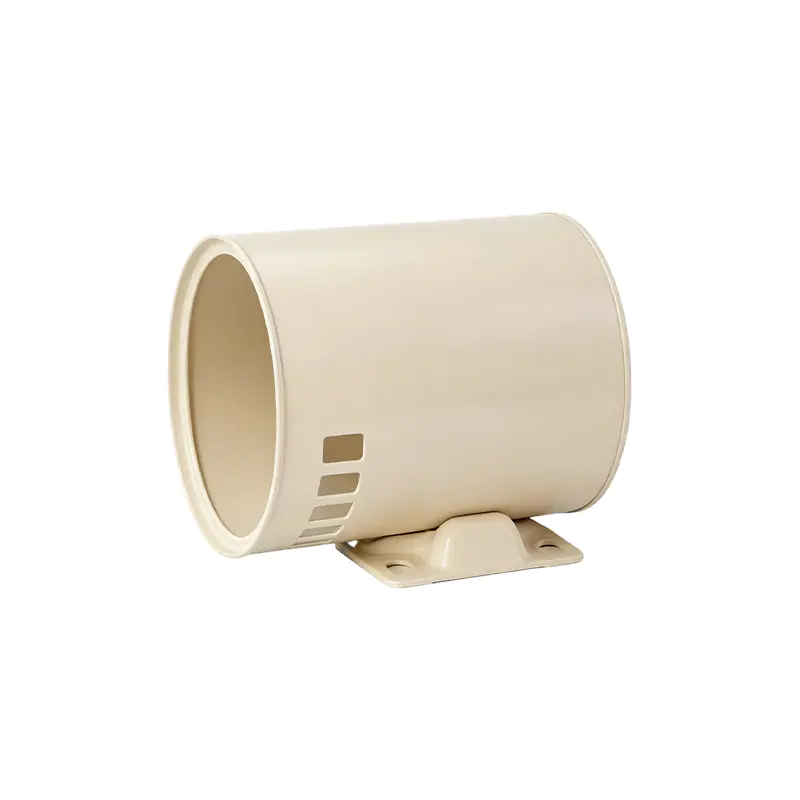
Inner Diameter 139 Steel Motor Housing With Base
5. Welding Process and Structural Integration
Welding is central to the performance of this motor housing because the base must remain securely attached to the body during the life of the motor. A high-quality welding process aims to achieve sufficient penetration, consistent joint formation, controlled distortion, and a clean finished appearance.
Uniform welds are important for load distribution. If the weld is inconsistent, the load may concentrate in limited areas instead of being transferred smoothly around the joint. Uneven welds can also create local stress points or require additional finishing work. By controlling the welding process, the manufacturer works to improve both structural reliability and appearance.
Welding fixtures play an important role in maintaining the position of the base during joining. If the base moves during welding, the finished housing may have an incorrect mounting angle or an inconsistent relationship between the base and cylindrical body. Dedicated positioning tools help stabilize the workpiece and support repeatability across production batches.
Heat input must also be managed. Excessive heat can create distortion, discoloration, or dimensional changes in the surrounding steel. Insufficient heat may result in an incomplete or weak joint. A controlled process balances weld strength with dimensional stability.
After welding, inspection may include visual examination, dimensional checks, weld appearance assessment, and other methods selected according to the product’s requirements. For demanding applications, customers may specify additional weld inspection or process documentation. These requirements should be defined before mass production so that the appropriate controls can be incorporated into the manufacturing plan.
6. Manufacturing Advantages Over Less Integrated Supply Models
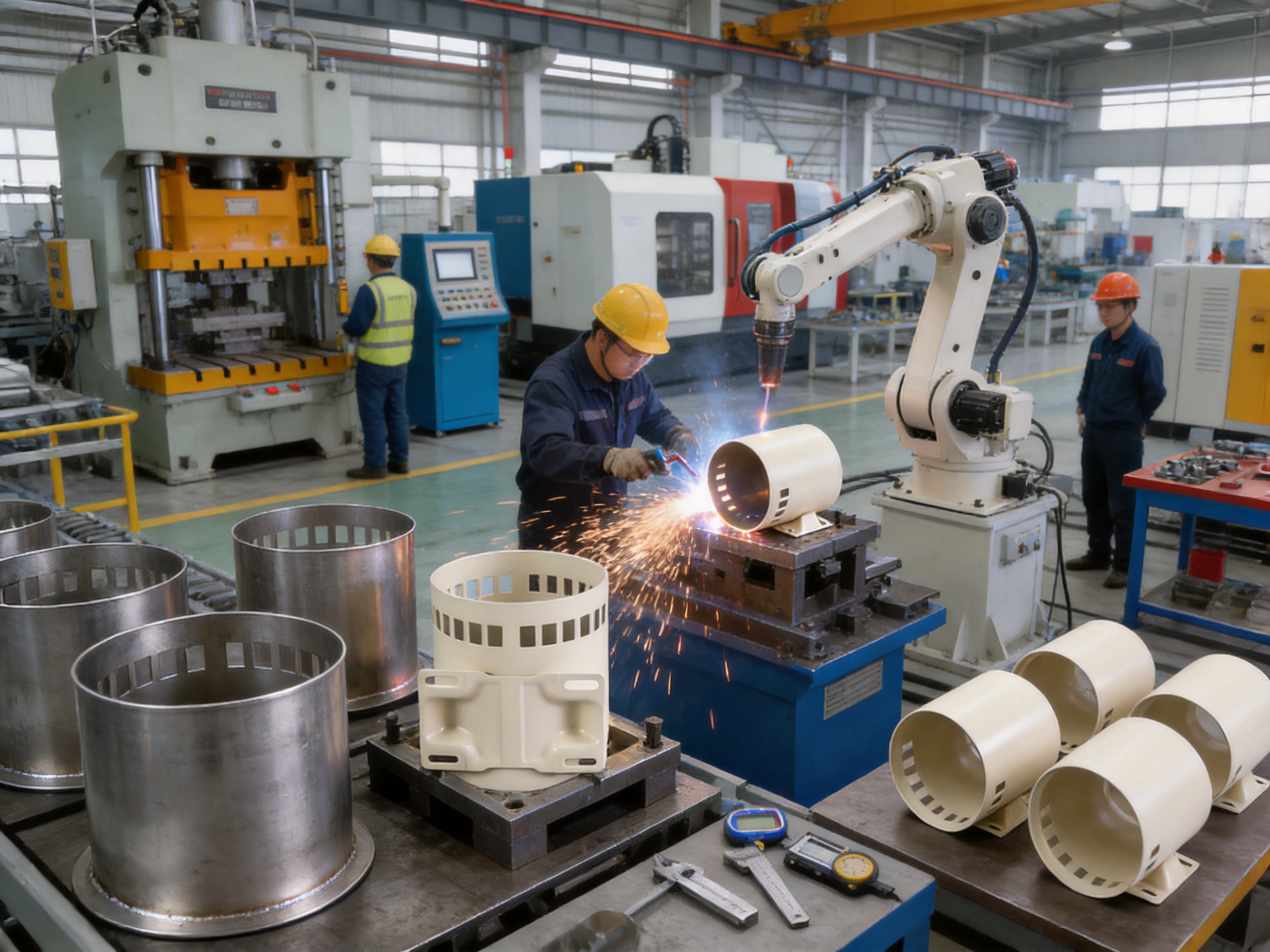
Customers comparing motor housing suppliers often evaluate more than the visible product. They also consider how many processes a supplier controls internally, how quickly technical changes can be implemented, and how effectively quality issues can be traced. The manufacturer of this housing integrates stamping, welding assembly, machining, inspection, and surface treatment within its production system.
This integrated model can offer advantages over a fragmented supply chain in which the body is made by one supplier, the base is welded by another, machining is outsourced to a third party, and finishing is handled elsewhere. Multiple suppliers may increase transportation, coordination, scheduling, and quality-management complexity. It can also make it more difficult to determine where a dimensional or appearance problem originated.
With more processes managed in-house, engineering information can move more directly from development to production. A design change affecting the body, base, or mounting features can be reviewed with the relevant process teams. This may shorten communication cycles and reduce the risk of inconsistent interpretations between separate vendors.
In-house production also supports better process coordination. Stamping conditions can be considered alongside welding requirements. Machining allowances can be planned around forming and welding distortion. Surface treatment can be selected based on the steel condition and the expected use environment. This broader view is valuable for motor housings because their performance depends on the interaction of several manufacturing stages.
For customers seeking stable mass production, integrated manufacturing can also support more consistent capacity planning. The supplier has established production resources for steel processing, welding, machining, finishing, and inspection, with an annual production capacity exceeding five million units. Capacity confirmation remains necessary for each project, but this background indicates experience with larger production programs.
From raw material to finished housing
The manufacturing route normally begins with material preparation and incoming inspection. Steel material must be selected according to the approved drawing, mechanical requirements, thickness, surface condition, and downstream processing needs. Proper material control helps reduce variation during forming and welding.
Stamping and forming operations create the basic geometry of the housing or related components. Tooling and process settings influence dimensional accuracy, edge condition, roundness, and repeatability. Stable forming is important because later welding and machining operations depend on the initial geometry.
The formed body is then combined with the dedicated base through controlled welding. Fixtures help maintain the intended position, while process parameters are managed to achieve consistent bonding. Where needed, post-weld correction or machining may be used to bring critical features within specification.
Machining can provide improved accuracy for selected surfaces, holes, interfaces, or mounting areas. It may also remove excess material or prepare the component for subsequent assembly. The specific machining route depends on the customer’s drawing and the required tolerance level.
Surface treatment and painting complete the external appearance. The standard almond white finish gives the product a clean appearance suitable for many equipment styles. Other colors can be considered when customers require brand coordination, product differentiation, or application-specific identification.
Final inspection verifies that the completed housing meets the agreed requirements. Inspection may cover dimensions, weld condition, finish, color, mounting features, and packaging condition. A documented inspection plan can be developed for projects with more demanding quality-control needs.
7. Surface Appearance and Color Customization
Motor housings are functional components, but their appearance can also influence the perceived quality of the finished machine or appliance. The standard almond white color provides a warm, understated appearance that can blend with household equipment, light industrial systems, and other finished products.
A consistent finish can help create a uniform visual impression across a product line. Even when two housings have identical mechanical functions, differences in color, gloss, texture, or coating quality can affect the appearance of the final assembly. Controlled surface treatment helps customers maintain a consistent product standard.
Color customization is available according to customer requirements. Customers may request a color that matches an existing enclosure, a corporate identity system, a product family, or a specific operating environment. Before production, color samples, coating specifications, gloss levels, and acceptance criteria should be confirmed.
Surface treatment also contributes to protection. The appropriate coating can help shield the steel surface from handling marks, humidity, and general environmental exposure. The required treatment depends on the operating environment. Indoor household use, industrial workshops, outdoor equipment, and high-humidity applications may require different coating systems or additional corrosion-protection measures.
Color customization should therefore be considered together with functional requirements. A visually attractive finish is valuable, but coating adhesion, coverage, curing, surface preparation, and environmental suitability are equally important.
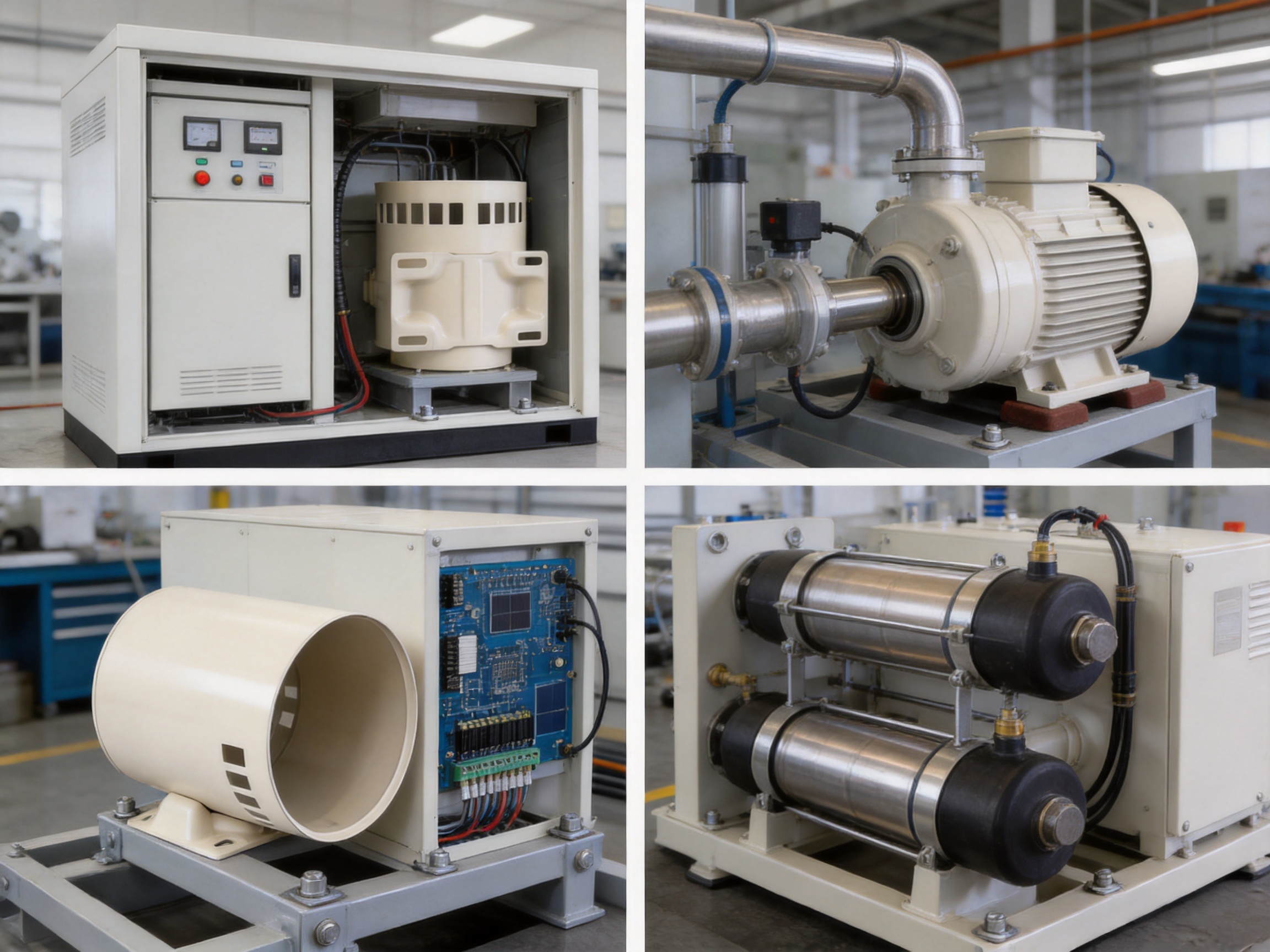
8. Applications Across Multiple Industries
The 139 mm steel motor housing can be considered for a range of motor-driven products. Its final suitability depends on the motor design, mounting requirements, load conditions, internal clearances, temperature, and environmental exposure.
Household appliances
Household appliances often require compact, reliable, and visually consistent motor components. The almond white housing can fit appliances where a light-colored external appearance is preferred. The integrated base may simplify attachment of the motor assembly to the appliance frame or internal support structure.
In appliance applications, customers may focus on low noise, dimensional consistency, appearance, and efficient assembly. The housing can contribute to these objectives by providing a stable motor enclosure and a repeatable mounting interface. Additional requirements such as vibration isolation, ventilation, insulation, or specific fastening points should be reviewed during development.
Industrial drives
Industrial drives may operate for extended periods and experience regular vibration, repeated starts and stops, and mechanical loads transmitted through the mounting system. A steel housing with a welded base can provide a strong structural platform for such equipment.
Industrial customers may require detailed documentation, defined inspection points, batch traceability, and customized machining. The supplier’s combination of stamping, welding, machining, and inspection capabilities can support these requirements when they are specified in the project documentation.
New energy vehicles and equipment
New energy vehicles and related equipment contain numerous motor-driven systems, including pumps, fans, compressors, actuators, and auxiliary drive units. These products may place demanding requirements on size, weight, vibration resistance, production consistency, and appearance.
A steel motor housing may be appropriate where structural strength and manufacturing repeatability are priorities. However, the application must be evaluated carefully for temperature range, corrosion exposure, electromagnetic considerations, weight limits, and vehicle-specific durability requirements.
Special equipment
Special equipment often requires customized components rather than catalog-standard parts. The housing may be adapted to specific mounting conditions, external colors, machining features, or assembly requirements. Customers can work with the engineering team to review drawings and determine whether the 139 mm internal diameter and existing base configuration are suitable.
The ability to combine standard product knowledge with customized manufacturing is valuable for special equipment manufacturers. It can reduce the time required to develop a completely new housing while still allowing the final component to match the equipment’s technical requirements.
9. Engineering and Customization Support
Motor housing projects frequently involve technical details that are not visible in a product photograph. These may include wall thickness, concentricity, flatness, base angle, hole position, weld length, surface roughness, color tolerance, and packaging protection. A supplier’s engineering experience is therefore an important part of product value.
The manufacturer supports product development from initial design through mass production. Its engineering team has an average of more than 20 years of experience, providing practical knowledge in housing structure, forming, welding, machining, and production coordination.
When reviewing a new project, the engineering team can assess whether the proposed design is suitable for stamping, welding, machining, and finishing. Design-for-manufacturing feedback may identify opportunities to simplify geometry, improve material utilization, reduce welding difficulty, or make inspection more reliable.
Customers can provide two-dimensional drawings, three-dimensional models, technical specifications, sample parts, or performance requirements. A complete information package normally includes the target inner diameter, tolerances, material requirements, base dimensions, mounting-hole details, surface finish, color, annual quantity, and operating environment.
Engineering review is especially important when a customer wants to modify the standard product. A change to the base may affect weld access. A change to the wall thickness may affect forming and stiffness. A change to the finish may affect surface preparation and curing. Early review helps identify these relationships before tooling or mass production begins.
Possible customization areas
Depending on the approved design and production feasibility, customization may include:
• Internal and external dimensions.
• Base size, shape, and mounting arrangement.
• Mounting-hole diameter, location, and quantity.
• Local openings, slots, or cable passages.
• Machined interfaces and assembly surfaces.
• Welding configuration and reinforcement requirements.
• Surface treatment, gloss, texture, and color.
• Packaging method and labeling requirements.
Not every modification is suitable for the same production process. A technical quotation should be based on confirmed drawings and requirements rather than on nominal diameter alone.
10. Quality Management and Inspection Considerations
Quality control for a motor housing should cover the entire process, not only the final visual inspection. The body geometry, base position, weld integrity, machined features, and coating condition all influence the performance of the completed component.
Incoming material inspection helps confirm that the steel corresponds to the approved material specification. This may include checking dimensions, surface condition, identification, and documentation. Material control is the foundation for stable forming and welding performance.
During stamping and forming, process checks can monitor key dimensions and detect changes in shape, roundness, or edge condition. Early detection helps prevent large quantities of nonconforming parts from moving to later operations.
During welding, inspection may focus on joint continuity, appearance, position, distortion, and signs of incomplete bonding. The required inspection method should correspond to the design risk and customer specification. For some applications, visual and dimensional inspection may be sufficient; others may require additional verification.
Machined features should be checked using suitable gauges or measuring instruments. Critical dimensions such as mounting-hole position, interface diameter, flatness, and alignment may require documented measurement results.
Surface treatment inspection can include color comparison, coverage, adhesion, surface cleanliness, and visible defect evaluation. Acceptance standards should be defined clearly because color and appearance judgments can vary if no reference sample or tolerance is established.
The company has inspection instruments supporting production quality control. Customers with specific documentation requirements can discuss inspection reports, sample approval procedures, control plans, or other quality records during project planning.
Why process consistency benefits customers
Consistent processes reduce the risk of variation that may not be immediately visible. A housing can appear acceptable while having a small dimensional deviation that affects assembly. Likewise, a weld can look uniform but require confirmation of strength or position for a demanding application. Process-based quality management provides more confidence than relying on final appearance alone.
Integrated manufacturing also makes corrective action more direct. If a dimensional issue is found, the supplier can review forming, welding, machining, and inspection records within the same production organization. This supports faster analysis and more coordinated improvement.
11. Production Capacity and Supply Reliability
For motor manufacturers, supplier capacity is a commercial and operational consideration. A component may meet technical requirements but still be unsuitable if the supplier cannot support forecasted volume, delivery schedules, or future increases in demand.
The manufacturer has an annual production capacity of more than five million units and approximately 40 years of experience in motor housing manufacturing. This background reflects long-term familiarity with repetitive production, tooling management, process control, and customer coordination.
Capacity should always be confirmed for the individual project. Factors such as material availability, product complexity, color changes, tooling requirements, inspection frequency, and delivery schedule can affect actual output. Nevertheless, established stamping lines, automated welding equipment, machining facilities, and finishing resources provide a strong basis for supporting both regular and larger-volume orders.
A reliable supply relationship also involves communication. Clear drawings, agreed specifications, production schedules, sample approval, and packaging instructions help reduce misunderstandings. Fast response is particularly valuable when customers need engineering changes, replacement parts, or production adjustments.
The company has served more than 50 customers across different application areas. This customer experience can help the supplier understand the practical requirements of household appliances, industrial drives, new energy products, and special equipment.
12. Advantages Compared with Less Suitable Alternatives
Product selection should be based on application requirements, but several characteristics make this housing attractive compared with less integrated or less specialized alternatives.
The first advantage is the combination of a defined 139 mm inner diameter and a dedicated welded base. Customers do not have to source a general cylindrical shell and separately develop a mounting solution. The product is designed as a combined protective and structural component.
The second advantage is steel’s balance of strength and manufacturability. For applications where structural rigidity, impact resistance, and repeatable production are more important than minimum weight, steel can be a practical choice.
The third advantage is the integrated welding capability. A supplier that controls the body-forming and base-welding processes can better coordinate dimensional requirements and structural performance than a supply model that divides these operations without close technical integration.
The fourth advantage is flexible finishing. The standard almond white appearance provides a ready-to-use option, while color spraying supports product-specific requirements. This gives customers more freedom than a supplier offering only an uncoated or fixed-color component.
The fifth advantage is full-process support. Stamping, welding, machining, assembly, and finishing are available within the manufacturing system. This can simplify supplier management and improve responsiveness during development and production.
The sixth advantage is practical engineering experience. A product may look simple, but motor housing production involves forming behavior, weld distortion, mounting alignment, coating, and inspection. Experienced engineering support can help convert a design into a stable production process.
These advantages do not mean that the housing is automatically suitable for every motor. Customers must compare the design with their specific load, temperature, corrosion, weight, tolerance, and certification requirements. The value of the product lies in its strong manufacturing foundation and its ability to be evaluated and adapted for the intended application.
13. Installation and Application Considerations
Before installation, customers should inspect the housing for transportation damage, coating defects, deformation, and contamination. The inner diameter and mounting features should be checked against the approved drawing when required by the assembly process.
The motor assembly should be inserted or installed using methods that avoid excessive force on the housing wall, welded base, or machined interfaces. If the design includes a controlled clearance or press-fit condition, the assembly procedure should follow the approved engineering specification.
Mounting fasteners should be selected according to the equipment’s load and vibration requirements. Over-tightening can deform local mounting areas, while insufficient tightening can allow movement during operation. Where vibration isolation components are used, their stiffness and location should be considered together with the housing base.
During installation, the base should sit evenly on the equipment support surface. Any uneven contact can create additional stress or cause the motor to operate at an unintended angle. If the equipment frame is not flat, corrective measures should be taken before final fastening.
After installation, customers may verify the motor’s alignment, vibration, noise, temperature, and mounting stability. These checks are particularly important when the housing is part of a new motor design or when operating conditions differ significantly from earlier products.
14. Packaging, Handling, and Storage
Steel motor housings are durable, but finished surfaces and mounting features can still be damaged by careless handling. Packaging should protect the cylindrical body from impact, prevent the bases from striking one another, and reduce movement during transportation.
For painted housings, separators or protective materials can help prevent abrasion between parts. Packaging design should also consider moisture control, especially when products are transported through humid environments or stored for extended periods.
During storage, the housings should be kept in a clean and dry location. Direct exposure to rain, condensation, chemicals, or corrosive vapors should be avoided unless the product has been specifically designed for those conditions. Heavy stacking should be managed carefully so that the base and cylindrical body are not distorted.
Customers with special logistics requirements can discuss packaging quantity, pallet configuration, labeling, protective films, and batch identification during order planning. Suitable packaging contributes to product quality by ensuring that the component reaches the assembly line in the same condition in which it passed final inspection.
15. Recommended Customer Evaluation Procedure
A structured evaluation helps customers determine whether the Inner Diameter 139 Steel Motor Housing with Base is suitable for their project.
The first step is to confirm the internal diameter requirement. The customer should compare the 139 mm housing dimension with the motor’s stator, rotor, insulation, end components, and required clearances.
The second step is to review the mounting structure. The base dimensions, hole locations, support surface, and load direction should be compared with the equipment frame. Any requirement for rubber mounts, brackets, grounding, or additional reinforcement should be identified.
The third step is to evaluate operating conditions. Temperature, vibration, impact, humidity, dust, chemicals, outdoor exposure, and service life expectations may influence material and surface-treatment choices.
The fourth step is to confirm appearance requirements. The standard almond white finish may be suitable, or the customer may request another color, gloss level, or surface specification.
The fifth step is to review production volume and timing. Tooling, sample approval, annual demand, delivery frequency, and forecast changes should be included in the commercial and technical discussion.
The sixth step is to establish inspection and acceptance criteria. Important characteristics should be identified before production, including internal diameter, base position, mounting-hole location, weld appearance, coating condition, and packaging requirements.
The final step is to conduct sample validation. A prototype or first-article housing should be assembled with the intended motor components and tested under representative conditions. This can reveal issues that are difficult to identify through drawing review alone.
16. Questions and Answers
Q1: What is the main purpose of this steel motor housing?
The housing protects the motor’s internal components and provides a stable structural enclosure. The integrated welded base also supplies a mounting foundation for the complete motor or motor-driven assembly.
Q2: What is the inner diameter of the product?
The specified inner diameter is 139 mm. Customers should confirm the complete dimensional tolerance and related fit requirements with the supplier before placing a production order.
Q3: Is the base supplied as part of the housing?
Yes. The base is welded to the bottom of the housing, creating an integrated component rather than two separate parts that must be joined by the customer.
Q4: Why is a welded base useful?
A welded base can simplify assembly, improve mounting consistency, reduce the number of loose components, and provide a stable connection capable of supporting vibration and impact loads when properly designed and manufactured.
Q5: What color is available as standard?
The standard exterior color is almond white. Other colors may be sprayed according to customer requirements, subject to confirmation of the coating specification and production feasibility.
Q6: Can the housing be customized?
Customization may be possible for dimensions, base configuration, mounting holes, machining features, openings, surface treatment, color, and packaging. The exact scope must be evaluated from customer drawings and application requirements.
Q7: Which industries can use this housing?
Potential applications include household appliances, industrial drives, new energy vehicles and equipment, and special machinery. Final suitability depends on the motor design and operating environment.
Q8: What manufacturing processes are available?
The manufacturing system includes stamping, welding assembly, machining, inspection, and surface treatment. These capabilities support production from steel processing through finished housing delivery.
Q9: How does in-house production benefit a customer?
In-house production can simplify communication, improve process coordination, reduce dependence on multiple external suppliers, and support faster response to engineering or production issues.
Q10: What information should a customer provide for a quotation?
Useful information includes drawings or three-dimensional models, inner and outer dimensions, tolerances, material requirements, base details, mounting-hole information, surface finish, color, annual quantity, operating conditions, inspection requirements, and delivery expectations.
Q11: Is the product suitable for high-vibration equipment?
The welded base and steel body are designed to provide structural support, but suitability must be confirmed against the actual vibration, impact, fatigue, mounting, and service-life requirements of the equipment.
Q12: Does the housing provide corrosion resistance?
The surface finish helps protect the steel in suitable environments, but the required corrosion protection depends on humidity, chemicals, outdoor exposure, and service conditions. Customers should specify the environmental requirements during engineering review.
Q13: Can the housing be used in automated assembly?
Its repeatable cylindrical geometry and integrated base may support automated or semi-automated assembly. Compatibility should be validated with the customer’s fixtures, grippers, gauges, and assembly tolerances.
Q14: What is the company’s production experience?
The manufacturer has approximately 40 years of experience in motor housing manufacturing, has served more than 50 customers, and reports an annual production capacity of over five million units.
Q15: Can customers request inspection documentation?
Inspection documentation can be discussed according to project requirements. The inspection plan may include dimensional records, appearance checks, weld evaluations, coating inspection, sample approval, and other agreed quality documents.
17. Supplier Strength and Manufacturing Background
Jiangsu Yufeng Electric Co., Ltd. is a professional motor housing manufacturer based in Jiangsu Province, China. The company specializes in the research, development, and production of motor housings and related steel components.
Its production system integrates stamping, welding assembly, machining, and surface treatment. This full-process structure allows the company to manage a housing from steel processing to finished product delivery. The combination of production equipment and engineering experience supports both standard products and customized projects.
The company’s products are used in household appliances, industrial drives, new energy vehicles, and special equipment. These markets require different combinations of strength, precision, appearance, production volume, and responsiveness. Experience across multiple sectors can help the engineering team understand how a housing design must perform in practical use.
The company operates stamping lines, automated welding equipment, machining facilities, and inspection instruments. These resources support process coordination and scalable production. Its engineering team has an average of more than 20 years of experience, offering technical support from product development through mass production.
With approximately 40 years of motor housing manufacturing experience, the company has developed knowledge in steel forming, housing assembly, base welding, dimensional control, finishing, and customer coordination. Its stated production capacity exceeds five million units annually, providing a foundation for customers seeking a long-term manufacturing partner.
The company emphasizes quality, efficiency, and fast response. These priorities are important in motor component sourcing because customers often need accurate parts, stable delivery, rapid engineering communication, and practical support when production conditions change.
18. Conclusion
The Inner Diameter 139 Steel Motor Housing with Base is a practical solution for motor assemblies requiring a controlled 139 mm internal diameter, durable steel construction, and an integrated mounting base. Its design combines protective enclosure function with structural support, helping customers simplify assembly and create a stable foundation for motor operation.
The welded base is a key product advantage. Uniform and firm welds help connect the base and housing into one assembly capable of handling the vibration and impact loads associated with motor operation. The steel body provides strength and manufacturing flexibility, while the standard almond white finish offers a clean appearance suitable for many equipment designs.
Additional value comes from the supplier’s integrated manufacturing capabilities. Stamping, welding, machining, assembly, surface treatment, and inspection are coordinated within one production system. This can improve communication, support customization, simplify supply-chain management, and provide a stronger foundation for repeat production.
For customers evaluating the product, the most important next step is to compare the 139 mm inner diameter and base configuration with the complete motor design. Operating environment, tolerances, mounting loads, surface requirements, production quantity, inspection standards, and packaging should also be reviewed. With confirmed technical information, the housing can be assessed for household appliances, industrial drives, new energy equipment, special machinery, and other motor-driven applications.
As a steel motor housing supplier with decades of industry experience, Jiangsu Yufeng Electric Co., Ltd. provides a combination of manufacturing depth, engineering support, production capacity, and finishing flexibility. This makes the Inner Diameter 139 Steel Motor Housing with Base a strong candidate for customers seeking a reliable, customizable, and production-ready motor housing solution.
References
1. Jiangsu Yufeng Electric Co., Ltd., Product Information: Inner Diameter 139 Steel Motor Housing with Base, Product Code ID139013.
2. Jiangsu Yufeng Electric Co., Ltd., Corporate Manufacturing Profile and Motor Housing Production Capabilities.
3. General engineering principles for steel forming, welded structural assemblies, dimensional control, and surface treatment.
4. General guidelines for motor enclosure design, mounting stability, vibration management, and production inspection.
5. General manufacturing practices for stamping, automated welding, machining, assembly, and industrial coating processes.

 Previous