

 English
 Español
Content
- 1 Product Overview
- 2 Lightweight Construction Without Unnecessary Compromise
- 3 Precision Geometry for Consistent Motor Assembly
- 4 Ventilation Design and Thermal Performance
- 5 Manufacturing Process and Quality Control
- 6 Advantages Over Conventional or Less Specialized Motor Housings
- 7 Applications and Suitable Motor Systems
- 8 Engineering Considerations Before Adoption
- 9 Customization and Product Development Support
- 10 Company Manufacturing Strengths
- 11 Installation, Handling, and Maintenance Considerations
- 12 Why Precision Matters to Total Cost
- 13 Q&A
- 13.1 What is the main application of this product?
- 13.2 What is the inner diameter of the housing?
- 13.3 What are the height and outside diameter?
- 13.4 Why is the 1.2 mm wall thickness important?
- 13.5 Which materials can be used?
- 13.6 What does the roundness specification mean?
- 13.7 How accurate are the end faces?
- 13.8 How does the ventilation design work?
- 13.9 Can the housing be customized?
- 13.10 What manufacturing processes are available?
- 13.11 How can customers validate suitability?
- 13.12 What industries does the manufacturer serve?
- 14 Conclusion
- 15 References
- 16 Product: Inner Diameter 120 Steel Motor Housing
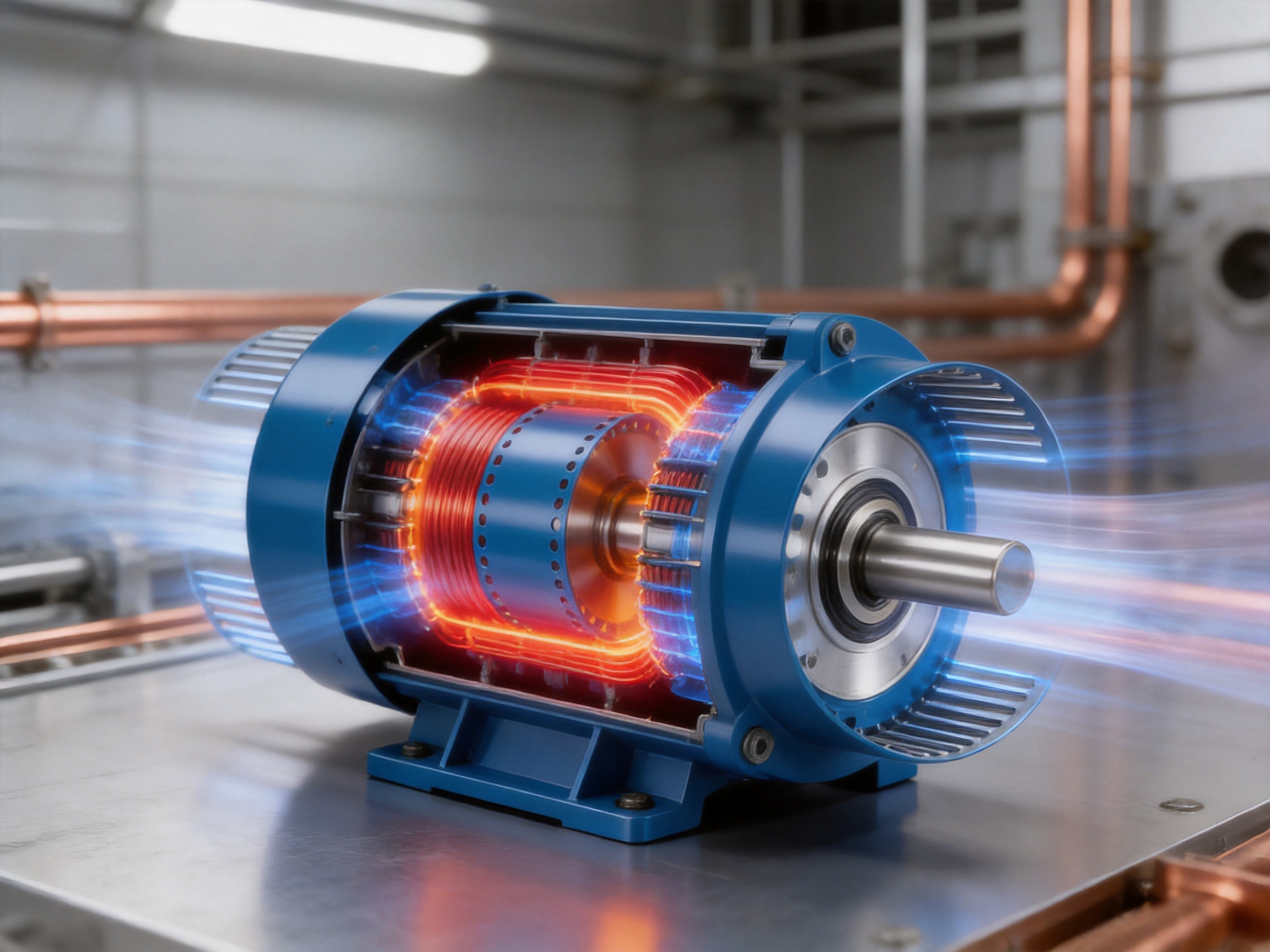
Motor housing performance directly influences the reliability, efficiency, service life, and assembly quality of an electric motor. Although a housing may appear to be a relatively simple cylindrical component, it must satisfy demanding dimensional, structural, thermal, and manufacturing requirements. It supports and protects the stator and rotor, maintains the correct relationship between internal components, assists with heat dissipation, and provides a stable interface for end covers and other motor parts. Even small deviations in roundness, parallelism, wall thickness, or height can affect motor vibration, sealing, noise, temperature rise, and operating life.
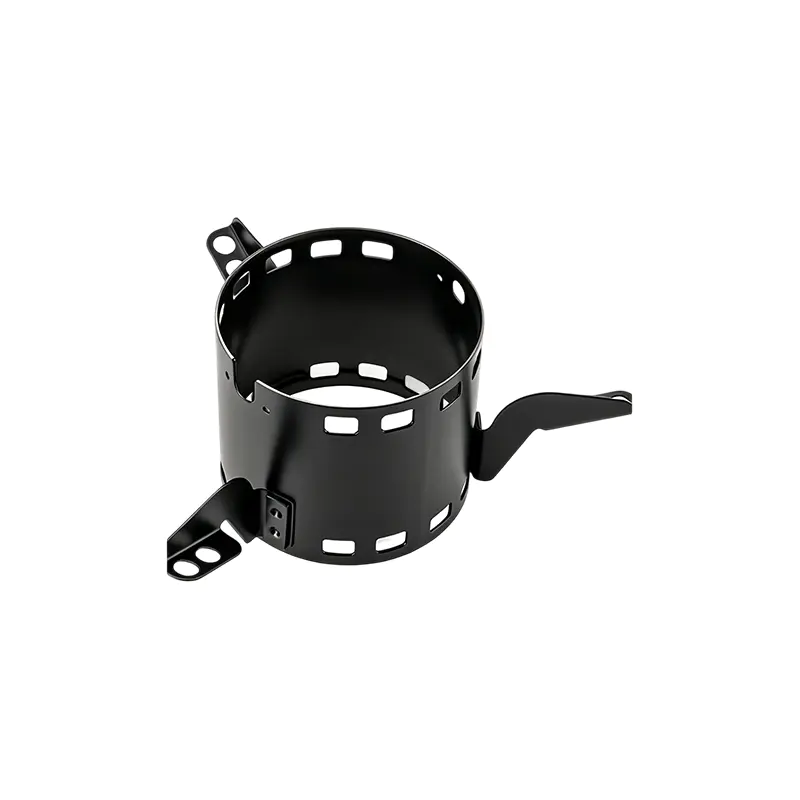
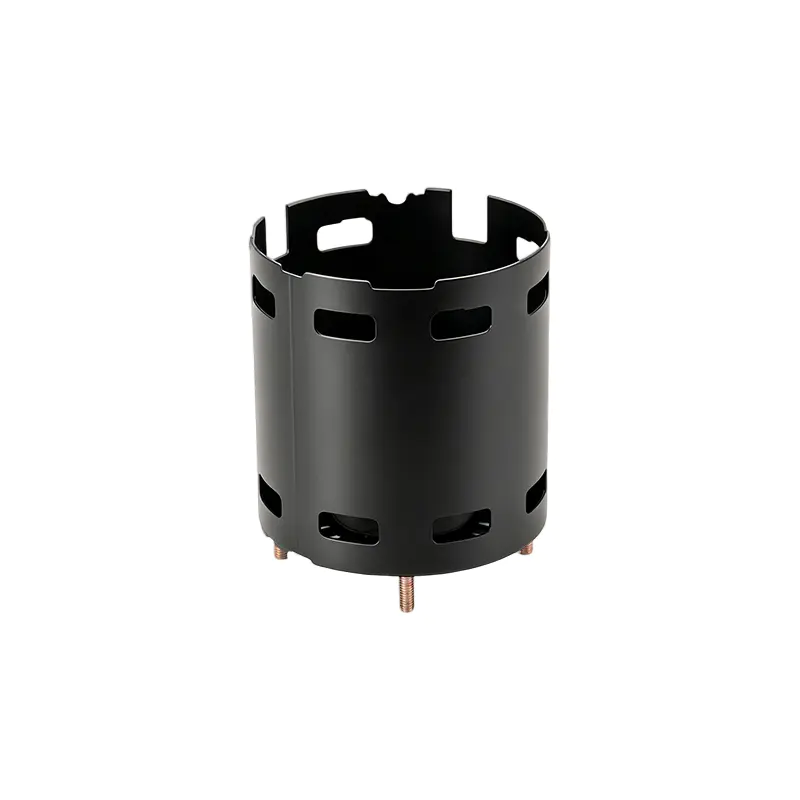
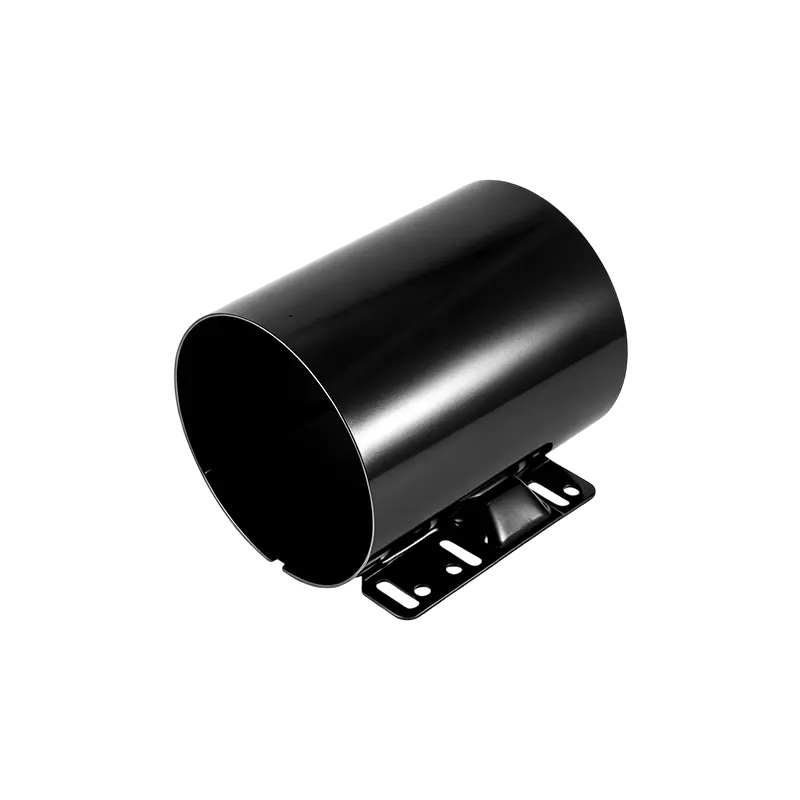
The Inner Diameter 120 Steel Motor Housing is designed for applications that require a compact, lightweight, and accurately manufactured steel enclosure. It has a nominal inner diameter of 120 mm, a height of 69.9 mm, an outside diameter of 122.4 mm, and a wall thickness of 1.2 mm. Manufactured from SPCC, ST12, or DC01 material specifications, this housing combines the practical benefits of low-carbon steel with precision forming and machining capabilities. Its carefully controlled dimensions and ventilation design make it suitable for motor assemblies used in household appliances, industrial drives, new energy equipment, and other engineered systems.
The product is particularly valuable where designers seek to reduce unnecessary mass without compromising stiffness, alignment, or durability. A thin 1.2 mm wall reduces material consumption and contributes to a lighter motor assembly, while the cylindrical structure retains effective resistance to deformation. Precision-machined end faces provide parallelism within 0.1 mm, helping end covers fit accurately and supporting more dependable assembly and sealing. Ventilation holes at both ends establish an axial airflow path through the motor interior, allowing heat generated by the stator and rotor to be transferred away more efficiently.
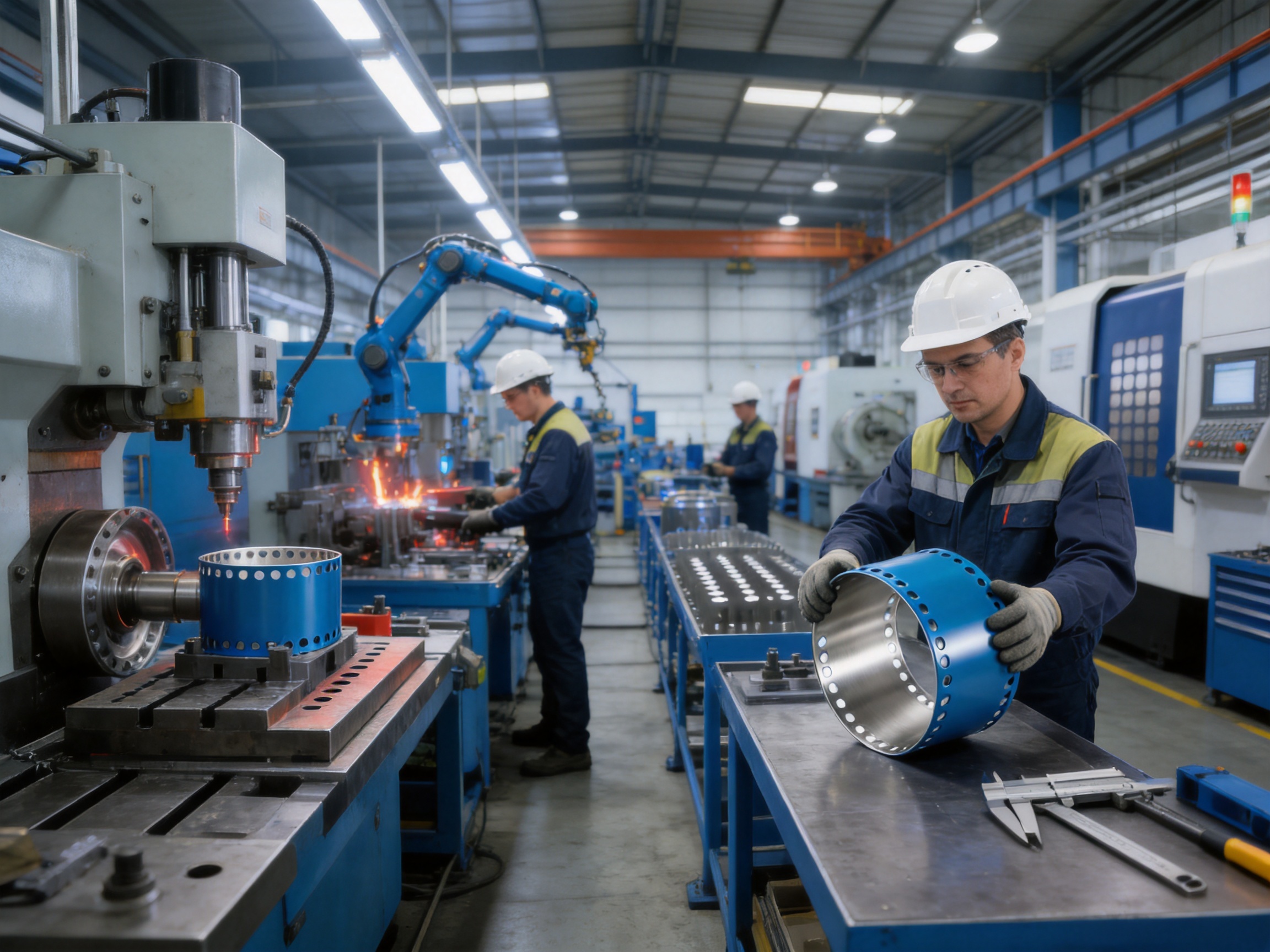
Jiangsu Yufeng Electric Co., Ltd. supports this product with integrated manufacturing capabilities that include stamping, welding assembly, machining, surface treatment, inspection, and finished-product delivery. Its production model allows engineering, process development, manufacturing, and quality control to be coordinated within one organization. This integrated approach can shorten communication cycles, improve process consistency, and make it easier to respond to customer requirements for customized motor housings.
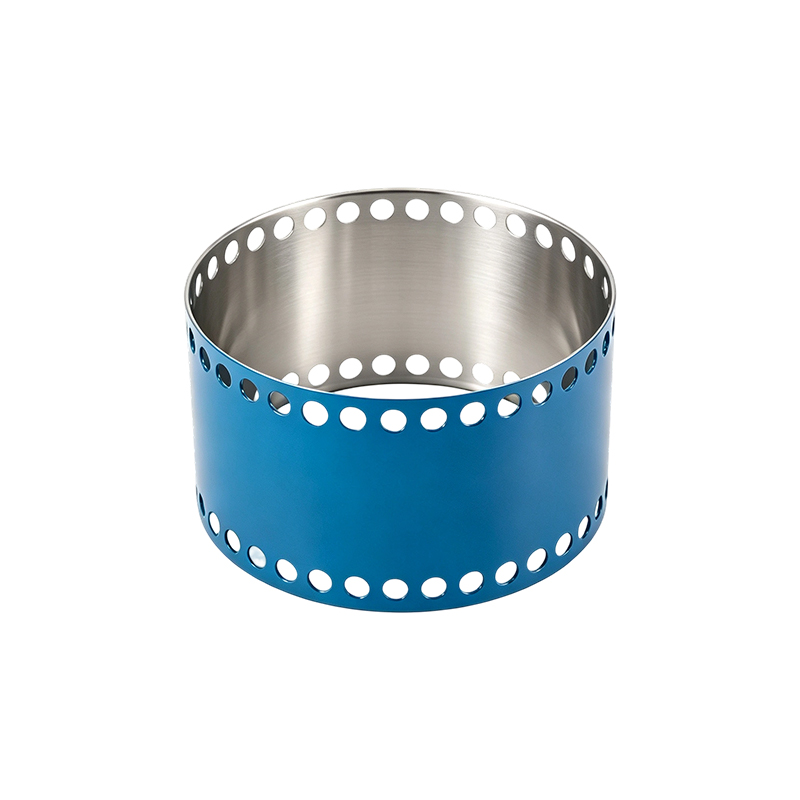
Inner Diameter 120 Steel Motor Housing
Product Overview
The Inner Diameter 120 Steel Motor Housing is a cylindrical steel component developed to accommodate motor internals while providing structural support and thermal management. Its principal function is to create a stable and accurately dimensioned enclosure around the stator and rotor assembly. The housing must remain sufficiently rigid during operation, tolerate assembly forces, maintain its form under temperature changes, and provide an appropriate interface for end covers, bearings, seals, and related components.
The nominal inner diameter is 120 mm. This dimension is central to the product's application because it determines the available internal space for the motor's active components and affects the relationship between the stator outer diameter and the housing. A controlled inner diameter helps ensure that the stator can be positioned correctly without excessive clearance or interference. It also contributes to consistent magnetic alignment and predictable assembly conditions.
The housing height is 69.9 mm, providing a defined axial envelope for the motor assembly. Height accuracy affects the fit of end covers and the axial positioning of the internal components. In compact motor designs, a difference of even a small fraction of a millimeter can influence compression, bearing alignment, rotor clearance, and the overall stack-up of components. The specified height therefore supports repeatable assembly and helps designers establish a reliable dimensional reference.
The wall thickness is 1.2 mm. This thin-wall construction is an important characteristic of the product. It offers a practical balance between material efficiency, overall weight, manufacturability, and structural rigidity. Compared with a thicker housing designed with less precise forming control, the 1.2 mm configuration can reduce steel usage and help lower the mass of the completed motor. At the same time, the cylindrical shape distributes loads around the circumference, allowing the housing to maintain useful stiffness when correctly formed and supported by the motor assembly.
The outside diameter is 122.4 mm, which corresponds to the nominal inner diameter and wall thickness. Maintaining a consistent relationship between these dimensions is essential for production repeatability. It allows customers to design surrounding brackets, end covers, mounting interfaces, and protective structures around a dependable external envelope.
The listed material specifications are SPCC, ST12, and DC01. These low-carbon steel grades are commonly associated with forming performance, consistent sheet quality, and suitability for precision sheet-metal components. Material selection can be adapted according to the customer's application, forming requirements, corrosion expectations, surface treatment, and supply standards. Final material confirmation should be made according to the customer's technical drawings and procurement specifications.
Key Technical Specifications
| Item | Specification | Engineering Significance |
|---|---|---|
| Product type | Steel motor housing | Provides structural protection and dimensional support for motor internals |
| Inner diameter | 120 mm | Defines the primary internal motor assembly envelope |
| Height | 69.9 mm | Controls the axial housing dimension and end-cover relationship |
| Wall thickness | 1.2 mm | Supports lightweight construction and efficient material usage |
| Outside diameter | 122.4 mm | Provides the external installation and design envelope |
| Material specifications | SPCC / ST12 / DC01 | Offers low-carbon steel options suitable for forming and fabrication |
| Roundness | ≤ 0.08 | Helps maintain circularity and consistent internal fit |
| End-face parallelism | Within 0.1 mm | Supports accurate end-cover mating and sealing reliability |
| Cooling design | Ventilation holes at both ends | Establishes an axial airflow channel for heat removal |
The specifications above should be evaluated together rather than individually. A housing with a nominally correct inner diameter may still create assembly problems if roundness is poor. Similarly, a thin wall may reduce weight, but it must be combined with controlled forming, appropriate end-face processing, and suitable inspection. The value of this product lies in the coordinated control of its geometry, material, ventilation, and manufacturing processes.
Lightweight Construction Without Unnecessary Compromise
Weight reduction is an important consideration in modern motor design. Lower housing mass can simplify handling during assembly, reduce shipping weight, improve the power-to-weight ratio of the final product, and contribute to the compactness of equipment. In applications such as household appliances, portable equipment, robotics, electric mobility systems, and space-constrained industrial machinery, every reduction in unnecessary material can provide a practical design advantage.
The 1.2 mm wall thickness of this steel motor housing is intended to support this objective. Instead of relying only on a heavy section to achieve rigidity, the design uses the natural strength of a cylindrical shell and controlled manufacturing processes to achieve a balanced result. A round housing distributes circumferential forces efficiently and avoids the stress concentration that can occur in less continuous structures. When the material is properly formed and the geometry is accurately controlled, the housing can remain stable while using less steel.
Compared with heavier motor housings, this product may help customers reduce the overall weight of the motor assembly. This can be beneficial during automated handling, line-side assembly, and transportation. It can also support equipment designers who are attempting to reduce the weight of a finished product without changing the motor's essential operating dimensions.
Lightweight construction must not be considered separately from stiffness. A housing that is too flexible may allow vibration, distort under clamping forces, or create a poor fit with end covers. The product's precision end-face machining, controlled roundness, and defined dimensional envelope are therefore important supporting features. These characteristics help the thin-wall housing function as an engineered motor component rather than merely as a low-material enclosure.
Material Efficiency and Design Flexibility
SPCC, ST12, and DC01 steel options provide a useful basis for customers with different regional standards, procurement channels, and forming requirements. These materials are widely used in fabricated steel components because they can support stamping, drawing, forming, welding, and machining operations when properly specified and processed.
Material selection may influence surface quality, forming behavior, yield strength, weldability, and finishing requirements. For this reason, a professional supplier should review the complete application before finalizing the material grade. Factors such as motor operating temperature, exposure to humidity, required coating, welding method, storage conditions, and expected service life may affect the best material and surface-treatment solution.
Jiangsu Yufeng Electric can coordinate material processing with subsequent manufacturing stages. This helps reduce the risk that a material choice made during the design stage conflicts with stamping, welding, machining, or finishing requirements. A coordinated review is particularly useful for customers developing a new motor platform or transferring a housing design from prototype to mass production.
Precision Geometry for Consistent Motor Assembly
Precision is essential in a motor housing because the component establishes several reference surfaces at once. The inner cylindrical surface affects the stator fit. The end faces determine how the end covers seat against the housing. The external diameter affects mounting and surrounding component interfaces. The axial height influences the assembled stack-up. Roundness affects the uniformity of clearances and the position of internal components.
This product has a roundness specification of no more than 0.08. Controlled roundness helps the housing maintain a more uniform circular profile. This can assist with stator insertion, reduce localized interference, and support predictable positioning. It may also help reduce the risk of uneven contact between the housing and components installed inside or around it.
The end faces are precision-machined with a parallelism tolerance within 0.1 mm. This feature is especially important because end covers commonly serve several functions. They may support bearings, retain seals, locate internal components, close the motor enclosure, and help manage axial loads. If the housing end faces are not sufficiently parallel, an end cover may tilt or sit unevenly. Such misalignment can affect bearing positioning, sealing pressure, rotor clearance, and vibration behavior.
By controlling end-face parallelism, the housing supports a more reliable relationship between the enclosure and the end covers. It can also make the assembly process more repeatable by reducing the need for manual correction, selective fitting, or excessive tightening. In a high-volume production environment, these benefits can contribute to improved line efficiency and fewer dimensional-related rework events.
Precision machining is not a substitute for good design, and it cannot correct every upstream forming problem. The best results are achieved when stamping or forming creates a stable base geometry, welding is controlled to minimize distortion, and machining removes only the necessary amount of material from accurately supported workpieces. Jiangsu Yufeng's integrated process structure allows these stages to be considered as part of one manufacturing route.
Ventilation Design and Thermal Performance
Heat management is one of the most important responsibilities of a motor housing. Electrical losses in the windings, magnetic losses in the core, bearing friction, and mechanical losses all contribute to heat generation. If heat cannot be removed effectively, the motor temperature may rise, insulation may age faster, lubricant performance may deteriorate, and the expected service life may be reduced.
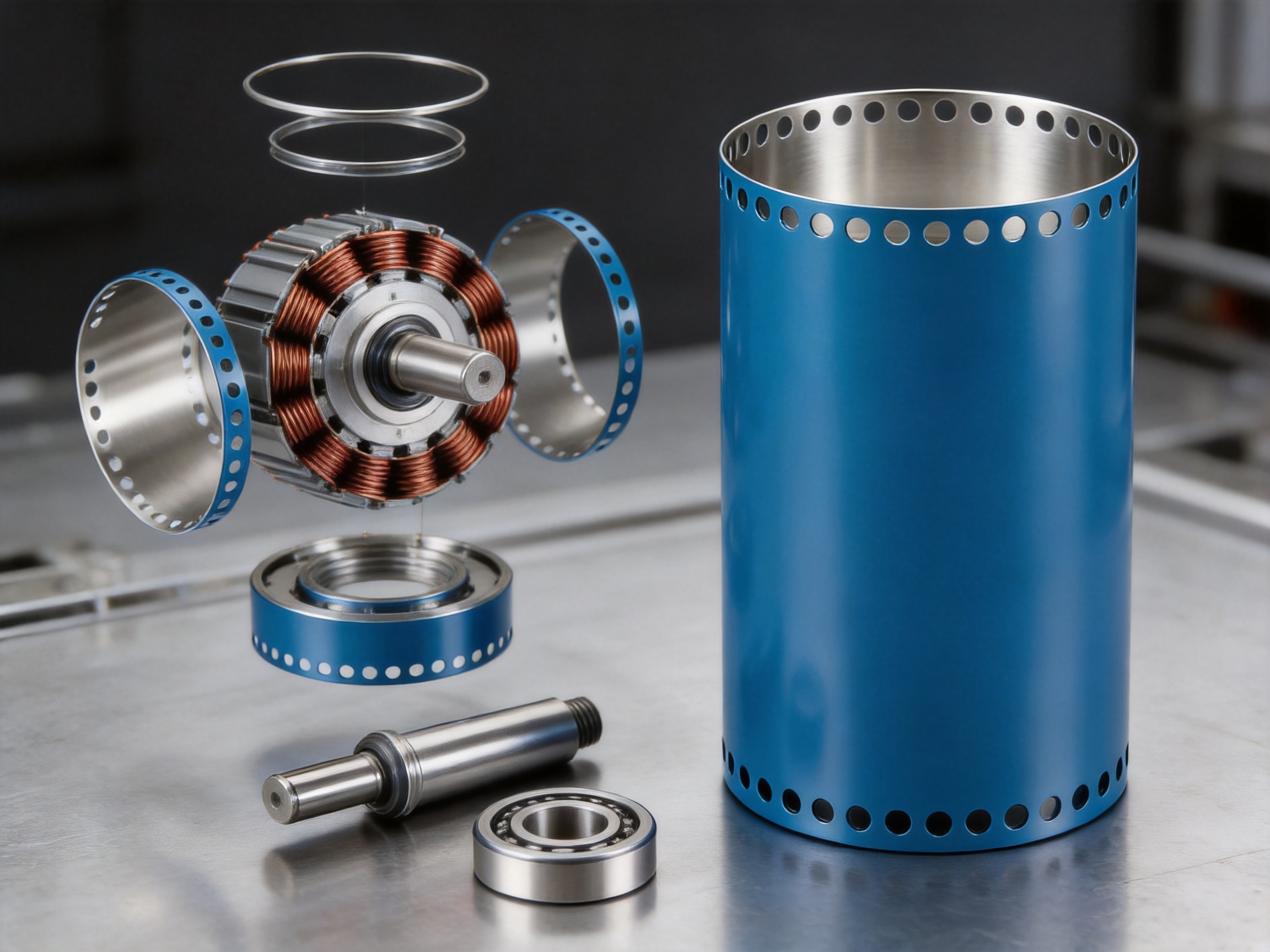
The Inner Diameter 120 Steel Motor Housing incorporates ventilation holes at both ends. These openings are arranged to establish an axial airflow channel through the housing interior. As air moves through the housing, it can carry heat away from the stator and rotor assemblies. The result is a more direct cooling path than a fully enclosed structure with limited air movement.
An axial cooling channel is useful because it guides airflow along the length of the motor. When the surrounding motor design includes a suitable fan, impeller, pressure differential, or natural-convection arrangement, the housing openings can support the movement of air through the internal area. Cooling effectiveness will depend on the complete motor system, including fan performance, airflow resistance, ventilation layout, rotor speed, winding losses, ambient temperature, and installation orientation.
The ventilation design also supports continuous-duty applications in which the motor may operate under sustained load. By assisting heat transfer, the housing can help reduce thermal stress on the motor components. This can be valuable in industrial drives, appliances with extended operating cycles, ventilation equipment, pumps, and special-purpose machinery.
Ventilation holes must be designed and manufactured carefully. Their size, position, quantity, and relationship to the stator and rotor influence airflow and structural integrity. The openings should not create excessive burrs, sharp edges, or interference with internal components. Appropriate deburring, inspection, and finishing are therefore important parts of the production process.
Thermal Advantages Compared with Less Ventilated Designs
A motor housing without an effective ventilation path may rely primarily on conduction through the housing wall and end covers. While conduction remains important, it may not be sufficient for every high-load or continuous-duty application. A housing with ventilation openings can enable greater interaction between the internal heat sources and moving air, potentially improving the overall cooling arrangement.
Compared with a basic closed shell, the ventilated design offers a more deliberate approach to thermal management. It gives motor designers an additional tool for controlling temperature rise without necessarily increasing the housing size. This can help preserve the 120 mm internal design envelope while supporting demanding operating conditions.
Ventilation is also relevant to product longevity. Lower operating temperatures can reduce thermal cycling stress and slow the aging of insulating materials. However, actual life extension depends on the complete motor design and operating environment. Customers should validate temperature rise through prototype testing or system-level thermal analysis before placing the housing into a final product.
Manufacturing Process and Quality Control
The performance of a thin-wall motor housing depends strongly on how it is manufactured. A robust production process must control material preparation, forming, trimming, welding where applicable, machining, ventilation-hole processing, surface treatment, and final inspection. Each step can affect the geometry and functional performance of the finished component.
Material Preparation
Production begins with the selection and preparation of suitable steel material. Incoming material should be reviewed for grade, thickness, surface condition, dimensional consistency, and compatibility with the planned forming process. Stable material properties are important because variations in sheet quality can influence springback, deformation, weld behavior, and final roundness.
Material preparation may include slitting, blanking, leveling, or other operations required to create consistent workpieces. Proper preparation helps ensure that the forming equipment receives material with predictable dimensions. It also supports more stable production from one batch to the next.
Stamping and Forming
Stamping and forming create the primary cylindrical body of the housing. Tool design, forming sequence, die condition, press parameters, lubrication, and material behavior all influence the resulting shape. A controlled process is particularly important for a 1.2 mm wall because thin material can be more sensitive to wrinkling, local deformation, tearing, and springback.
Engineering review is required to determine how the cylindrical shape should be formed and how the workpiece should be supported during the operation. The goal is to achieve a stable body with a consistent inner diameter, controlled outside diameter, and sufficient structural integrity for later processing. Tool maintenance and regular process checks help prevent gradual dimensional drift.
Welding and Assembly
Where the product configuration requires welding, welding assembly may be used to join formed sections or integrate additional features. Welding parameters must be selected to achieve adequate joint strength while minimizing heat distortion. Excessive heat input can affect roundness, end-face alignment, and the position of nearby features.
Automated welding equipment can improve repeatability by controlling torch movement, speed, current, and positioning. Fixtures are also important because they hold the housing in the correct geometry while the joint is created. After welding, the component may require inspection or correction before machining. The supplier's ability to coordinate welding with subsequent processes can be a significant advantage for customers who require consistent mass production.
Machining of End Faces
Precision machining is used to establish the final condition of functional end faces and other critical interfaces. The housing must be positioned securely so that machining references the actual cylindrical geometry rather than an unstable or distorted surface. Proper fixturing reduces the risk of producing an end face that is dimensionally correct at one location but misaligned relative to the housing axis.
Machining parameters, tool condition, cutting stability, and inspection frequency all influence end-face parallelism. The target of within 0.1 mm supports accurate mating with end covers. Depending on the customer's drawing, other operations may include drilling, reaming, tapping, chamfering, slotting, or the creation of additional mounting features.
Ventilation-Hole Processing
Ventilation holes can be created through stamping, punching, drilling, or a combination of processes. The appropriate method depends on the hole pattern, production volume, required edge quality, material behavior, and design tolerances. High-volume production may favor dedicated stamping or punching tools, while lower-volume or customized production may benefit from flexible machining methods.
Hole edges must be checked for burrs and deformation. Burr control is important because loose metal fragments can damage insulation, interfere with assembly, or enter moving areas of the motor. Deburring and cleaning should be included in the process plan, especially when the housing will be assembled directly with electrical and rotating components.
Surface Treatment and Finishing
Surface treatment can be selected according to the customer's environmental and appearance requirements. Options may include cleaning, oil protection, painting, powder coating, plating, or other finishing systems suitable for the chosen steel grade and operating environment. The correct treatment can improve corrosion resistance, handling durability, and compatibility with surrounding components.
Surface preparation is essential for coating adhesion. Manufacturing residue, oil, scale, and particles should be removed before finishing. Coating thickness and coverage may also require inspection, particularly around edges, ventilation holes, weld zones, and machined surfaces. The final treatment should not obstruct critical interfaces or alter dimensions beyond the customer's allowable limits.
Inspection and Measurement
Inspection instruments are used to verify the housing's dimensional and functional characteristics. Depending on the production program, inspection may include measurements of inner diameter, outside diameter, height, wall thickness, roundness, end-face parallelism, hole location, surface condition, and weld quality.
Inspection should be performed at multiple stages rather than only at the end of production. In-process checks can identify forming drift, tool wear, fixture movement, or machining variation before a large quantity of parts is affected. Final inspection confirms whether the finished product meets the agreed technical requirements before shipment.
A supplier with stamping, welding, machining, finishing, and inspection capabilities under one organizational structure can more easily connect measurement results with process adjustments. This is especially valuable when a customer needs corrective action, engineering changes, or production scaling.
Advantages Over Conventional or Less Specialized Motor Housings
The competitive value of this motor housing comes from the combination of dimensions, thin-wall design, precision, ventilation, and integrated manufacturing support. Customers should compare motor housings according to complete functional performance rather than unit price alone. A lower-cost housing may create additional expenses if it requires manual fitting, extra machining, thermal redesign, or higher rejection rates.
Advantage 1: Balanced Lightweight Design
At 1.2 mm wall thickness, the housing is designed to reduce material use while retaining the benefits of a continuous cylindrical structure. This can provide a more favorable weight-to-function relationship than heavy-wall alternatives. The result may support easier handling, more compact equipment, and lower material consumption.
Advantage 2: Controlled Assembly Interfaces
End-face parallelism within 0.1 mm gives the product a clearly defined assembly advantage. Accurate end faces can reduce the likelihood of tilted end covers, uneven sealing, and inconsistent axial positioning. This is particularly important when the end covers support bearings or other precision components.
Advantage 3: Improved Circularity
A roundness specification of no more than 0.08 supports more uniform internal geometry. This can make stator insertion more predictable and reduce local interference. It also gives motor designers a more reliable basis for calculating clearances and fitting conditions.
Advantage 4: Integrated Cooling Path
Ventilation holes at both ends create an axial airflow route through the motor. This feature distinguishes the housing from basic closed cylindrical shells that provide fewer options for internal air movement. When integrated with the rest of the motor's cooling system, the design can assist with temperature control during continuous operation.
Advantage 5: Material and Process Options
The availability of SPCC, ST12, and DC01 material specifications gives customers flexibility when aligning the housing with regional material standards or existing supply chains. Combined with stamping, welding, machining, and surface treatment capabilities, this supports customized production for different motor platforms.
Advantage 6: One-Source Manufacturing Coordination
When multiple suppliers perform forming, welding, machining, finishing, and inspection separately, communication gaps can occur. An integrated manufacturer can coordinate the process route, technical drawings, tooling requirements, inspection standards, and delivery schedule more efficiently. This may reduce the risk of mismatched tolerances and simplify supplier management.
Applications and Suitable Motor Systems
The product is suitable for motor systems in which a 120 mm internal diameter and 69.9 mm housing height match the required mechanical envelope. It may be used in household appliances, industrial drive units, ventilation equipment, pumps, compressors, special equipment, and selected new energy applications. Final suitability depends on the motor's electromagnetic design, load profile, temperature requirements, mounting configuration, environmental exposure, and certification needs.
Household Appliances
Household appliances often require motors that are compact, quiet, reliable, and suitable for high-volume production. A lightweight steel housing can simplify appliance assembly and help maintain a controlled product weight. Ventilation features may also support the thermal requirements of motors used for fans, blowers, pumps, and other continuously or intermittently operated appliances.
In appliance manufacturing, dimensional consistency is important because motor housings may be installed using automated or semi-automated equipment. Controlled roundness and end-face parallelism can help improve assembly repeatability and reduce the need for manual adjustment.
Industrial Drives
Industrial drives may operate under frequent starts, variable loads, or long duty cycles. These conditions place higher demands on mechanical integrity and thermal management. The steel construction provides a durable enclosure, while the ventilation design can support airflow through the motor. Customers should match the housing with an appropriate cooling system and validate performance under the intended load.
New Energy Equipment
New energy equipment often emphasizes compactness, efficiency, weight control, and reliable operation. The thin-wall structure may help designers manage the mass of a motor assembly, while precision interfaces support integration into a larger equipment package. Depending on the application, additional corrosion protection, sealing, electromagnetic considerations, and environmental validation may be required.
Special Equipment
Special-purpose machinery may require customized mounting holes, surface treatments, ventilation patterns, or end-cover interfaces. A manufacturer with engineering and in-house production resources can review these requirements and develop a suitable process plan. The standard 120 mm housing concept can serve as a foundation for customized versions rather than limiting customers to a fixed, non-modifiable configuration.
Engineering Considerations Before Adoption
Customers should provide a complete technical drawing or specification package when evaluating the housing for a new motor. Important information includes the stator outer diameter, rotor dimensions, end-cover design, bearing arrangement, seal requirements, mounting method, ventilation requirements, surface treatment, and expected operating environment.
The housing's inner diameter should be compared with the stator dimensions and any required insulation, liner, or clearance. Designers should determine whether the stator is press-fitted, bonded, mechanically retained, or installed using another method. The fit must be evaluated across the expected temperature range because steel and motor components may expand differently during operation.
The 69.9 mm height should be considered together with end-cover thickness, bearing seats, rotor stack length, shaft position, and axial preload. A proper tolerance stack-up analysis can identify potential assembly risks before tooling is released. This is particularly important in compact motors, where several components may share a limited axial space.
The ventilation-hole arrangement should be reviewed against the stator winding layout, insulation system, rotor movement, fan direction, and protection requirements. If the motor operates in a dusty, humid, or chemically aggressive environment, open ventilation may require filters, shields, special coatings, or an alternative cooling architecture.
Surface treatment should be specified according to storage, transport, installation, and operating conditions. Indoor appliance use may require a different finish from outdoor industrial equipment. Customers should also identify any restrictions on coating thickness, electrical grounding, weldability, or compatibility with adhesives and sealants.
Customization and Product Development Support
Standard dimensions provide a starting point, but many motor manufacturers require customized housings. Variations may include different inner diameters, axial heights, wall thicknesses, mounting features, ventilation patterns, end-face profiles, welding details, or surface finishes. A capable supplier should evaluate these changes in terms of tooling, forming feasibility, machining access, inspection method, production volume, and target cost.
Jiangsu Yufeng Electric provides technical support from product development through mass production. This allows the supplier to participate in early design reviews, identify manufacturing risks, recommend suitable process sequences, and prepare the product for stable production. Early engineering involvement can be particularly valuable when the housing uses a thin wall, tight parallelism requirement, or complex ventilation pattern.
Prototype development can be used to confirm the basic geometry, assembly fit, ventilation arrangement, and surface-treatment requirements. Testing may include dimensional verification, trial assembly with end covers, roundness measurement, thermal evaluation, vibration testing, and corrosion assessment when relevant. Feedback from these tests can then be incorporated into tooling or process adjustments before volume production.
For mass production, process documentation and inspection standards help maintain consistency. The supplier and customer can agree on critical-to-quality dimensions, sampling plans, appearance criteria, packaging methods, and change-control procedures. These measures support predictable supply as production quantities increase.
Company Manufacturing Strengths
Jiangsu Yufeng Electric Co., Ltd. is a professional motor housing manufacturer with experience in research, development, and production. Its capabilities cover stamping, welding assembly, machining, surface treatment, and inspection. The company serves customers in household appliances, industrial drives, new energy vehicles, and special equipment, giving it experience across several demanding application environments.
The company has approximately 40 years of experience in motor housing manufacturing and has served more than 50 customers. Its annual production capacity exceeds 5 million units. These figures indicate an established production base capable of supporting both ongoing supply programs and the process discipline required for volume manufacturing.
Its engineering team has an average of more than 20 years of experience. Engineering experience is important in motor housing production because many quality problems originate at the intersection of design and process. An experienced team can recognize risks involving material springback, weld distortion, fixture design, machining references, ventilation-hole burrs, surface treatment, and dimensional stack-up.
The company operates a full-process manufacturing model, from steel processing to finished product delivery. This can simplify project coordination for customers that prefer a single supplier for multiple operations. It also allows production feedback from stamping, welding, machining, finishing, and inspection to be brought together during process improvement activities.
Integrated Production Benefits
Integrated production can improve traceability because material, processing, inspection, and shipment records can be connected within one supply chain. If a dimensional issue occurs, the manufacturer can investigate the relevant forming, welding, or machining stage without waiting for information from multiple external companies.
It can also support faster response to engineering changes. When a customer modifies a hole pattern, coating requirement, end-face detail, or dimensional tolerance, the supplier can assess the effect across its own manufacturing departments. This may reduce the time required to coordinate tooling modifications and production trials.
Another benefit is process consistency. A housing formed by one supplier, welded by a second, machined by a third, and finished by a fourth may encounter differences in datum selection, handling methods, and acceptance criteria. A coordinated in-house process can reduce these interfaces and support a more consistent final product.
Quality and Delivery Orientation
Motor housings are often production-critical components. Delays or inconsistent quality can interrupt the assembly of complete motors and create costly line stoppages. Jiangsu Yufeng Electric emphasizes quality, efficiency, and fast response in its service approach. Its production capacity and full-process structure are intended to support stable delivery for customers with recurring requirements.
Customers should still establish project-specific quality agreements, inspection requirements, packaging standards, and delivery schedules. A strong supplier relationship is built through clear technical communication, documented acceptance criteria, and regular review of production performance.
Installation, Handling, and Maintenance Considerations
During assembly, the housing should be handled in a way that prevents dents, scratches, and deformation. Thin-wall components can be damaged by improper clamping or stacking, even when the finished part has adequate operating rigidity. Protective packaging and suitable workholding can help preserve roundness and end-face condition.
Before assembly, the inner surface and end faces should be free of chips, burrs, oil contamination, and foreign particles. Clean interfaces support accurate fitting and reduce the risk of debris entering the motor. If a sealant or adhesive is used, it should be compatible with the steel surface treatment and the motor's operating temperature.
End covers should be installed evenly and according to the specified tightening sequence. Excessive or uneven tightening may introduce distortion into the housing or end covers. Where the motor uses bearing-supported end covers, the assembly procedure should control axial alignment and bearing seating carefully.
Ventilation openings should remain unobstructed during assembly and operation. Cable routing, protective covers, filters, and nearby equipment should not block the intended airflow path. In dusty environments, regular cleaning or filtration may be required to maintain cooling performance.
Maintenance requirements depend on the complete motor system. Operators should monitor temperature, noise, vibration, and airflow during service. An unexpected increase in temperature or vibration may indicate a problem with the motor internals, bearings, ventilation path, mounting, or assembly alignment. The housing is one part of the system, and system-level maintenance remains essential.
Why Precision Matters to Total Cost
Purchase price is only one part of the cost associated with a motor housing. Additional machining, manual fitting, assembly delays, rework, rejects, field failures, and warranty claims can significantly increase the total cost of ownership. A housing with controlled geometry and stable production may provide better economic value even if its initial unit price is not the lowest available.
Accurate end faces can reduce assembly adjustment. Controlled roundness can help lower the risk of interference or uneven fit. Consistent ventilation holes can reduce manual deburring and inspection effort. Integrated manufacturing can simplify supplier management and shorten the response time when process issues occur.
For high-volume applications, even a small improvement in first-pass yield can create meaningful savings. If a housing is produced at millions of units per year, dimensional stability and process control become especially important. The supplier's annual capacity of more than 5 million units provides a foundation for customers evaluating long-term production programs.
Cost effectiveness should therefore be assessed through a broader review that includes tooling, assembly labor, inspection, logistics, quality risk, and expected service performance. The 120 mm steel housing is designed to support this broader value proposition through material efficiency, precision, cooling, and manufacturing integration.
Q&A
What is the main application of this product?
The product is a steel motor housing designed to enclose and support motor components such as the stator and rotor. It can be considered for household appliances, industrial drives, new energy equipment, and special machinery when the specified dimensions and performance characteristics match the motor design.
What is the inner diameter of the housing?
The nominal inner diameter is 120 mm. Customers should confirm the required fit with the stator, insulation system, and any internal retaining or locating features before production.
What are the height and outside diameter?
The housing height is 69.9 mm, and the outside diameter is 122.4 mm. These dimensions define the primary axial and radial installation envelope.
Why is the 1.2 mm wall thickness important?
The 1.2 mm wall thickness supports a lightweight design and efficient steel usage. It is intended to reduce unnecessary mass while retaining the structural benefits of a cylindrical steel enclosure. Final stiffness and strength should be evaluated in the context of the complete motor assembly and operating conditions.
Which materials can be used?
The listed material specifications are SPCC, ST12, and DC01. The final grade should be confirmed according to the customer's drawing, forming requirements, surface treatment, environmental conditions, and applicable material standards.
What does the roundness specification mean?
The roundness specification is no more than 0.08. It indicates controlled circularity of the housing and helps support consistent internal fitting, stator insertion, and dimensional repeatability.
How accurate are the end faces?
The precision-machined end faces have a parallelism tolerance within 0.1 mm. This helps the end covers seat more evenly and may improve assembly alignment and sealing reliability.
How does the ventilation design work?
Ventilation holes are designed at both ends of the housing. They establish an axial airflow path through the interior, allowing moving air to pass along the stator and rotor area. Actual cooling performance depends on the complete motor design, airflow source, operating speed, load, and ambient conditions.
Can the housing be customized?
Customized dimensions, ventilation patterns, mounting features, surface treatments, and other details may be developed according to customer requirements. Technical feasibility should be reviewed before tooling and mass production are confirmed.
What manufacturing processes are available?
The manufacturer provides stamping, welding assembly, machining, surface treatment, inspection, and finished-product delivery. These capabilities support integrated production from steel processing to completed motor housing.
How can customers validate suitability?
Customers should compare the housing dimensions with their motor drawings, perform a tolerance stack-up analysis, confirm material and surface-treatment requirements, and conduct trial assembly. Thermal, vibration, sealing, and durability testing may also be appropriate for the intended application.
What industries does the manufacturer serve?
The company serves customers in household appliances, industrial drives, new energy vehicles, and special equipment. Its process capabilities can also support related motor applications requiring stamped, welded, machined, and finished steel housings.
Conclusion
The Inner Diameter 120 Steel Motor Housing is a precision-oriented component designed for motor manufacturers seeking a balanced combination of light weight, dimensional control, structural support, and ventilation. Its 120 mm inner diameter, 69.9 mm height, 122.4 mm outside diameter, and 1.2 mm wall thickness provide a compact and material-efficient configuration. Controlled roundness of no more than 0.08 and end-face parallelism within 0.1 mm support more dependable fitting and assembly.
The ventilation holes at both ends provide a deliberate axial cooling path that can help manage temperature rise when incorporated into a suitable motor airflow system. This feature, together with the lightweight cylindrical construction, makes the housing a practical option for motors used in appliances, industrial equipment, new energy systems, and special-purpose machinery.
The product's competitive advantages are reinforced by Jiangsu Yufeng Electric Co., Ltd.'s integrated manufacturing capabilities. Stamping, welding, machining, surface treatment, and inspection are coordinated within one production organization. Supported by approximately 40 years of manufacturing experience, an experienced engineering team, service to more than 50 customers, and annual capacity exceeding 5 million units, the company can support customers from early product development through volume delivery.
For buyers evaluating motor housing suppliers, the most important considerations are not limited to nominal dimensions or initial price. Material consistency, forming stability, end-face accuracy, roundness, ventilation quality, surface protection, inspection capability, customization support, and delivery reliability all contribute to the final value of the component. When these factors are reviewed together, the 120 mm steel motor housing provides a strong foundation for reliable and efficient motor assembly.
References
1. International Organization for Standardization, “Geometrical Product Specifications and Geometrical Tolerancing Principles.”
2. International Organization for Standardization, “Geometrical Product Specifications and Geometrical Tolerancing: Form, Orientation, Location and Run-Out.”
3. International Electrotechnical Commission, “Rotating Electrical Machines: Rating and Performance.”
4. International Electrotechnical Commission, “Degrees of Protection Provided by Enclosures for Electrical Equipment.”
5. American Society for Testing and Materials, “Standard Specification for Cold-Rolled Carbon Steel Sheet.”
6. Association of Iron and Steel Technology, “Steel Sheet Forming and Manufacturing Practices.”
7. Motor design and manufacturing engineering references covering electric motor thermal management, stator housing fit, dimensional stack-up, and vibration control.
8. Supplier-provided technical information for the Inner Diameter 120 Steel Motor Housing, including dimensional specifications, material options, ventilation design, manufacturing capabilities, and company production information.

 Previous