

 English
 Español
Content
- 1 Product Overview
- 2 Why 304 Stainless Steel Is an Effective Housing Material
- 3 Structural Design and Mechanical Reliability
- 4 Mirror-Polished Surface Finish
- 5 Permanent Laser-Engraved Identification
- 6 Manufacturing Capabilities Behind the Product
- 7 Quality Control and Inspection Considerations
- 8 Advantages Over Competing Housing Options
- 8.1 Advantage One: Corrosion Resistance Without Dependence on Paint
- 8.2 Advantage Two: Stronger Construction Than Lightweight Alternatives
- 8.3 Advantage Three: Integrated Mounting Support
- 8.4 Advantage Four: Premium and Hygienic Surface
- 8.5 Advantage Five: Permanent Product Identification
- 8.6 Advantage Six: Full-Process Manufacturing Support
- 9 Application Areas
- 10 Installation and Use Recommendations
- 11 Maintenance and Service Life
- 12 Customization and Procurement Support
- 13 Why Manufacturing Experience Matters
- 14 Q&A
- 14.1 What is the material of this motor housing?
- 14.2 What are the main dimensions?
- 14.3 Why is the 3mm wall thickness important?
- 14.4 Is the base separate from the housing?
- 14.5 Can the welded base withstand motor vibration?
- 14.6 What is the purpose of the mirror polish?
- 14.7 Does the surface require special maintenance?
- 14.8 What is the benefit of laser engraving?
- 14.9 Can the product be customized?
- 14.10 Which industries can use this housing?
- 14.11 How should customers evaluate a motor housing supplier?
- 14.12 What information should be included in an inquiry?
- 15 Conclusion
- 16 References
- 17 Product: Inner Diameter 160 304SS Motor Housing With Base
Motor housings are essential structural and protective components in electric motor assemblies. They support the motor’s internal parts, help maintain alignment, protect sensitive components from mechanical damage, and provide a dependable mounting interface for integration into complete equipment. In applications exposed to moisture, cleaning chemicals, salt spray, vibration, heat, or continuous operation, the housing material and manufacturing quality directly influence the service life and reliability of the motor.
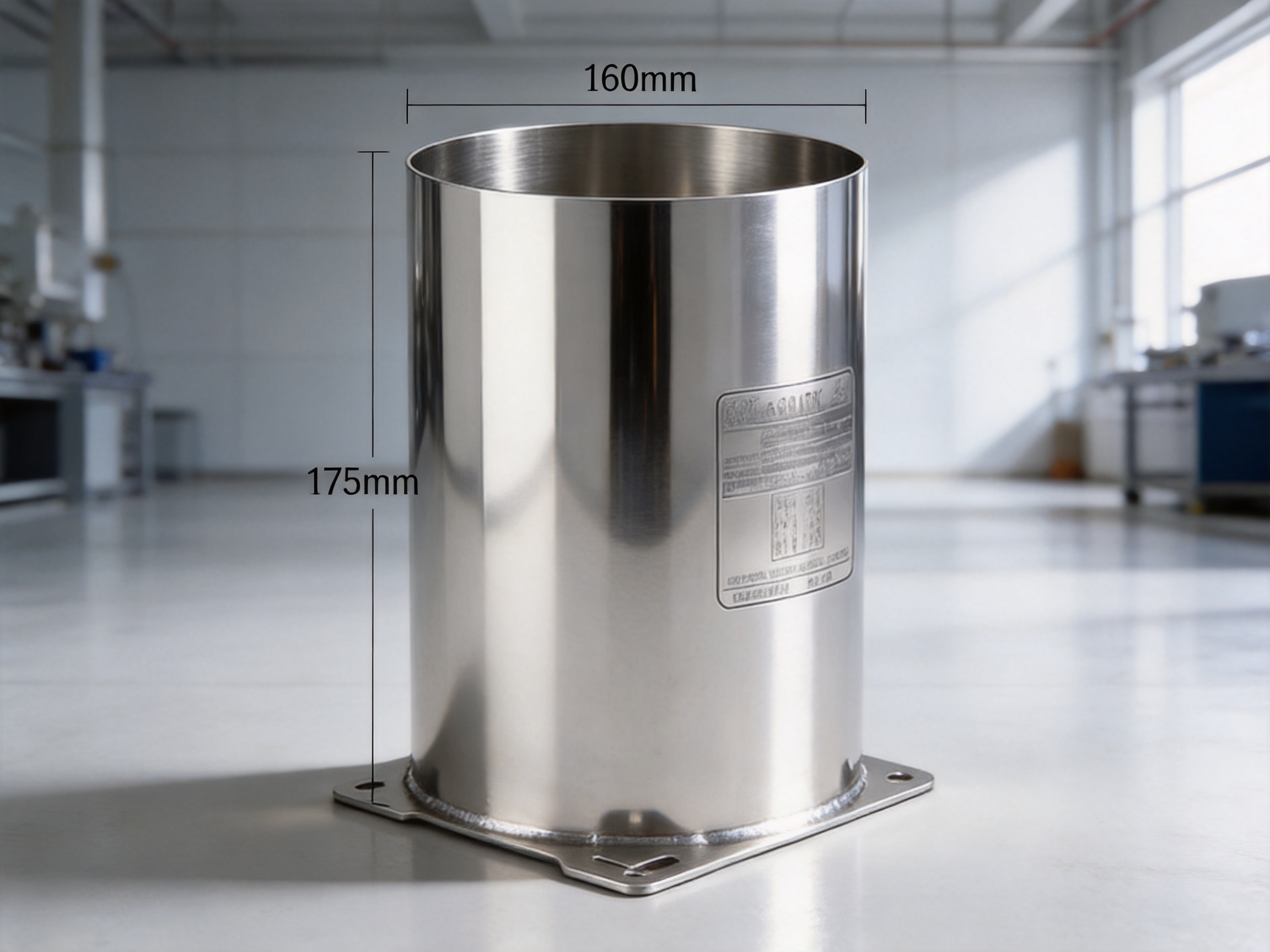
The Inner Diameter 160 304SS Motor Housing With Base is designed for demanding industrial and commercial applications that require corrosion resistance, structural strength, cleanability, and stable mounting performance. Produced from 304 stainless steel, this housing combines a 160mm inner diameter, a 175mm height, a 3mm wall thickness, a welded base, a mirror-polished exterior, and a permanently laser-engraved nameplate. These characteristics make it suitable for equipment manufacturers and system integrators seeking a robust alternative to ordinary carbon steel or thin-wall housings.
Its design is especially appropriate where the motor housing must perform reliably in humid, corrosive, hygienic, or vibration-prone environments. The stainless-steel construction resists rust and oxidation, while the reinforced wall provides a strong barrier against compression, impact, and deformation. The welded base adds practical value by simplifying installation and delivering a stable support surface for the complete motor assembly.
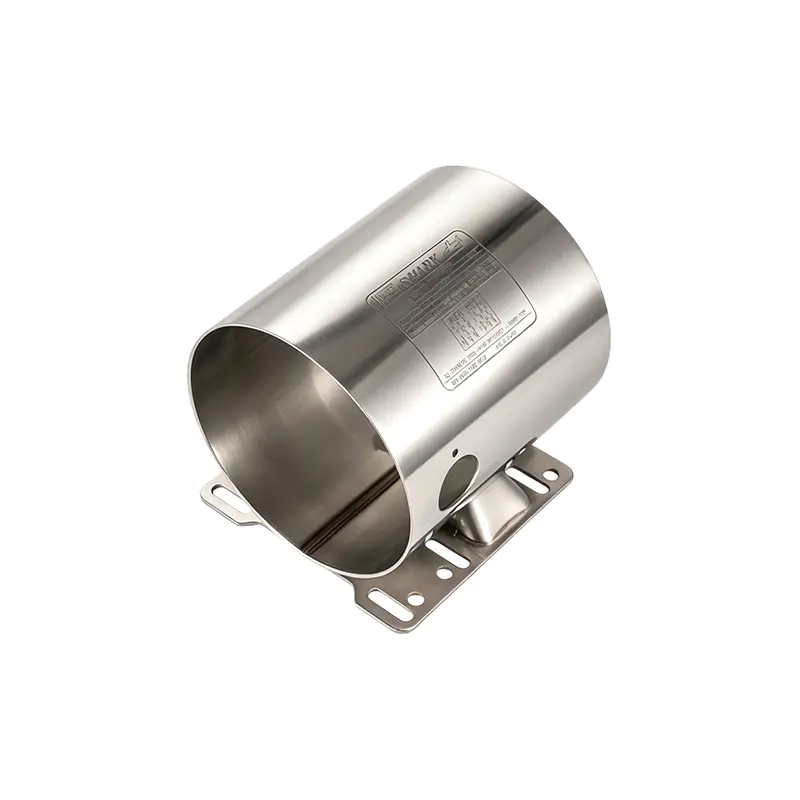
Inner Diameter 160 304SS Motor Housing With Base
Product Overview
The housing is manufactured with an inner diameter of 160mm, a height of 175mm, and a wall thickness of 3mm. These dimensions establish a substantial enclosure for compatible motor components while maintaining a compact cylindrical form. The inner diameter is an important specification because it determines the available space for the motor stator, insulation system, and related internal components. Correct dimensional control is therefore essential for assembly accuracy, electromagnetic performance, heat transfer, and long-term reliability.
The 175mm height provides the axial space required for the intended motor configuration and contributes to the overall positioning of internal parts. A housing that is too short may create assembly interference or insufficient support, while a housing that is too tall can increase unnecessary material use and installation space. The selected height offers a practical balance between enclosure capacity, structural support, and integration efficiency.
The 3mm wall thickness is one of the product’s primary structural advantages. Compared with lightweight housings made from thinner sheet, a 3mm wall can provide greater resistance to denting, vibration-induced deformation, and installation damage. It also gives the housing a more substantial feel and supports a stable relationship between the inner motor components and the external mounting structure.
| Specification | Product Information |
|---|---|
| Product type | Stainless steel motor housing with base |
| Material | 304 stainless steel |
| Inner diameter | 160mm |
| Height | 175mm |
| Wall thickness | 3mm |
| Base configuration | Welded base integrated with the housing |
| Surface finish | Mirror polish |
| Identification method | Laser-engraved nameplate |
| Typical application sectors | Household appliances, industrial drives, new energy equipment, food-related machinery, medical equipment, pharmaceutical equipment, and special machinery |
By combining these features in one component, the product reduces the need for additional protective treatment, separate mounting brackets, and temporary identification labels. This can simplify procurement, assembly, cleaning, and maintenance for customers who need a finished motor-housing solution rather than a basic unfinished shell.
Why 304 Stainless Steel Is an Effective Housing Material
Material selection has a direct effect on the performance of a motor housing. A motor enclosure may encounter water vapor, condensation, cleaning agents, airborne contaminants, salt, acidic residues, alkaline substances, or temperature variation. If the housing material corrodes, the resulting surface deterioration can affect appearance, dimensional stability, mounting strength, and protection of internal motor components.
304 stainless steel is widely used where a combination of corrosion resistance, strength, cleanability, and manufacturing flexibility is required. Its chromium content supports the formation of a passive protective layer on the surface. When the surface is properly processed and maintained, this layer helps reduce the progression of rust and oxidation in many common industrial and commercial environments.
For motor housings, this material offers several practical benefits. First, it helps preserve the external appearance of the product over time. Second, it reduces the risk that corrosion products will contaminate surrounding equipment or working areas. Third, it provides a durable substrate for polishing, welding, machining, and laser marking. Finally, it is suitable for applications where regular cleaning and sanitation are important.
The product description identifies the 304 stainless steel as corrosion-resistant, high-temperature resistant, and oxidation-resistant. These characteristics make it suitable for long-term use in humid environments and in applications involving exposure to acids, alkalis, or salt spray. The exact service performance will depend on the concentration of chemicals, operating temperature, exposure duration, cleaning method, and design of the complete motor assembly, but the material provides a stronger starting point than ordinary untreated steel.
Comparison with Ordinary Carbon Steel Housings
Carbon steel can provide good mechanical strength at a competitive initial cost, but it normally requires painting, plating, powder coating, or another protective treatment to resist corrosion. Once the coating is scratched, chipped, or worn away, the exposed steel may begin to rust. In a motor housing that is frequently handled, cleaned, or exposed to vibration, maintaining coating integrity can become a continuing concern.
The 304 stainless steel housing reduces dependence on an external paint layer for basic corrosion protection. Its surface remains metallic and can be polished to a high visual standard. This can lower the risk of coating flakes, simplify cleaning, and improve the appearance of equipment installed in visible areas. It also avoids the need to match paint colors or manage coating repair during maintenance.
Stainless steel may have a higher initial material cost than basic carbon steel, but the total value should be considered over the complete service life. Longer surface durability, reduced repainting requirements, improved hygiene, and better resistance to environmental exposure can help reduce maintenance and replacement costs.
Comparison with Thin-Wall Stainless Housings
Not all stainless steel housings offer the same level of mechanical protection. A thin-wall enclosure may resist corrosion while remaining vulnerable to denting, deformation, or damage caused by installation tools and repeated vibration. Material grade alone does not define the complete performance of a housing; wall thickness, geometry, weld quality, dimensional accuracy, and surface treatment are equally important.
The 3mm wall thickness gives this product an advantage where the housing must withstand external loads or repeated handling. The reinforced cylindrical body can help maintain its shape during assembly and operation. It also provides greater tolerance against localized impacts than a lighter, thinner enclosure.
For equipment designers, this means that corrosion resistance and structural durability are addressed together. Instead of selecting a thin corrosion-resistant shell and adding external reinforcement, the customer can use a substantial housing with an integrated base and finished surface treatment.
Structural Design and Mechanical Reliability
A motor housing must do more than surround the motor. It must help maintain the alignment of the internal assembly, resist external forces, transfer mounting loads, and remain stable under operating vibration. The cylindrical body of this product is designed to provide a continuous protective enclosure around the motor components.
The 3mm thickened wall contributes to compression resistance. During installation or equipment operation, the housing can be exposed to loads transmitted through mounting points, covers, brackets, or connected mechanical components. A thicker wall is less likely to collapse or distort under ordinary compressive forces than a thin sheet structure.
Impact resistance is also important. Motor housings may be moved through production areas, installed in confined spaces, or handled during service. Accidental contact with tools, equipment frames, or other components can produce localized impacts. A robust stainless body offers greater protection against dents and permanent deformation, helping preserve the internal clearance required for the motor.
Deformation resistance affects more than the external appearance. If the housing becomes distorted, the motor’s internal components may no longer remain concentric. Misalignment can increase friction, vibration, noise, and bearing loads. Maintaining the shape of the enclosure therefore supports the overall operating stability of the motor assembly.
Integrated Base Construction
The welded base is a major functional feature of this model. Rather than requiring a separate support bracket to be attached later, the base is integrated directly with the housing through welding. This creates a complete housing-and-mounting unit that can be positioned and installed as one component.
A properly welded base can provide a strong connection capable of withstanding the continuous vibration and impact loads generated during motor operation. The welding process must produce uniform, firm welds with adequate bonding and consistent penetration. Irregular or weak welds could create stress concentrations, looseness, or fatigue-related failure. For this reason, welding quality is central to the reliability of the product.
The integrated base also improves installation consistency. A separate bracket may require additional alignment, fasteners, adjustment, and inspection. With a welded base, the relationship between the cylindrical housing and the support surface is established during manufacturing. This can reduce assembly time and simplify the customer’s production process.
From a maintenance perspective, an integrated base reduces the number of separate parts that can loosen or become misplaced. It also creates a cleaner external structure with fewer connection points exposed to contamination. For equipment designers, this may translate into a more compact and reliable motor installation.
Vibration and Impact Considerations
Electric motors naturally generate vibration during operation. The magnitude depends on motor balance, bearing condition, rotational speed, load, installation accuracy, and the stiffness of the surrounding equipment. A housing that is too flexible can amplify movement or permit gradual distortion at the mounting area.
The combination of a substantial wall and welded base provides a stable foundation for the complete motor unit. The housing is better able to resist repeated movement, while the base offers a defined interface for attachment to the machine frame. In applications with especially high vibration, the complete system should still be evaluated for balance, fastener selection, foundation stiffness, and resonance behavior.
Impact loads may occur during transportation, installation, or equipment use. The robust structure helps protect the motor from external contact, but proper packaging and handling remain important. Customers should also verify that the housing is not subjected to loads beyond the intended design range.
Mirror-Polished Surface Finish
The mirror-polished surface gives the housing a bright, reflective appearance and a premium visual texture. This finish can be valuable in equipment where appearance, cleanliness, and professional presentation influence purchasing decisions. It is particularly appropriate for visible machinery, stainless production lines, laboratory equipment, and consumer-oriented products.
Polishing also provides functional benefits. A smooth surface has fewer irregularities where dirt, oil, moisture, or processing residues can accumulate. This can make the housing easier to wipe and clean. In environments requiring regular sanitation, a well-finished stainless surface can support more efficient cleaning routines when combined with suitable detergents and maintenance procedures.
The cleanability of the mirror finish makes the product attractive for food, medical, and pharmaceutical equipment. These sectors often place strict requirements on equipment surfaces, including resistance to contamination, ease of inspection, and compatibility with repeated cleaning. The housing’s surface treatment helps support these requirements, although the suitability of the complete assembly must be assessed according to the specific industry standard and cleaning chemicals involved.
A polished surface can also reduce the visual signs of ordinary handling and provide a consistent appearance across equipment assemblies. It is important, however, to protect the finish during transportation and installation. Abrasive tools, rough packaging, and contact with incompatible metals can scratch the surface. Protective film or suitable packaging practices may be used where appearance is critical.
Hygiene and Cleaning Advantages
In hygiene-sensitive applications, the ability to clean equipment thoroughly is just as important as corrosion resistance. Residues can collect in surface imperfections, around poorly finished welds, or in unnecessary seams and gaps. A smooth, carefully processed housing can reduce these risk areas.
The mirror-polished exterior supports visual inspection because stains, scratches, corrosion spots, and residue are easier to identify on a reflective surface. This can help maintenance personnel detect changes before they become serious problems. Regular inspection should include the base, weld zones, mounting interfaces, and any areas exposed to standing water or chemical deposits.
Customers should select cleaning agents compatible with 304 stainless steel and avoid procedures that could damage the passive surface layer. Chloride-rich chemicals, prolonged exposure to aggressive solutions, and contamination from carbon-steel particles can affect stainless surfaces. Appropriate cleaning and drying practices will help preserve the appearance and corrosion performance of the product.
Permanent Laser-Engraved Identification
The housing incorporates a laser-engraved nameplate process for product identification. Unlike an adhesive label, laser marking does not rely on glue that can dry out, peel, or lose adhesion. Unlike a conventional printed label, it is less vulnerable to fading caused by cleaning, ultraviolet exposure, abrasion, or moisture.
Permanent identification can support traceability throughout the product life cycle. Depending on the customer’s marking requirements, identification may include a model number, batch code, serial number, production date, material designation, or customer-specific reference. Clear marking helps production personnel, inspectors, and maintenance teams identify the correct component quickly.
The marking is also useful in environments where the housing is frequently wiped or washed. A durable engraved reference can remain readable after repeated cleaning, provided that the selected marking depth, contrast, and location are appropriate. This is a practical advantage over temporary paper labels or surface stickers.
For equipment manufacturers, the nameplate area can help organize documentation and service procedures. When a motor housing is integrated into a large production line, clear identification makes it easier to match the physical unit with drawings, inspection records, replacement orders, and maintenance instructions.
Manufacturing Capabilities Behind the Product
The product is manufactured by Jiangsu Yufeng Electric Co., Ltd., a professional motor-housing manufacturer with capabilities covering research and development, stamping, welding assembly, machining, surface treatment, and final production. This full-process structure is important because motor housing quality depends on the coordination of multiple operations rather than on one isolated process.
When a supplier controls major manufacturing steps internally, it can improve communication between engineering, production, quality control, and finishing departments. Design changes can be reviewed more efficiently, production problems can be addressed closer to their source, and process parameters can be coordinated across operations.
The company has approximately 40 years of experience in motor housing manufacturing and has served more than 50 customers. Its reported annual production capacity exceeds 5 million units. This combination of experience and capacity indicates an ability to support both development projects and repeat production programs.
Engineering and Product Development
Engineering support begins with understanding the customer’s motor dimensions, mounting requirements, operating environment, production volume, and quality expectations. A housing must be designed around the complete assembly rather than treated as an isolated metal part. Important considerations include inner diameter, height, wall thickness, base geometry, weld location, surface finish, identification, and inspection criteria.
The company’s engineering team has an average of more than 20 years of experience. This depth of practical knowledge can help customers identify potential problems before mass production, including interference between components, insufficient mounting support, difficult welding access, unsuitable surface treatment, or excessive dimensional variation.
Experienced engineering review is particularly valuable for customized motor housings. A customer may require changes to the base, holes, mounting points, height, diameter, material, marking, or finishing standard. Early evaluation can establish whether the requested design is suitable for stamping, welding, machining, and finishing at the required production volume.
Stamping and Steel Processing
Stamping and steel-processing capabilities provide the foundation for producing consistent metal components. The forming process must control the shape of the cylindrical body, maintain dimensional accuracy, and minimize defects such as wrinkles, cracks, excessive thinning, or distortion.
Process control is especially important for a housing with a specified 160mm inner diameter. Even small dimensional changes can affect motor insertion, stator fit, insulation clearance, and concentricity. Tooling condition, material preparation, forming sequence, and in-process inspection all influence the final result.
Using appropriate production equipment and standardized procedures helps achieve repeatable output. For larger production runs, stable stamping parameters can also improve efficiency and reduce variation between batches. This is important for customers who need consistent interchangeability across motors or equipment produced over an extended period.
Automated and Controlled Welding
Welding joins the housing and base into an integrated structure. The welding process must balance strength, appearance, distortion control, and corrosion performance. Excessive heat can cause deformation or discoloration, while insufficient heat can produce an incomplete or weak joint.
Automated welding equipment can improve repeatability by maintaining consistent travel speed, positioning, and process parameters. Controlled welding is especially beneficial when the same housing design is produced in large quantities. It helps reduce variation in weld location and appearance and supports more consistent inspection results.
Welded areas may require subsequent finishing, cleaning, or polishing to achieve the desired appearance. The relationship between welding and surface treatment must be carefully managed. The final product should combine a secure structural joint with a clean external finish suitable for the intended application.
Machining and Dimensional Refinement
Machining capabilities support accurate processing of critical surfaces, mounting areas, holes, interfaces, and other features that may require tighter tolerances than forming alone can provide. Machining can also help refine the base or correct specific functional dimensions after welding.
In a motor housing, dimensional accuracy affects assembly efficiency and operating stability. The inner surface, base location, mounting plane, and any connection features must work together. A housing that looks acceptable externally may still create installation problems if its functional dimensions are not controlled.
Integrated machining capacity allows the manufacturer to coordinate formed, welded, and machined features within one production system. This can reduce reliance on multiple outside suppliers and simplify quality responsibility for the customer.
Surface Treatment and Finishing
Surface treatment is a distinct manufacturing stage that influences both appearance and practical performance. For this product, mirror polishing creates the bright exterior finish required for premium appearance and easy cleaning. The process must be controlled to achieve a consistent visual result while avoiding excessive material removal or distortion.
Finishing also includes preparing the product for laser engraving and final inspection. A clear identification mark requires a suitable surface condition and a controlled marking process. The nameplate must remain legible while fitting naturally into the finished housing design.
Quality Control and Inspection Considerations
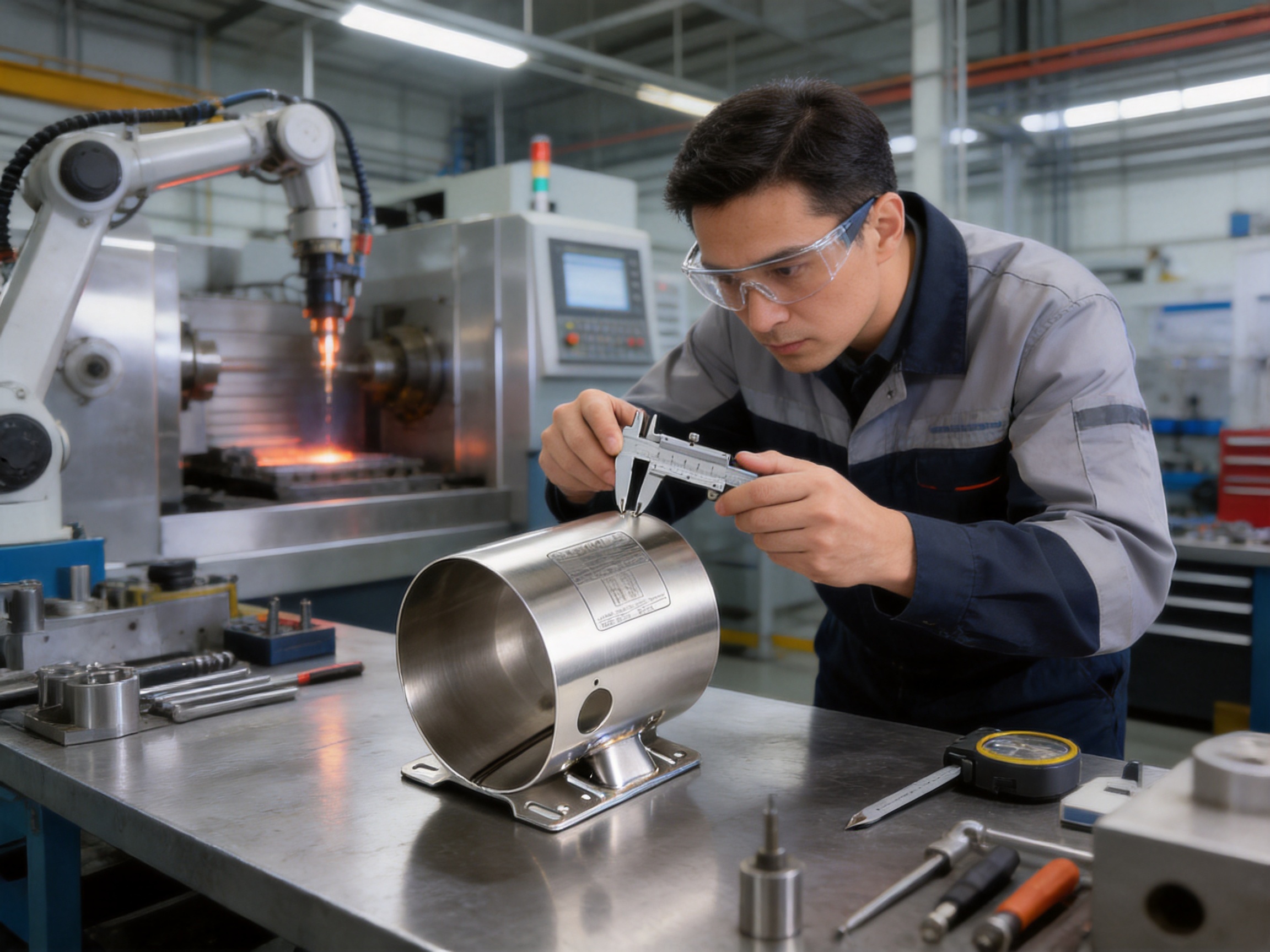
Reliable motor housing production requires inspection at multiple stages. Incoming stainless steel should be checked for material conformity, surface condition, thickness, and dimensional suitability. During forming, operators and inspectors can monitor diameter, height, roundness, and visible defects. After welding, the base position, weld quality, distortion, and overall geometry should be evaluated.
Final inspection should confirm the key product requirements: 160mm inner diameter, 175mm height, 3mm wall thickness, correct 304 stainless steel material, secure base attachment, acceptable mirror polish, and readable laser identification. Inspection methods may include dimensional gauges, calipers, micrometers, visual examination, surface inspection, and other checks defined by the customer’s quality plan.
| Inspection Area | Purpose | Typical Evaluation |
|---|---|---|
| Material verification | Confirm the specified stainless-steel grade | Material records, identification, and customer-approved verification method |
| Inner diameter | Ensure compatibility with internal motor components | Dimensional measurement at defined locations |
| Height | Confirm axial fit and assembly space | Measurement from the specified reference surface |
| Wall thickness | Verify structural design and material consistency | Direct or indirect thickness measurement |
| Base alignment | Ensure stable installation and correct positioning | Position, flatness, orientation, and mounting interface checks |
| Weld quality | Confirm structural integrity of the integrated base | Visual inspection and additional testing when specified |
| Surface finish | Maintain appearance and cleanability | Visual uniformity, polish quality, and defect inspection |
| Laser marking | Support traceability and product identification | Content, position, contrast, and readability |
Documented inspection results can provide customers with greater confidence during incoming inspection and production assembly. For repeat orders, the supplier can use approved samples, process records, and defined inspection standards to maintain consistency from batch to batch.
Advantages Over Competing Housing Options
The product’s competitive advantages come from the combination of material, thickness, integrated construction, surface treatment, identification, and manufacturing support. Any single feature can be found in other products, but combining them into one finished housing provides stronger practical value.
Advantage One: Corrosion Resistance Without Dependence on Paint
Compared with painted carbon steel, 304 stainless steel offers inherent corrosion resistance and eliminates the risk of paint peeling from ordinary surface wear. This is useful in humid areas, washdown environments, and equipment exposed to salt or chemical residues.
Advantage Two: Stronger Construction Than Lightweight Alternatives
The 3mm wall provides a more substantial structure than many thin-wall housings. It offers improved resistance to compression, impact, and deformation, helping maintain internal clearance and mounting stability.
Advantage Three: Integrated Mounting Support
The welded base reduces the need for an additional mounting bracket and minimizes the number of separate parts. This supports faster installation, better structural continuity, and a cleaner overall equipment design.
Advantage Four: Premium and Hygienic Surface
The mirror-polished exterior improves visual quality and supports cleaning. It is appropriate for applications where equipment appearance, hygiene, and surface inspection are important.
Advantage Five: Permanent Product Identification
Laser engraving offers a durable identification method that is more resistant to fading, peeling, and abrasion than ordinary labels. This supports traceability and maintenance over the service life of the motor assembly.
Advantage Six: Full-Process Manufacturing Support
Access to stamping, welding, machining, assembly, surface treatment, and inspection within one manufacturing organization can simplify supplier management. It also allows the product to be adapted to customer-specific requirements without coordinating numerous independent vendors.
Application Areas
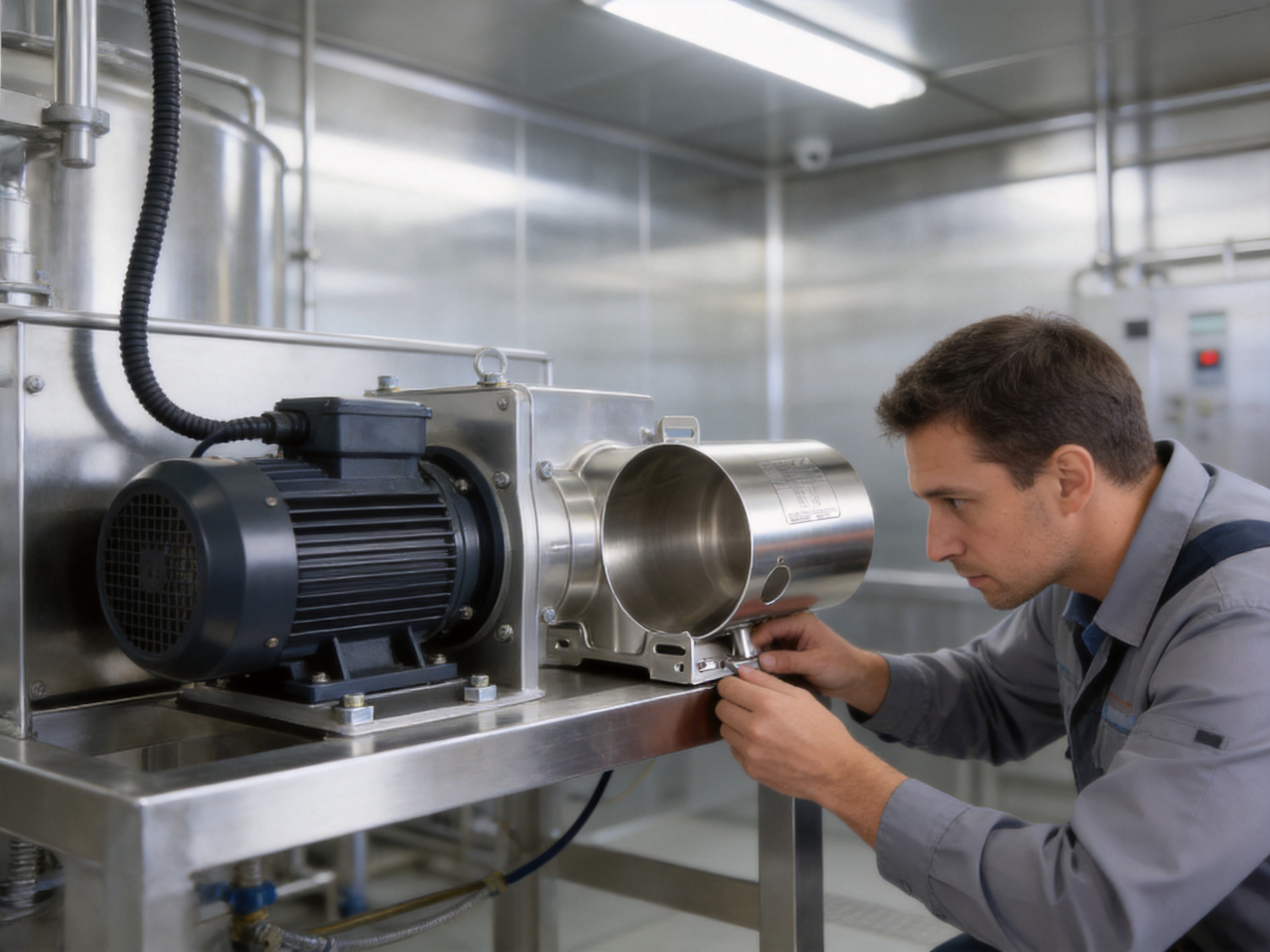
The housing can be used in a variety of applications where motors require dependable structural protection and environmental resistance. Its specific suitability depends on the motor design, operating temperature, chemical exposure, load, speed, and installation method, but the product features align with several demanding sectors.
Household Appliances
Household appliances may contain motors that operate in humid areas or near water, detergents, oils, and changing temperatures. A stainless housing can improve resistance to rust and help maintain a clean appearance. The polished finish may also complement appliances where the motor area is visible or where the product must meet high cosmetic expectations.
Industrial Drives
Industrial drive systems often operate for extended periods and may be exposed to dust, vibration, oil mist, or cleaning procedures. The rigid housing and integrated base provide a stable enclosure and mounting structure for compatible drive assemblies.
New Energy Equipment
New energy equipment may require corrosion-resistant and compact components for use in charging systems, auxiliary machinery, thermal management equipment, and specialized drive units. Stainless steel can be helpful where long service life, environmental durability, and clean appearance are priorities.
Food Processing Machinery
Food-related machinery often requires surfaces that are easy to clean and resistant to moisture. The mirror-polished stainless exterior can support sanitary maintenance practices, provided that the full motor assembly, weld design, seals, and installation arrangement comply with the applicable requirements.
Medical and Pharmaceutical Equipment
Medical and pharmaceutical equipment may place emphasis on surface cleanliness, traceability, and resistance to repeated cleaning. The combination of stainless steel, polished finishing, and laser identification makes the housing suitable for consideration in these environments.
Special Equipment
Special machinery frequently requires customized dimensions or mounting features. A manufacturer with engineering, forming, welding, machining, and finishing capabilities can adapt the basic housing concept to meet specific system requirements while retaining consistent production control.
Installation and Use Recommendations
Before installation, customers should verify that the 160mm inner diameter and 175mm height are compatible with the motor assembly, insulation system, bearing arrangement, and any required internal clearances. The housing should not be forced over components that are outside the intended dimensional range.
The base should be installed on a stable, flat support surface. Fasteners should be selected according to the equipment load, vibration level, mounting-hole design, and applicable engineering standards. Uneven support can introduce stress into the base and housing, so the installation surface should be checked before tightening.
During assembly, avoid striking the mirror-polished surface with steel tools or dragging the housing across abrasive surfaces. Protective materials should remain in place as long as practical. Any contamination from carbon-steel tools or particles should be removed promptly because embedded iron particles can create surface discoloration or localized corrosion.
After installation, inspect the base and surrounding structure for looseness, distortion, or abnormal vibration. If unusual noise or movement occurs during motor operation, the complete system should be shut down and examined. Housing performance depends on correct motor balance, bearing condition, alignment, fastening, and foundation design.
Maintenance and Service Life
Routine maintenance should include visual inspection of the stainless surface, welded base, mounting points, and laser-engraved identification. The housing should be cleaned using methods suitable for 304 stainless steel and the specific operating environment.
Although 304 stainless steel is corrosion-resistant, it is not immune to every chemical condition. Long exposure to aggressive chloride solutions, strong acids, or incompatible cleaners may damage the surface. Cleaning residues should not be allowed to dry on the housing, particularly in areas where liquid can collect around the base or welds.
A soft cloth or non-abrasive cleaning pad is generally preferable for preserving the mirror finish. Abrasive powders, rough wire brushes, and tools contaminated with ordinary steel should be avoided. After cleaning, drying the surface can reduce water spotting and help prevent deposits from accumulating.
The laser-engraved marking should be kept readable during maintenance inspections. If the product is installed in a location where the marking is difficult to see, the equipment documentation should record the housing identification and its relationship to the motor assembly.
Customization and Procurement Support
Customers may require variations in housing diameter, height, wall thickness, base configuration, mounting holes, surface treatment, or identification content. The manufacturer’s full in-house capabilities provide a foundation for evaluating these requirements from design through production.
A successful customization project should begin with complete technical information. Useful data includes motor drawings, internal component dimensions, operating speed, load, temperature, environmental exposure, mounting arrangement, expected annual volume, inspection requirements, and packaging expectations.
Engineering review can then determine the appropriate forming method, welding sequence, machining process, polishing standard, and inspection plan. Early clarification is especially important for the base because its geometry affects tooling, welding access, load distribution, installation space, and final dimensional control.
Customers should also define cosmetic expectations for the mirror finish. Terms such as polished, bright, or mirror finish can be interpreted differently unless the appearance standard, sample, inspection lighting, and acceptable surface defects are clearly established.
For laser engraving, the customer should provide the required text, symbols, code format, location, orientation, and readability expectations. A production sample or approved artwork can reduce the possibility of errors during mass production.
Why Manufacturing Experience Matters
Motor housings may appear simple because they consist primarily of a cylindrical body and a base. In practice, achieving consistent performance requires control over material behavior, forming accuracy, welding distortion, machining tolerances, polishing quality, and inspection procedures.
Long-term manufacturing experience helps a supplier recognize how one process affects another. For example, a forming operation that produces the correct initial diameter may still create distortion during welding. A strong weld may require finishing that affects the appearance of the mirror surface. A polished housing may need special handling to prevent scratches before shipment. Coordinating these details is essential to delivering a finished product that performs as intended.
Jiangsu Yufeng Electric combines approximately four decades of motor housing experience with production capabilities covering steel processing, stamping, automated welding, machining, assembly, and surface treatment. Its engineering team and production infrastructure are positioned to support both standard and customized projects.
The company’s reported annual capacity of more than 5 million units also indicates suitability for customers requiring scalable supply. Capacity alone does not guarantee quality, but when supported by process control and inspection, it can help customers maintain continuity as demand grows.
Q&A
What is the material of this motor housing?
The housing is made from 304 stainless steel. This material provides corrosion resistance, oxidation resistance, high-temperature resistance, and a cleanable surface suitable for many industrial, commercial, and hygienic applications.
What are the main dimensions?
The product has a 160mm inner diameter, a 175mm height, and a 3mm wall thickness. Customers should compare these dimensions with their motor drawings and required internal clearances before ordering.
Why is the 3mm wall thickness important?
The 3mm wall provides increased resistance to compression, impact, vibration-related deformation, and handling damage compared with many lightweight thin-wall designs. It helps create a rigid protective enclosure for internal motor components.
Is the base separate from the housing?
No. The base is welded directly to the bottom of the housing. This integrated construction provides a stable mounting interface and reduces the need for a separate support bracket.
Can the welded base withstand motor vibration?
The welded base is designed to provide firm structural support under continuous vibration and impact loads generated during motor operation. Actual system performance also depends on motor balance, fasteners, support-frame stiffness, alignment, and operating conditions.
What is the purpose of the mirror polish?
The mirror polish gives the housing a bright, premium appearance and creates a smooth surface that is easier to clean and inspect. It is especially useful in food, medical, pharmaceutical, and visible equipment applications.
Does the surface require special maintenance?
Routine cleaning should use methods compatible with 304 stainless steel. Abrasive tools, harsh chemicals, chloride-rich residues, and contamination from ordinary carbon steel should be avoided to protect the finish and corrosion resistance.
What is the benefit of laser engraving?
Laser engraving provides clear, permanent identification that is more resistant to fading, peeling, corrosion, and abrasion than adhesive labels. It can support model recognition, batch traceability, and maintenance management.
Can the product be customized?
Customization may be possible depending on the required changes. Potential areas include dimensions, base design, mounting features, material, surface treatment, and identification. Technical drawings and application information should be provided for engineering evaluation.
Which industries can use this housing?
Potential sectors include household appliances, industrial drives, new energy equipment, food machinery, medical equipment, pharmaceutical equipment, and special machinery. The final application should be checked against the operating environment and relevant industry requirements.
How should customers evaluate a motor housing supplier?
Customers should consider material control, dimensional capability, welding quality, machining resources, surface treatment, inspection systems, engineering support, production capacity, delivery reliability, and experience with similar motor applications. A supplier capable of managing the complete process can reduce coordination risk.
What information should be included in an inquiry?
An inquiry should include the motor drawing, required inner diameter and height, wall thickness, base dimensions, mounting requirements, material preference, surface finish, marking content, annual volume, operating environment, inspection standards, and packaging requirements.
Conclusion
The Inner Diameter 160 304SS Motor Housing With Base is a robust, finished motor-housing solution for applications that demand corrosion resistance, structural strength, cleanability, and reliable mounting. Its 304 stainless-steel construction helps protect against humidity, oxidation, acids, alkalis, and salt spray. The 3mm wall provides a strong barrier against compression, impact, and deformation, while the welded base creates an integrated support structure for the complete motor assembly.
The mirror-polished surface improves appearance and supports cleaning in hygiene-sensitive environments. The laser-engraved nameplate provides durable product identification for traceability and maintenance. Together, these features offer practical advantages over ordinary painted steel housings, thin-wall alternatives, and assemblies that require separate mounting brackets or temporary labels.
Behind the product is a full-process manufacturing system that includes engineering development, stamping, welding, machining, assembly, surface treatment, and inspection. Supported by approximately 40 years of motor housing experience, an experienced engineering team, more than 50 customers served, and an annual production capacity exceeding 5 million units, Jiangsu Yufeng Electric can support customers from initial design evaluation through repeat production.
For equipment manufacturers and system integrators seeking a durable stainless motor enclosure, this housing provides a balanced combination of environmental resistance, mechanical reliability, premium finishing, and manufacturing support. Its dimensions and configuration should be confirmed against the customer’s motor design, but the overall construction makes it a strong candidate for demanding industrial, commercial, and hygienic applications.
References
1. ASTM International. Standard Specification for Stainless Steel Sheet and Plate Materials.
2. International Organization for Standardization. General Guidance for Geometrical Product Specifications and Dimensional Inspection.
3. International Organization for Standardization. Stainless Steels: Technical Guidance on Corrosion Resistance and Surface Treatment.
4. American Welding Society. Welding Quality and Inspection Principles for Fabricated Metal Components.
5. International Electrotechnical Commission. Rotating Electrical Machines: General Construction and Performance Considerations.
6. ASM International. Stainless Steels: Properties, Selection, and Applications.
7. Manufacturing engineering principles for stamping, welding, machining, polishing, and inspection of stainless-steel components.

 Previous