

 English
 Español
Content
- 1 Product Overview
- 2 Heavy-Wall Construction and Structural Reliability
- 3 Integrated Heat Dissipation Thread Design
- 4 Dimensional Accuracy and Assembly Compatibility
- 5 Manufacturing Process Capabilities
- 6 Advantages over Conventional Competitor Designs
- 7 Manufacturing Strengths of the Supplier
- 8 Application Areas
- 9 Design and Procurement Considerations
- 10 Quality Management and Production Consistency
- 11 Installation and Handling Guidance
- 12 Q&A
- 12.1 What is the inner diameter of this motor housing?
- 12.2 What are the height and outside diameter?
- 12.3 What is the wall thickness?
- 12.4 What material is used?
- 12.5 How does the housing support heat dissipation?
- 12.6 Is this housing suitable for high-torque motors?
- 12.7 How is the housing different from a smooth-wall steel housing?
- 12.8 Can the product be customized?
- 12.9 What manufacturing processes are available from the supplier?
- 12.10 What industries can use this type of housing?
- 12.11 Does the housing itself determine the motor’s temperature performance?
- 12.12 What information should be provided for a quotation?
- 13 Conclusion
- 14 References
- 15 Product: Inner Diameter 113 Heavy-Wall Motor Housing
Motor housing performance has a direct influence on motor reliability, service life, thermal stability, assembly accuracy, and protection of internal components. Although a housing may appear to be a relatively simple cylindrical part, its dimensional accuracy, material selection, wall thickness, surface design, and manufacturing quality all affect the finished motor. For applications involving high torque, repeated vibration, impact, or extended operating cycles, a standard thin-wall enclosure may not provide sufficient structural support. The Inner Diameter 113 Heavy-Wall Motor Housing is designed for these more demanding conditions.
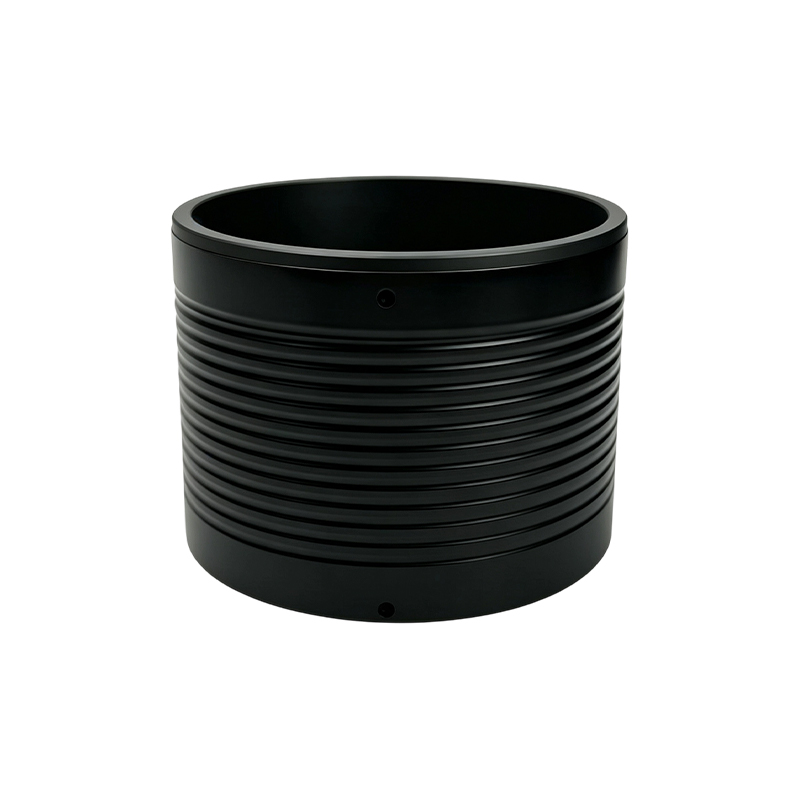
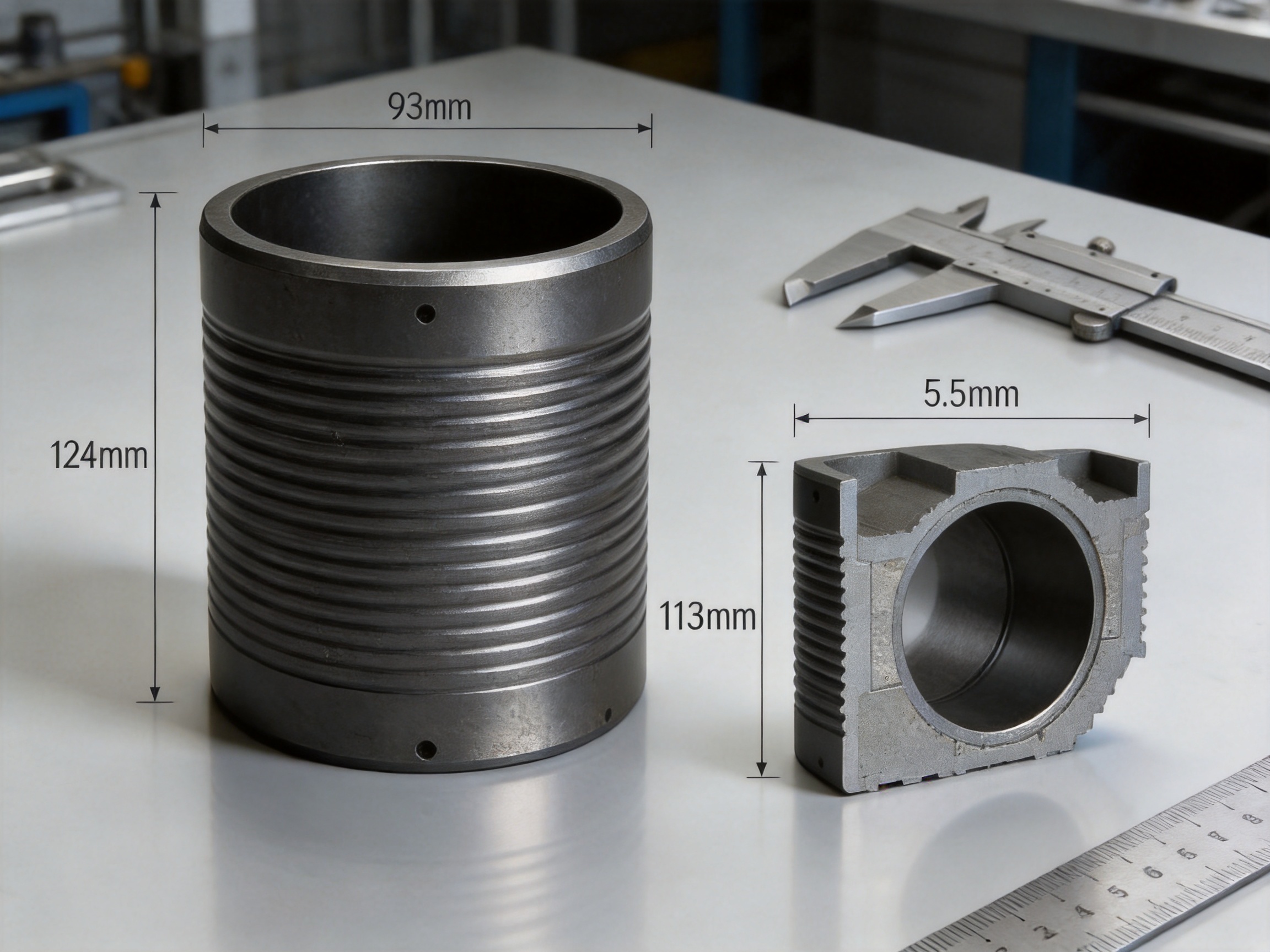
This steel tube motor housing has an inner diameter of 113 mm, a height of 93 mm, an outside diameter of 124 mm, and a wall thickness of 5.5 mm. Manufactured from 20# material specification steel, it provides a strong cylindrical structure for protecting motor components and supporting dependable assembly. Its heavy-wall construction improves resistance to deformation, while its exterior heat dissipation thread design increases the available cooling surface and creates natural airflow channels.
The product is manufactured by Jiangsu Yufeng Electric Co., Ltd., a specialist motor housing manufacturer with integrated capabilities in steel processing, stamping, welding assembly, machining, surface treatment, inspection, and finished-product delivery. The company’s full-process production model allows it to coordinate material preparation, forming, joining, machining, quality control, and customization within one manufacturing system.
This article examines the product’s technical characteristics, structural advantages, thermal performance, manufacturing process, quality considerations, application value, and purchasing factors. It also explains why a purpose-designed heavy-wall housing can offer advantages over conventional light-wall or inadequately cooled alternatives.
Inner Diameter 113 Heavy-Wall Motor Housing
Product Overview
The Inner Diameter 113 Heavy-Wall Motor Housing is a cylindrical steel housing developed for motor assemblies that require both dimensional stability and enhanced mechanical protection. Its principal function is to enclose and protect internal motor components while providing a stable external structure for integration into a larger motor system.
The housing’s 113 mm inner diameter defines the usable internal space for the motor assembly. This dimension must be controlled carefully because excessive variation can affect the fit between the housing and the stator, bearing supports, end covers, sleeves, or other associated parts. A controlled internal diameter helps manufacturers maintain repeatable assembly conditions and reduce the risk of looseness, interference, or uneven loading.
The 93 mm height establishes the axial length of the housing. This dimension is important for positioning internal components and ensuring that the complete motor assembly maintains the intended axial relationship. A housing that is too short may create assembly interference or insufficient support, while a housing that is too long can affect end-cover positioning, motor length, and installation compatibility.
The specified outside diameter is 124 mm, and the wall thickness is 5.5 mm. Together, these dimensions create a robust section capable of resisting external forces and maintaining its cylindrical form during motor operation. The relatively substantial wall thickness is particularly valuable in applications where the housing may be exposed to vibration, impact, high torque, repeated starts and stops, or mechanical loads transmitted through adjacent components.
The stated material specification is 20#. This steel material is suitable for many structural and fabricated motor housing applications when processed correctly and matched with the required design, surface treatment, and service environment. Material selection should always be confirmed against the customer’s applicable standards, mechanical requirements, corrosion expectations, and finishing specifications.
| Parameter | Specification | Engineering Significance |
|---|---|---|
| Product type | Heavy-wall steel tube motor housing | Provides a protective and structurally stable motor enclosure |
| Inner diameter | 113 mm | Defines the internal assembly space and fitting condition |
| Height | 93 mm | Controls axial installation space and overall housing length |
| Outside diameter | 124 mm | Defines external envelope and contributes to section rigidity |
| Wall thickness | 5.5 mm | Improves resistance to deformation, impact, and vibration |
| Material specification | 20# steel | Offers a practical carbon steel base for fabricated housing production |
| Cooling structure | Exterior heat dissipation threads | Increases heat transfer surface area and guides airflow |
| Product identification | ID113021 | Supports product identification and production traceability |
Heavy-Wall Construction and Structural Reliability
The main advantage of this product is its heavy-wall construction. A motor housing is not merely a cover. It can serve as a structural reference for internal parts, a mounting interface for external equipment, a barrier against impact, and a path through which heat is transferred to the surrounding environment. When the housing wall is too thin for the application, it may deform during handling, assembly, operation, or transportation.
The 5.5 mm wall thickness provides a substantial material section around the 113 mm internal diameter. Compared with a lighter construction designed only for basic enclosure duties, this configuration offers greater resistance to local denting and distortion. A more rigid wall can help preserve the alignment between the housing, stator, bearing supports, and end components.
Improved rigidity is especially important in high-torque motors. Torque creates a reaction force within the motor assembly, and the housing must help maintain the relative position of the internal components. If the enclosure flexes excessively, alignment may be affected. Misalignment can contribute to uneven air gaps, increased noise, bearing stress, mechanical friction, or accelerated wear. A rigid housing does not eliminate all motor design risks, but it provides a more stable foundation for the complete assembly.
Vibration resistance is another important benefit. Motors used in industrial drives, appliances, transportation equipment, and special machinery may experience continuous vibration or repeated dynamic loading. A heavy-wall cylindrical structure can reduce the likelihood of permanent deformation and can provide a more secure base for mounting and assembly. It also gives the product a robust feel during handling and integration.
Impact resistance is valuable throughout the product lifecycle. Housings may be moved between production stations, packed for shipment, installed in equipment, or serviced in difficult working environments. A stronger wall helps reduce the risk that ordinary handling impacts will create dents or dimensional changes that interfere with later assembly.
The cylindrical geometry itself contributes to structural efficiency. Curved walls distribute external loads around the circumference more effectively than flat unsupported panels. When combined with a comparatively thick wall, the cylindrical form provides a strong enclosure with good resistance to radial deformation. This is an important advantage for a motor housing that must maintain a precise internal cavity.
Compared with products selected solely for minimum material usage, this housing emphasizes operating stability and protective performance. The additional material may be particularly justified when the motor operates under high load, where replacement costs, downtime, and failure consequences are more significant than the initial difference in housing weight.
Protection of Internal Motor Components
The housing provides a protective barrier around internal components such as the stator, rotor, winding system, insulation structure, and associated supports. By enclosing these parts within a stable steel shell, the product helps protect them from external contact, accidental impact, assembly damage, and environmental exposure appropriate to the final motor design.
Protection must be understood as part of a complete motor system. The housing alone does not determine the motor’s sealing rating, corrosion resistance, or environmental classification. End covers, seals, coatings, cable entries, fasteners, and assembly methods must also be designed correctly. Nevertheless, the housing is a critical primary barrier, and its dimensional and structural quality directly supports the reliability of the complete product.
A rigid enclosure can also improve consistency during downstream assembly. When the housing remains stable during pressing, fitting, welding, machining, or fastening operations, production teams can achieve more repeatable results. This is particularly valuable for high-volume motors, where small dimensional variations can become significant across large production runs.
Integrated Heat Dissipation Thread Design
Motor efficiency is affected by temperature. Heat is generated by electrical resistance, magnetic losses, friction, switching activity, and other operating factors. If this heat is not transferred away efficiently, the motor temperature may rise. Excessive temperature can shorten insulation life, accelerate lubricant degradation, increase thermal stress, and reduce the reliability of electrical and mechanical components.
The exterior of this housing features a dedicated heat dissipation thread design. The threads increase the effective external surface area compared with a smooth cylindrical wall. A larger surface area creates more opportunity for heat to move from the steel housing into the surrounding air or into an attached cooling structure.
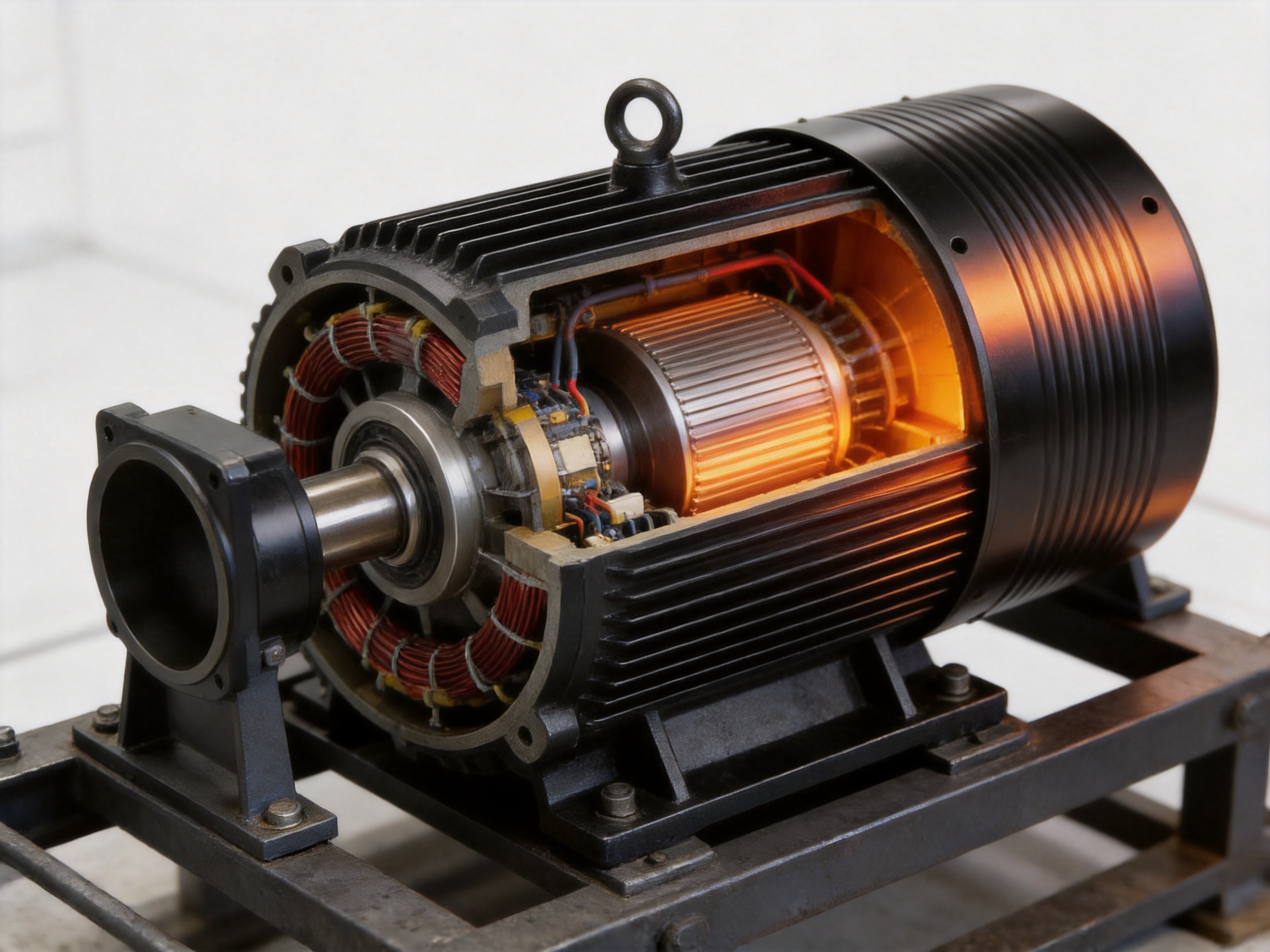
The thread grooves also form natural air guide channels. As air moves around the motor, the grooves can help direct airflow along the external surface. This supports convective heat exchange by encouraging contact between moving air and the heated steel wall. The actual thermal performance will depend on motor output, rotational speed, ambient conditions, airflow direction, installation clearance, coating, and the final system design, but the threaded exterior provides a purposeful thermal feature rather than relying only on a smooth enclosure.
Compared with a basic smooth-wall housing of similar dimensions, the threaded structure may offer a greater heat transfer area and better airflow interaction. Compared with a thin-wall housing that has no dedicated cooling geometry, it combines structural reinforcement with a thermal management feature. This combination can be valuable when the motor must operate continuously or repeatedly under demanding loads.
The exterior thread design also has potential system-level benefits. By supporting faster heat dissipation, it may help reduce temperature rise during operation. Lower operating temperature can contribute to longer insulation system durability and more stable performance over extended duty cycles. However, the housing should be evaluated as part of the complete thermal path. Heat must travel from internal sources to the housing wall and then from the outer wall to the environment. Proper internal contact, assembly pressure, ventilation, and installation clearance remain important.
Thermal Advantages over Conventional Smooth Housings
A smooth housing provides a simple external surface, but its cooling potential is limited by its available area and airflow pattern. Adding external threads or ribs increases the complexity of the surface, yet it also provides additional area for heat exchange. The threaded configuration can therefore be a practical solution when the motor envelope does not allow a substantial increase in overall diameter.
The design is also useful where passive or semi-passive cooling is preferred. Not every motor installation has room for a separate fan, large cooling jacket, or complicated thermal management assembly. A housing with an integrated heat dissipation feature can contribute to cooling without requiring a completely separate external component. The final result depends on the application, but integrating thermal geometry into the housing can simplify the overall architecture.
The grooves may additionally help prevent the external surface from behaving as a single uninterrupted boundary layer. Airflow patterns vary according to motor orientation and surrounding equipment, so the thread design should not be treated as a substitute for system-level thermal testing. Instead, it should be viewed as a strong foundation for improving the housing’s ability to release heat.
Dimensional Accuracy and Assembly Compatibility
Motor housing performance depends on more than nominal dimensions. Circularity, straightness, concentricity, end-face condition, local wall variation, and surface finish may all influence assembly. For a housing with a 113 mm inner diameter, the production process must be controlled so that the internal cavity remains suitable for the intended motor components.
Dimensional accuracy helps prevent several common assembly problems. If the inner diameter is undersized, insertion may require excessive force or may damage the stator and insulation system. If it is oversized, the fit may be loose, reducing mechanical stability or affecting heat transfer. If the housing is not sufficiently round, contact may be uneven, leading to localized stress and nonuniform thermal paths.
The 93 mm height must also be controlled to support correct axial positioning. End faces may need to be perpendicular to the housing axis so that covers, brackets, or other components seat evenly. Depending on the final design, machining may be used to achieve the required end-face flatness, bore quality, or reference geometry.
Jiangsu Yufeng Electric’s integrated production capability allows the housing to move through coordinated manufacturing stages rather than relying entirely on disconnected suppliers. This can improve communication between forming, welding, machining, surface treatment, and inspection teams. It also makes it easier to review a drawing, identify manufacturing risks, and adjust process parameters before mass production.
For customers with application-specific requirements, dimensional tolerances should be defined through engineering drawings and technical agreements. The nominal dimensions supplied for this product establish the basic configuration, while final tolerances should reflect the motor design, assembly method, equipment capability, and inspection requirements.
Manufacturing Process Capabilities
The quality of a motor housing is closely related to how well each manufacturing stage is controlled. A capable supplier must do more than produce a steel cylinder. It must manage material preparation, forming accuracy, joining quality, machining consistency, surface condition, inspection, packing, and production traceability.
Material Preparation
Production begins with suitable steel material matching the specified 20# material requirement and the customer’s applicable standards. Material preparation may include receipt inspection, dimensional verification, surface review, identification, cutting, and preparation for forming or other processing operations.
Material consistency is important because variations in thickness, surface condition, or chemical and mechanical properties can affect forming behavior and downstream machining. A disciplined incoming-material process helps prevent unsuitable material from entering production.
Forming and Stamping
Stamping and forming equipment can be used to create repeatable cylindrical or related steel components. Proper tooling design is essential for controlling shape, diameter, wall condition, and production repeatability. Forming parameters must be selected to reduce excessive stress, wrinkling, cracking, or distortion.
For a heavy-wall part, forming force and tooling strength must be matched to the material section. The objective is not simply to produce the required profile but to achieve a consistent profile that can proceed efficiently to later operations. Process capability studies and first-piece verification can help confirm whether the forming method is suitable for the specified production volume.
Welding Assembly
Where the housing design includes welded components or welded features, welding quality affects strength, dimensional stability, appearance, and service performance. Automated welding equipment can improve repeatability by controlling torch movement, welding speed, current, and other parameters. Fixtures help hold components in the correct position and limit distortion during joining.
Welding procedures should be selected according to material, joint design, thickness, required strength, and appearance. Post-weld inspection may include visual review, dimensional measurement, and additional testing when required by the application. Controlling heat input and sequence is important because excessive localized heat may cause warpage or affect the final fit.
Machining
Machining can refine critical dimensions and functional surfaces after forming or welding. Potential operations may include end-face machining, bore correction, turning, groove processing, drilling, tapping, or preparation of mounting interfaces. The exact process depends on the customer drawing and the required assembly relationship.
Machining is particularly useful when the housing must meet tighter requirements than can be achieved through forming alone. It can improve the relationship between the inner diameter, end faces, and external reference features. Consistent machining also supports reliable interchangeability across production batches.
Surface Treatment
Surface treatment can improve appearance, handling, corrosion resistance, and compatibility with the final motor environment. The appropriate treatment depends on the application, exposure conditions, customer requirements, and downstream assembly process. Possible requirements may include cleaning, protective coating, painting, plating, or another specified finish.
Surface treatment must be applied without compromising critical dimensions. Coating thickness, masking, edge coverage, curing, adhesion, and cleanliness may all require control. A supplier with integrated surface treatment capability can coordinate these requirements with machining and inspection instead of treating finishing as an unrelated final step.
Inspection and Testing
Inspection supports the consistency of the finished housing. Typical inspection activities may include dimensional measurement, visual examination, material verification, surface review, weld inspection, and functional fit checks. The exact inspection plan should be based on the product drawing, customer quality agreement, and application risk.
Inspection instruments should be selected according to the dimensions and tolerances being evaluated. Internal diameter, outside diameter, height, wall thickness, roundness, and end-face conditions may require different measurement methods. Proper calibration and documented inspection procedures help ensure that measurement results are reliable.
The company’s production system includes inspection instruments and quality control resources intended to support the transition from raw steel to finished motor housing. This integrated approach helps identify defects earlier and reduces the risk of passing an unsuitable part to the customer.
Advantages over Conventional Competitor Designs
Every motor housing must be evaluated according to its intended duty, but this product has several characteristics that distinguish it from basic alternatives.
Greater Resistance to Deformation
The 5.5 mm wall provides a stronger section than many lightweight housings designed for low-stress applications. It is better suited to situations where the housing may encounter impact, vibration, or load transfer. This does not mean that every competing housing will perform poorly, but a heavy-wall construction provides a clear structural advantage when rigidity is a priority.
Improved High-Torque Support
High-torque operation can impose greater reaction loads on the motor structure. A rigid housing helps maintain the geometry of the internal assembly and can reduce the risk of housing-related alignment changes. For industrial drives, special equipment, or motors with demanding starting and stopping cycles, this support can contribute to more stable operation.
Integrated Cooling Geometry
The exterior heat dissipation threads offer a cooling feature integrated into the housing itself. A conventional smooth-wall housing may require additional cooling components or may provide less external surface area. This product combines the protective role of a heavy-wall steel tube with a dedicated heat transfer structure.
Manufacturing Coordination
When stamping, welding, machining, surface treatment, and inspection are managed within one manufacturing organization, engineering communication can be more direct. This can reduce coordination problems related to dimensional handoffs, surface damage, process responsibility, and corrective action.
Customization Potential
The product is based on a defined configuration, but the manufacturer’s production capabilities support customization for customer-specific requirements. Depending on the project, customization may involve dimensions, mounting features, machining details, surface treatment, production quantities, packaging, or inspection documentation. Customization should be confirmed through technical drawings and formal review before production.
Suitability for Repeat Production
Motor manufacturers often require stable supply over multiple production cycles. A supplier with stamping lines, automated welding equipment, machining facilities, and established inspection procedures is better positioned to support repeat orders than a workshop limited to one isolated operation. Process documentation and production experience help support consistency as order quantities increase.
Manufacturing Strengths of the Supplier
Jiangsu Yufeng Electric Co., Ltd. specializes in the research, development, and production of motor housings. Its product range is associated with household appliances, industrial drives, new energy vehicles, and special equipment. These application areas require different combinations of strength, precision, thermal management, surface quality, and production reliability.
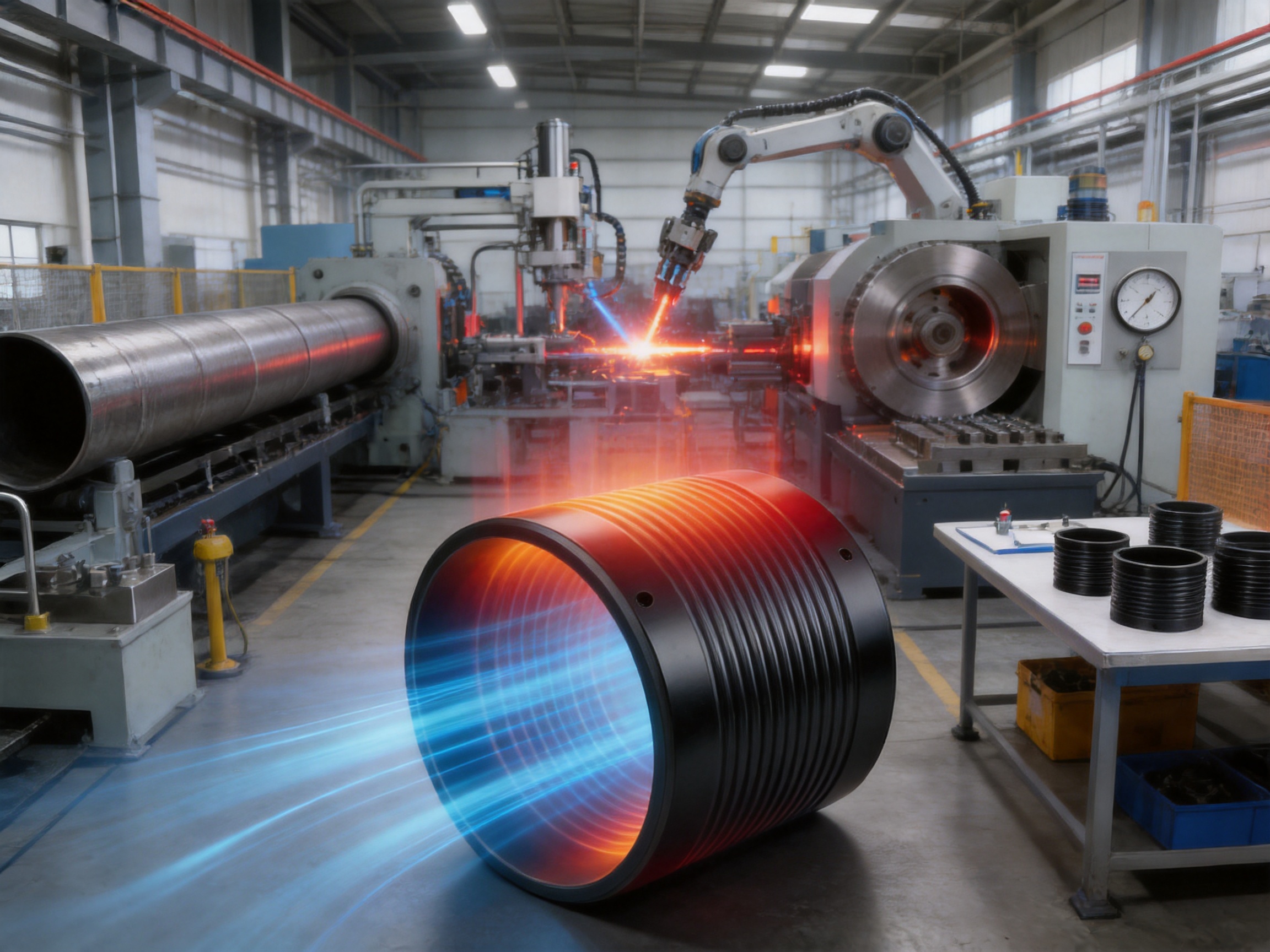
The company provides full-process manufacturing from steel processing to finished product delivery. Its capabilities include stamping, welding assembly, machining, and surface treatment. This combination allows the supplier to participate in product development as well as mass production. Instead of supplying only a basic formed shell, the company can support a broader portion of the housing manufacturing process.
The company has stamping lines for repeatable forming operations, automated welding equipment for consistent joining, machining facilities for dimensional refinement, and inspection instruments for quality verification. Each capability addresses a different risk in motor housing production. Forming controls the basic shape, welding joins components, machining establishes functional dimensions, finishing protects and improves the surface, and inspection verifies conformity.
Engineering experience is another important strength. The company reports an engineering team with an average of more than 20 years of experience. Experienced engineers can help identify practical manufacturing issues early, including potential forming difficulty, weld distortion, machining allowance, coating impact, tolerance accumulation, and assembly interference.
The company also reports 40 years of experience in motor housing manufacturing, service to more than 50 customers, and annual production capacity exceeding 5 million units. These figures indicate experience with both product development and volume manufacturing. Capacity alone does not guarantee quality, but it can provide the infrastructure required for organized production scheduling, process control, inspection, and delivery management.
For customers developing a new motor, an experienced supplier can contribute during the design-for-manufacturing stage. Reviewing the housing before tooling or mass production may reveal opportunities to improve manufacturability, simplify assembly, reduce distortion, or select more appropriate inspection points. Early engineering communication can lower the risk of expensive changes later.
Application Areas
The Inner Diameter 113 Heavy-Wall Motor Housing can be considered for motor applications where a strong steel enclosure and enhanced external heat dissipation are required. Its suitability must be confirmed against the complete motor design, but the basic characteristics are relevant to several sectors.
Household Appliances
Household appliances may contain motors that operate repeatedly, generate vibration, and face limited installation space. A rigid housing can improve mechanical protection and help preserve assembly stability. The external heat dissipation structure may also support thermal control where the motor must operate for extended periods.
Industrial Drives
Industrial drives often require dependable operation under load, repeated cycling, and vibration. A heavy-wall motor housing can provide a robust enclosure for internal components and support the alignment of the motor assembly. The product may be considered for equipment where durability and consistent supply are more important than achieving the lowest possible housing weight.
New Energy Vehicle Systems
New energy vehicle equipment can involve vibration, thermal cycling, limited packaging space, and demanding requirements for repeatability. A steel housing with controlled dimensions and integrated cooling geometry may offer value in appropriate motor or actuator systems. Automotive and vehicle-related use requires detailed validation for corrosion, fatigue, sealing, thermal cycling, and relevant industry standards.
Special Equipment
Special equipment frequently uses motors designed for specific loads, installation conditions, or duty cycles. In such systems, customized housing dimensions and features may be necessary. The manufacturer’s integrated capabilities can support modifications to the basic product configuration when requirements are clearly defined.
Design and Procurement Considerations
Before ordering this housing, the customer should confirm the complete technical specification. The 113 mm inner diameter, 93 mm height, 124 mm outside diameter, 5.5 mm wall thickness, and 20# material specification establish the basic product data, but additional requirements may be necessary for successful integration.
Important considerations include dimensional tolerances, roundness, concentricity, end-face flatness, surface roughness, heat dissipation thread geometry, mounting features, coating requirements, weld requirements, inspection documentation, packaging, and annual demand. The customer should also provide information about the intended motor, expected load, duty cycle, operating temperature, installation orientation, environmental exposure, and assembly method.
Thermal validation should consider the complete motor. The housing’s threaded surface can improve heat exchange, but cooling performance depends on airflow, clearance, motor speed, heat generation, contact conditions, and surrounding equipment. Prototype testing or thermal simulation may be appropriate when the motor operates close to its temperature limits.
Mechanical validation may include vibration testing, impact testing, dimensional stability review, assembly trials, and endurance operation. These evaluations help confirm that the selected wall thickness and material are suitable for the actual working environment.
Corrosion protection should be selected according to the environment. Indoor appliance use, industrial facilities, outdoor installations, vehicle systems, and humid environments may require different surface treatments. The final coating or treatment should be compatible with the customer’s assembly process and should not interfere with critical fits.
Packaging is also important for a precision steel component. Protective separators, suitable wrapping, moisture control, and stable loading can reduce the risk of scratches, dents, and corrosion during transportation. Packaging requirements should be agreed before shipment, especially for long-distance or multi-stage logistics.
Quality Management and Production Consistency
Consistent production depends on a controlled process rather than final inspection alone. A strong quality system begins with clear drawings and specifications, continues through material receipt and process control, and ends with documented inspection and delivery verification.
For this housing, process control should pay particular attention to the internal diameter, wall thickness, height, external thread geometry, circularity, and surface condition. These features influence assembly, thermal performance, and structural behavior. Measurement frequency should reflect production volume, process stability, and customer requirements.
Tooling maintenance is another important consideration. Forming tools and fixtures can gradually wear, which may cause dimensional drift. Regular tooling inspection and preventive maintenance help maintain consistent output. Automated welding equipment should also be monitored to ensure that parameters remain within approved ranges.
Corrective action capability is essential when a nonconformity is discovered. The supplier should be able to identify the affected process, isolate potentially affected products, determine the root cause, and implement a corrective measure. Integrated manufacturing can make this process more efficient because the supplier has greater visibility over the complete production route.
Traceability supports both quality control and customer service. Product identification such as ID113021 can help distinguish the housing configuration and support communication between engineering, production, inspection, and logistics teams. For repeat orders, clear identification reduces the risk of mixing similar products with different dimensions or finishes.
Installation and Handling Guidance
Although the housing is designed for robust service, careful handling is still recommended. The internal diameter and end faces should be protected from impacts that could create dents or burrs. The housing should be stored on clean, stable supports and protected from unnecessary moisture or contamination before assembly.
During assembly, insertion forces should remain within the limits established by the motor design. Excessive force can damage internal components, distort the housing, or affect the final alignment. If the housing is intended to work with a press-fit or controlled interference fit, the fit values and assembly tooling should be confirmed in advance.
Clearance around the external heat dissipation threads should be considered during installation. Blocking the grooves with adjacent structures, thick insulation, or close-fitting covers may reduce airflow and limit the thermal benefit. The final motor design should provide sufficient space for heat exchange according to the expected operating conditions.
Fasteners, brackets, end covers, and mounting surfaces should be tightened according to the motor assembly specification. Uneven fastening can introduce distortion or create localized stress. Where the housing is part of a larger structural assembly, the mounting sequence should be validated during prototype builds.
Q&A
What is the inner diameter of this motor housing?
The specified inner diameter is 113 mm. This dimension defines the internal space available for the motor assembly and should be matched with the stator, support components, and required fit conditions.
What are the height and outside diameter?
The housing height is 93 mm, and the listed outside diameter is 124 mm. These dimensions determine the axial length and external installation envelope of the housing.
What is the wall thickness?
The wall thickness is 5.5 mm. This heavy-wall construction is intended to improve resistance to deformation, impact, vibration, and load-related structural stress.
What material is used?
The stated material specification is 20# steel. Final material certification and applicable material standards should be confirmed according to the customer’s project requirements.
How does the housing support heat dissipation?
The exterior has a dedicated heat dissipation thread design. The threads increase the external surface area, while the grooves form natural airflow channels that can support heat exchange between the housing and the surrounding environment.
Is this housing suitable for high-torque motors?
Its heavy-wall construction is designed for demanding conditions that may include high torque, high load, impact, and vibration. Suitability must still be confirmed through the complete motor design and, where necessary, mechanical and thermal validation.
How is the housing different from a smooth-wall steel housing?
In addition to its substantial wall thickness, this housing includes an external heat dissipation structure. Compared with a smooth-wall design of similar size, it provides additional surface area and airflow channels for heat exchange while retaining a strong cylindrical enclosure.
Can the product be customized?
Customization may be available for dimensions, machining features, surface treatment, assembly details, packaging, and inspection requirements. A formal drawing and technical review should be completed before customized production begins.
What manufacturing processes are available from the supplier?
The supplier provides stamping, welding assembly, machining, surface treatment, and inspection capabilities. These processes allow the housing to be developed and produced through an integrated manufacturing route.
What industries can use this type of housing?
Potential sectors include household appliances, industrial drives, new energy vehicle systems, and special equipment. The final application must be evaluated according to load, temperature, vibration, corrosion, sealing, and regulatory requirements.
Does the housing itself determine the motor’s temperature performance?
No. The housing contributes to the thermal path, but total temperature performance also depends on motor losses, internal contact, airflow, installation clearance, operating speed, ambient temperature, and the rest of the cooling system.
What information should be provided for a quotation?
Useful information includes the required quantity, drawing, dimensional tolerances, material requirements, surface treatment, mounting features, expected application, operating conditions, inspection standards, packaging requirements, and delivery schedule.
Conclusion
The Inner Diameter 113 Heavy-Wall Motor Housing is a robust steel tube enclosure developed for motor assemblies that require dependable mechanical protection, dimensional stability, and improved external heat dissipation. Its 113 mm inner diameter, 93 mm height, 124 mm outside diameter, and 5.5 mm wall thickness establish a strong and practical configuration for demanding motor applications.
The heavy-wall design helps resist deformation caused by impact, vibration, and load-related forces. Its cylindrical structure provides a stable protective barrier for internal components, while the exterior heat dissipation threads increase surface area and create natural air guide channels. This combination gives the housing advantages over basic smooth-wall or lightweight alternatives when strength and thermal management are important.
The value of the product also comes from the manufacturing system behind it. Jiangsu Yufeng Electric Co., Ltd. integrates stamping, welding assembly, machining, surface treatment, inspection, and engineering support. With decades of motor housing experience, experienced technical personnel, production equipment, and reported annual capacity exceeding 5 million units, the company is positioned to support both customized development and repeat production.
For customers seeking a supplier for high-load motor housing applications, the most important next step is to match the product specifications with the complete motor design. Dimensional tolerances, thermal requirements, surface treatment, mounting conditions, testing, and quality documentation should be defined before production. When these requirements are coordinated effectively, the Inner Diameter 113 Heavy-Wall Motor Housing can serve as a reliable foundation for durable and thermally stable motor assemblies.
References
1. Product specification for Inner Diameter 113 Heavy-Wall Motor Housing, product identification ID113021.
2. Manufacturer-provided technical information for steel tube motor housing dimensions and material specification.
3. General engineering principles for motor housing structural rigidity, vibration resistance, and thermal management.
4. General manufacturing practices for stamping, welding assembly, machining, surface treatment, and dimensional inspection of steel components.
5. General design considerations for motor enclosure integration, heat dissipation, assembly fit, and production quality control.

 Previous