

 English
 Español
Content
- 1 1. Product Overview
- 2 2. How the Air Deflector Improves Airflow
- 3 3. Material Advantages of Galvanized Steel
- 4 4. Competitive Advantages of the Product
- 5 5. Application in Motor Housing Assemblies
- 6 6. Applications Beyond Motors
- 7 7. Manufacturing Process
- 8 8. Integrated Manufacturing Strengths
- 9 9. Quality, Reliability, and Production Consistency
- 10 10. Comparison of Common Airflow-Guide Solutions
- 11 11. Design Considerations for Customers
- 12 12. Recommended Development Process
- 13 13. Sustainability and Cost Efficiency
- 14 14. Why Select an Experienced Motor-Component Manufacturer?
- 15 15. Frequently Asked Questions
- 15.1 Q1: What is the primary function of this air deflector?
- 15.2 Q2: What material is used for the product?
- 15.3 Q3: Can the air deflector be customized?
- 15.4 Q4: How is the product installed?
- 15.5 Q5: Is galvanized steel suitable for humid environments?
- 15.6 Q6: Can the product be used with a motor housing?
- 15.7 Q7: Will the deflector reduce fan energy consumption?
- 15.8 Q8: Can it reduce equipment noise?
- 15.9 Q9: Is this product suitable for mass production?
- 15.10 Q10: What information should a customer provide for a quotation?
- 15.11 Q11: Can the manufacturer supply related motor-housing parts?
- 15.12 Q12: How does the company support new product development?
- 16 16. Conclusion
- 17 References
- 18 Product: Air Deflector
Air Deflector for Efficient Airflow Control in Motors, HVAC Systems, and Industrial Equipment
Air movement is a decisive factor in the performance, reliability, and service life of many machines. Motors, air-conditioning systems, ventilation units, industrial fans, server cabinets, household appliances, and fresh-air equipment all depend on controlled airflow to remove heat, maintain stable operating temperatures, and reduce unnecessary energy consumption. When airflow is poorly guided, the result may include turbulence, pressure loss, excessive noise, hot spots, vibration, and reduced equipment efficiency. A properly engineered air deflector provides a practical and cost-effective solution by directing air toward the required location while minimizing resistance and flow disturbance.
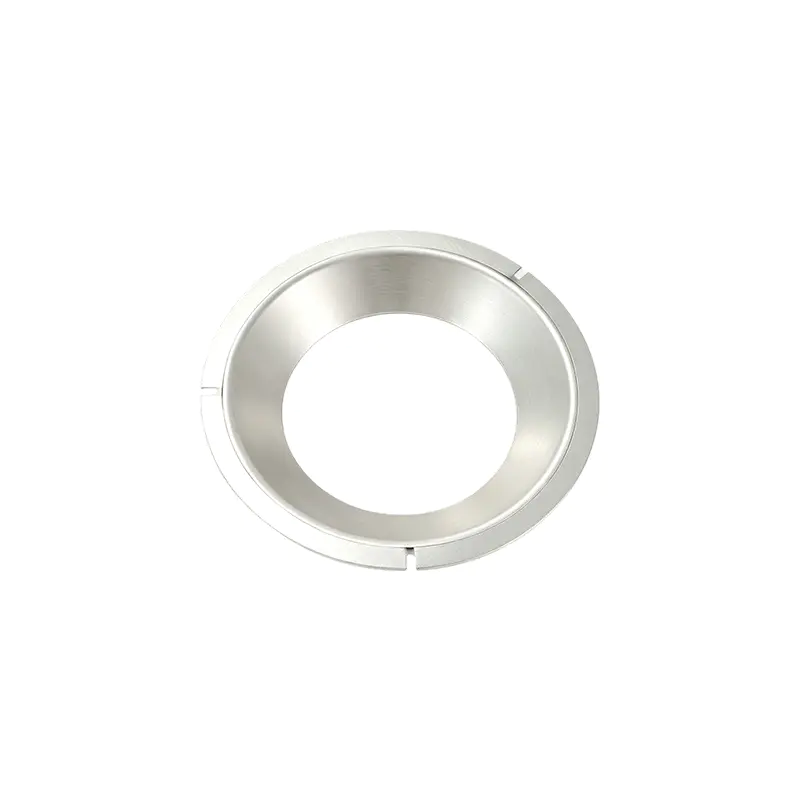
This galvanized steel air deflector is designed for applications that require reliable airflow guidance, compact installation, and consistent performance. Manufactured through stamping and forming, the product combines a lightweight structure with dependable mechanical strength. Its curved aerodynamic surface helps direct airflow smoothly, reduce vortex formation, and support more efficient ventilation. The result is a component that can improve the operating environment of complete equipment without adding unnecessary complexity or excessive weight.
Although the product is compact, its function is highly important. It can influence the air path at an outlet, around a motor housing, inside a ventilation duct, or within an enclosed cooling system. By controlling the angle and direction of discharged air, the deflector helps prevent air from circulating inefficiently inside a machine. It can also reduce the amount of energy needed to achieve a desired cooling or ventilation result.
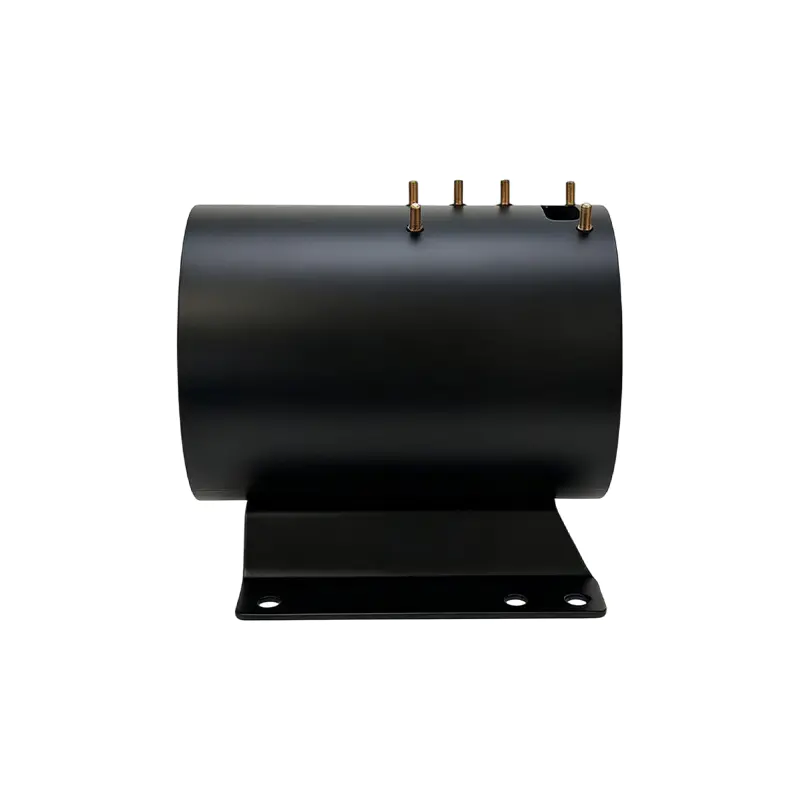
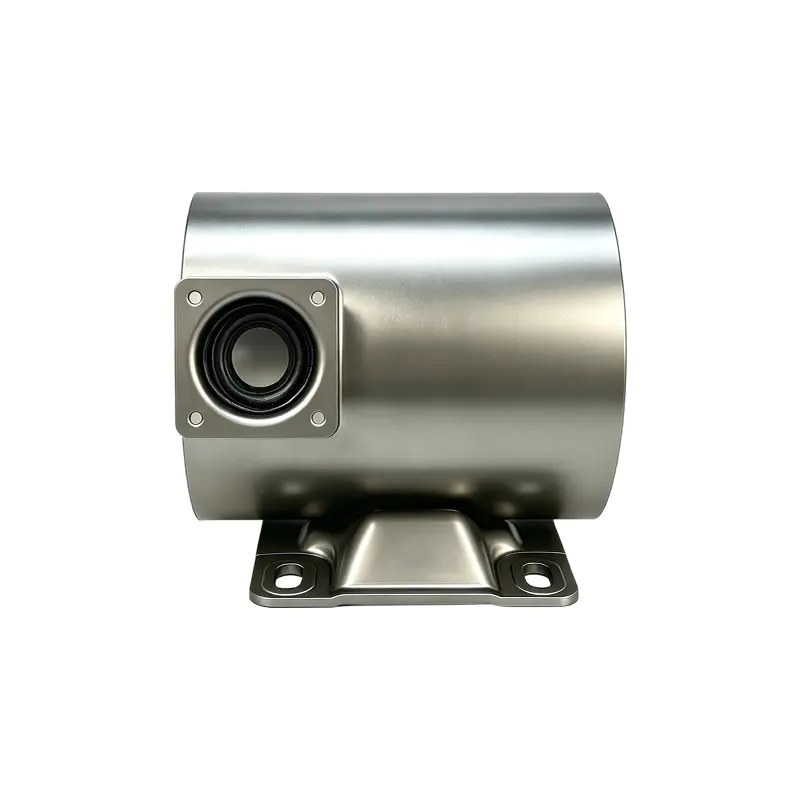
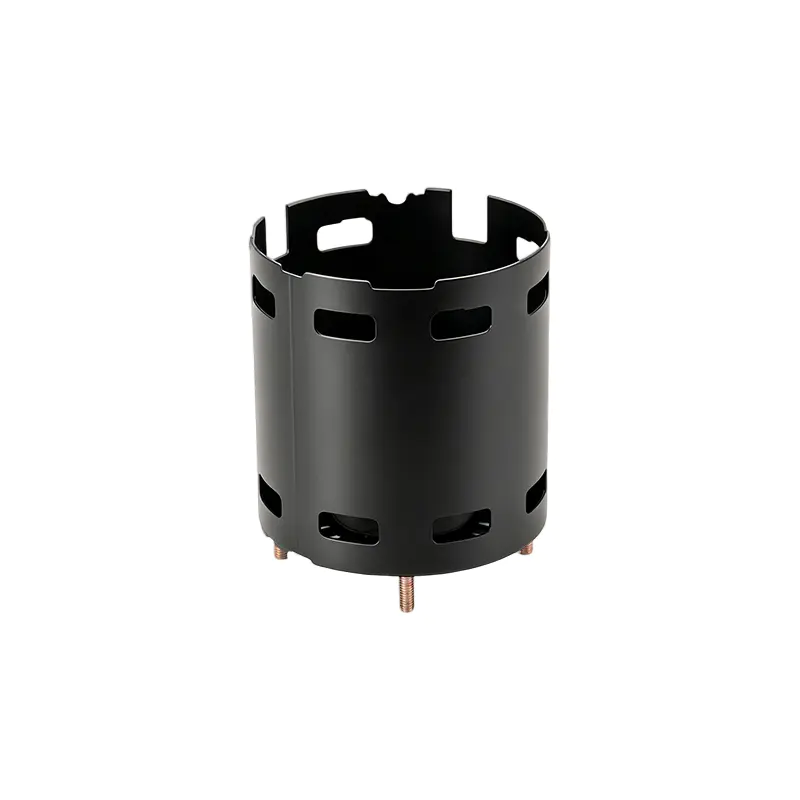
The product is particularly suitable for air-conditioner outlets, fresh-air systems, ventilation ducts, industrial fans, server-cabinet cooling assemblies, household appliances, and other equipment with demanding requirements for airflow control, noise reduction, and energy efficiency. It also complements the company’s broader manufacturing capabilities in steel motor housings, heavy-wall motor housings, stainless motor housings, steel tube motor housings, and other motor-related stamped, welded, machined, and finished components.
Air Deflector
1. Product Overview
The air deflector is a formed metal component used to change, organize, or stabilize the direction of moving air. It is produced from high-quality galvanized steel sheet, selected for its balance of corrosion resistance, formability, strength, and cost efficiency. The material is shaped through controlled stamping and forming operations to create a curved or angled surface capable of guiding air through a specified path.
Unlike a simple flat plate, the deflector uses an optimized curved surface. This surface helps air transition from one direction to another with less abrupt separation. Abrupt changes in direction can create turbulence, eddies, pressure losses, and unwanted noise. A properly formed curve supports a smoother airflow path and can improve the performance of fans, blowers, heat exchangers, and ventilation equipment.
The component can be integrated into new equipment or used as a replacement or modification part in existing systems. Depending on the design of the equipment, installation may be completed with clips, screws, magnetic attachment, or other suitable fixing methods. This flexible installation concept supports rapid assembly and allows the deflector angle or position to be adjusted when required.
Because the product is manufactured from formed sheet metal, it can be customized according to the customer’s specifications. Possible customization parameters include overall length, width, thickness, curvature, mounting hole pattern, edge treatment, fixing structure, surface finish, and airflow angle. This adaptability is important because air outlets and cooling channels vary significantly between motor assemblies, HVAC products, industrial equipment, and appliance platforms.
Key Product Characteristics
The product uses galvanized steel sheet as its primary material. Galvanization provides a protective zinc layer that helps defend the steel substrate against moisture and general atmospheric corrosion. This is especially useful in ventilation and air-conditioning applications where condensation, humid air, or temperature changes may be present.
The stamped and formed construction allows the component to maintain a consistent shape across production batches. Consistent forming is essential because even small variations in curvature or mounting position can influence airflow distribution. Automated or carefully controlled production also supports repeatability for customers who use the deflector in large-volume equipment assembly.
The lightweight structure reduces the burden placed on surrounding brackets and housings. It also helps simplify handling, shipping, and installation. At the same time, the formed geometry gives the part greater stiffness than an unformed sheet of equivalent thickness. Curvature, flanges, ribs, and folded edges can all improve resistance to deformation during assembly and service.
The product is designed for convenient installation. Depending on the equipment structure, users may choose clips for fast assembly, screws for more secure mechanical retention, or magnetic attachment where the surrounding materials and operating conditions permit. This flexibility can reduce installation time and make the product suitable for both original equipment manufacturing and maintenance applications.
2. How the Air Deflector Improves Airflow
Airflow inside a machine or duct is affected by outlet geometry, fan performance, pressure distribution, internal obstacles, surface friction, and sudden changes in direction. A deflector acts as an aerodynamic guide. It does not replace the fan or blower, but it helps the existing air-moving system use its output more effectively.
Guiding Air Toward the Required Area
In many systems, air leaves a fan or outlet in a direction that does not directly reach the target area. For example, a motor may generate heat near a confined enclosure, while the natural discharge path sends cooling air toward a wall or an unused space. The air deflector redirects the flow so that more air reaches the motor, heat exchanger, ventilation opening, or other functional area.
Improved directional control can reduce the need for higher fan speeds. If the air is delivered more effectively, the system may achieve the required cooling or ventilation performance with less wasted movement. This can contribute to lower energy consumption and a more stable operating temperature.
Reducing Turbulence and Vortex Formation
Uncontrolled airflow often separates from a surface when it encounters a sharp corner or poorly matched transition. This separation creates rotating regions, commonly referred to as vortices. Vortices consume energy without contributing effectively to useful air delivery. They may also produce pressure fluctuations, noise, and vibration.
The curved surface of the air deflector helps create a smoother transition. By reducing abrupt changes in direction, it supports more organized airflow and limits the formation of large recirculation zones. The exact performance depends on the complete system design, including the fan, outlet, duct dimensions, and installation position, but an appropriately designed deflector can significantly improve the air path.
Lowering Flow Resistance
Every component placed in an airflow path has the potential to increase resistance. A poorly shaped plate may obstruct air and create a large pressure drop. The optimized aerodynamic form of this product is intended to guide air without creating unnecessary blockage. Its profile can help reduce wind resistance compared with a flat or irregularly positioned sheet.
Lower resistance is beneficial because the fan does not need to work as hard to move the same volume of air. In systems where energy efficiency is a priority, lower pressure loss can contribute to reduced operating costs. In compact systems, improved flow can also help maintain performance when the available fan power is limited.
Reducing Airflow Noise
Noise can originate from fan blades, motors, bearings, duct walls, grilles, and turbulent airflow. An air deflector cannot eliminate all noise sources, but it can help reduce noise caused by unstable flow and abrupt air impacts. A smoother air path decreases the intensity of certain pressure fluctuations and can make operation quieter.
This benefit is valuable in residential appliances, office ventilation systems, server rooms, commercial buildings, and other environments where acoustic comfort matters. In industrial settings, reduced airflow noise can also improve the working environment and make it easier to identify abnormal mechanical sounds during equipment inspection.
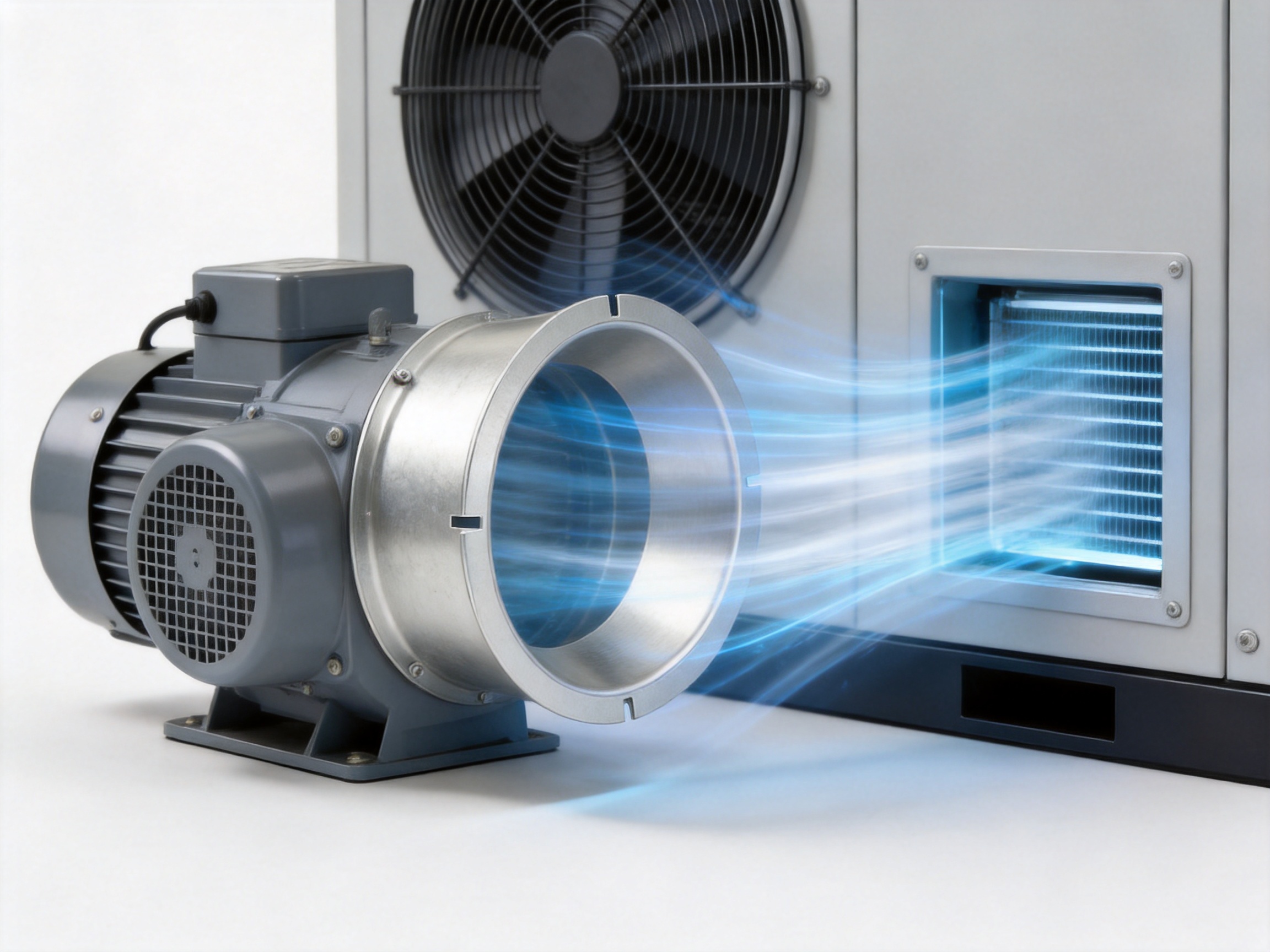
3. Material Advantages of Galvanized Steel
Material selection has a direct influence on the service life, manufacturability, and total cost of an air deflector. Galvanized steel is a practical material for this application because it combines the strength of steel with enhanced surface protection.
Corrosion Protection
The zinc coating on galvanized steel provides a protective barrier between the steel and the surrounding environment. It can also provide a degree of sacrificial protection if the surface is locally scratched or exposed. This makes galvanized sheet suitable for many indoor and semi-exposed ventilation applications, especially where humidity or condensation may occur.
For more demanding conditions, the material, coating, thickness, and finishing process can be reviewed according to the customer’s environment. Applications involving salt spray, aggressive chemicals, outdoor exposure, or high temperatures may require a different material or an additional protective treatment. The manufacturing team can evaluate these conditions during the engineering stage.
Strength and Formability
Steel offers higher stiffness and strength than many lightweight alternatives. This is important when the deflector is exposed to continuous airflow, vibration, thermal cycling, or repeated adjustment. A sufficiently rigid component is less likely to flutter, deform, or change position during operation.
At the same time, galvanized sheet can be stamped and formed into curved surfaces, folded edges, mounting tabs, and reinforcing features. This makes it possible to achieve a strong functional shape without using a thick and heavy section. The result is a favorable balance between structural performance and material efficiency.
Stable Performance in Repetitive Production
Sheet-metal stamping is well suited to repeat production. Once the tooling and process parameters have been validated, the same geometry can be reproduced across a large number of parts. This is important for customers who require stable fit, consistent airflow behavior, and reliable assembly in mass-produced equipment.
Compared with manually fabricated parts, stamped components generally offer better dimensional consistency and a more predictable production cycle. Consistency also makes quality inspection more efficient because key dimensions, hole positions, and forming profiles can be checked against established standards.
4. Competitive Advantages of the Product
The air deflector competes with several alternative solutions, including flat metal plates, manually bent sheets, plastic guide vanes, fixed duct transitions, and custom welded brackets. Each alternative may be appropriate in a particular situation, but the stamped galvanized steel design offers a balanced combination of performance, durability, customization, and manufacturing efficiency.
Advantage Over Flat Plates
A flat plate can redirect airflow, but it often causes a sharp change in direction. This may create turbulence, pressure loss, and noise. The formed curved surface of the air deflector is better suited to controlled flow guidance. Its geometry helps air follow the intended path more smoothly.
A flat plate may also need additional brackets to prevent vibration or deformation. The formed structure of this product can provide greater rigidity without requiring excessive thickness. This can simplify the overall assembly and reduce the number of supporting components.
Advantage Over Improvised or Manually Fabricated Parts
Improvised parts may appear inexpensive during initial installation, but they often have inconsistent dimensions, uneven edges, unstable mounting, and unpredictable airflow behavior. They can also create difficulties during repeated assembly or equipment servicing.
A production air deflector is developed with defined dimensions, controlled forming, and repeatable mounting features. This supports dependable installation and makes replacement easier. Customers can order parts according to an established drawing or specification rather than relying on a one-time manual adjustment.
Advantage Over Some Plastic Components
Plastic guide components can be lightweight and economical, but their suitability depends on temperature, fire requirements, vibration, ultraviolet exposure, and long-term dimensional stability. In motor housings, industrial machinery, and high-temperature ventilation areas, steel may provide greater resistance to mechanical stress and heat.
Galvanized steel also offers a solid, durable feel during assembly. It is less likely to crack when correctly formed and handled, and it can be integrated with other steel motor-housing components through mechanical fastening or compatible manufacturing methods.
Advantage Through Flexible Installation
The support for clips, screws, magnetic attachment, or other fixing approaches gives the product a practical advantage over components designed for only one installation method. Original equipment manufacturers can select the method that best matches their production line. Maintenance personnel can also use a suitable fixing method when retrofitting the product into an existing system.
The ability to adjust the angle or position can be especially useful during equipment testing. Engineers may fine-tune the airflow direction during prototype development or field installation without redesigning the complete housing.
Advantage Through Custom Engineering
Airflow requirements are rarely identical from one application to another. A deflector for a household appliance may be small and compact, while a component for an industrial fan may need greater length, stronger mounting, or a different radius. Custom engineering allows the product to be adapted to the customer’s operating conditions rather than forcing the customer to use a generic part.
Customization can include material grade, sheet thickness, surface treatment, radius, outlet angle, mounting structure, hole arrangement, edge configuration, and packaging requirements. This supports both standard product supply and project-based development.
5. Application in Motor Housing Assemblies
Motor housings protect internal electrical and mechanical components while also influencing heat dissipation, airflow, vibration, and noise. In many motor systems, cooling air must pass through a restricted path. The air deflector can be positioned near an inlet, outlet, fan cover, or internal channel to improve the movement of air around the motor housing.
For enclosed motors, the deflector may help guide external airflow across cooling surfaces or toward an opening. For systems with an internal fan, it can support the intended direction of air movement and reduce recirculation. For heavy-wall steel motor housings, a robust deflector can withstand the vibration and operating conditions associated with industrial drives.
The component may also be used with stainless motor housings or steel tube motor housings when the material and fastening method are selected appropriately. The surrounding housing design determines whether galvanizing alone is sufficient or whether the deflector requires an additional protective finish.
Improved cooling can help reduce thermal stress on windings, insulation, bearings, and other motor components. Stable temperature control may contribute to longer service life and more predictable performance. However, the final thermal result depends on the complete motor design, including heat generation, fan capacity, housing geometry, ambient temperature, and installation conditions.
Benefits for Motor Manufacturers
Motor manufacturers can use a standardized deflector as part of a modular cooling or ventilation design. A repeatable component reduces the need to create a different manually fabricated guide for each motor model. It can also support a cleaner bill of materials and more consistent assembly procedures.
When the deflector is developed together with the motor housing, engineers can optimize the mounting points, clearance, airflow angle, and service access. This approach can reduce interference with electrical components and make the complete assembly easier to inspect or maintain.
6. Applications Beyond Motors
Air-Conditioning Outlets
Air-conditioner outlets often need to distribute air across a room rather than discharge it directly toward one location. The air deflector can help guide the outlet flow upward, downward, sideways, or toward a specific zone. A smoother discharge path may improve comfort and reduce localized drafts.
Fresh-Air and Ventilation Systems
Fresh-air systems depend on effective distribution of outdoor or filtered air. A deflector can help prevent short-circuiting between supply and return paths and can direct air into occupied or process areas. In ventilation ducts, its geometry may also help manage directional changes in compact spaces.
Industrial Fans and Blowers
Industrial fans often operate continuously and may be exposed to vibration, dust, humidity, and fluctuating temperatures. A steel deflector can provide a durable means of organizing airflow near the fan discharge. Its strength and secure mounting are important for maintaining stable operation over long service periods.
Server Cabinet Cooling
Server cabinets and communication enclosures require careful control of hot and cold air. If hot air is allowed to recirculate toward equipment inlets, internal temperatures can rise rapidly. A compact deflector can guide exhaust air away from intake zones or help distribute cooling air more evenly within a restricted cabinet space.
Household Appliances
Household appliances such as refrigeration systems, dryers, range hoods, air purifiers, and other ventilation products may benefit from controlled airflow. The component can be designed to fit the available space and can be integrated into a compact sheet-metal structure without complicated assembly.
Special Equipment
Special equipment often has unique airflow requirements. Examples include battery cabinets, control cabinets, testing systems, heating equipment, agricultural machinery, and compact industrial enclosures. Custom stamping and forming make it possible to develop a deflector that matches the equipment’s envelope and performance objectives.
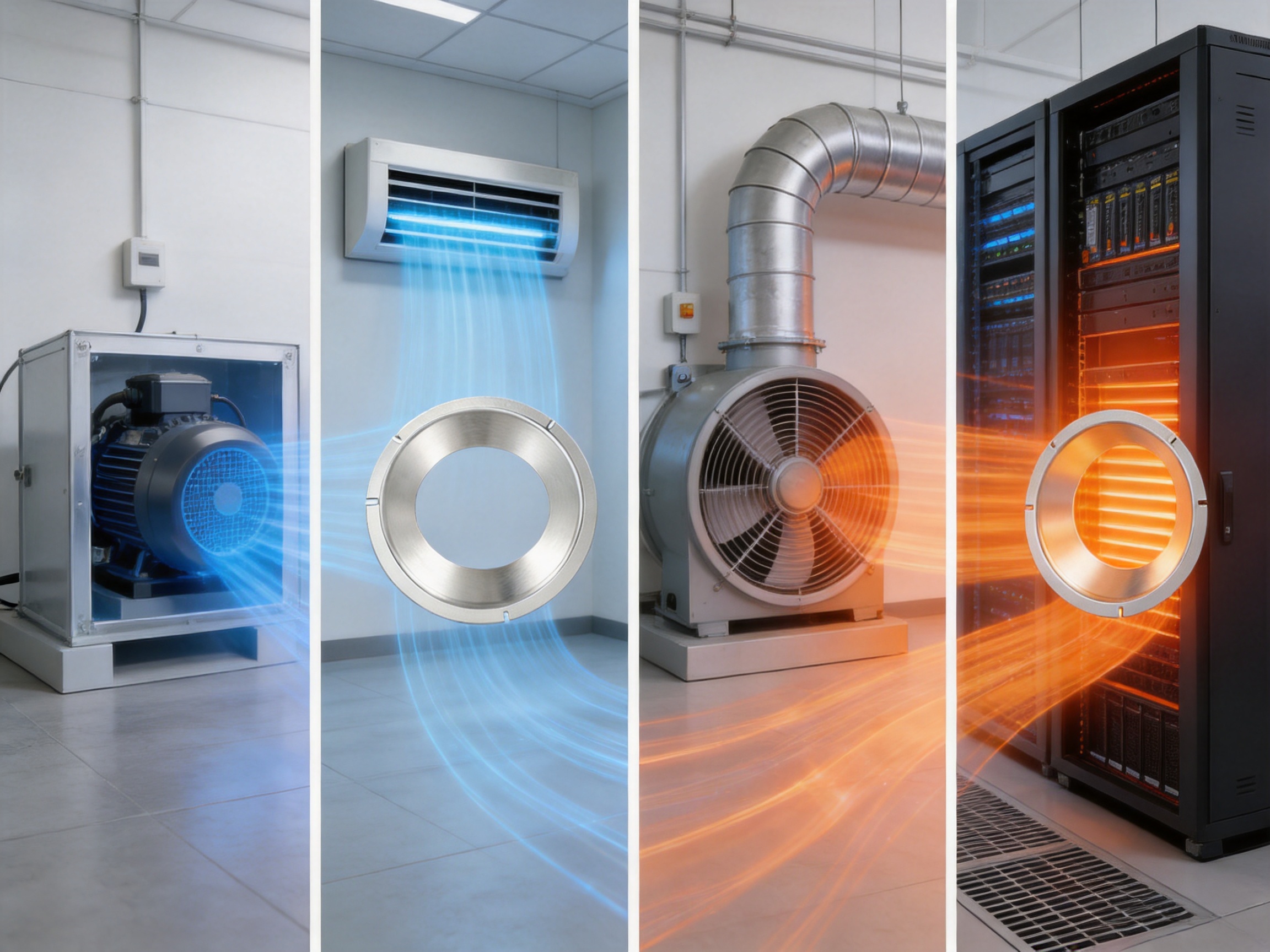
7. Manufacturing Process
The quality of an air deflector depends not only on its material but also on the control of every manufacturing stage. Jiangsu Yufeng Electric Co., Ltd. integrates stamping, welding assembly, machining, surface treatment, and inspection within its production capabilities. This full-process structure supports closer coordination between product development, tooling, production, and delivery.
Engineering Review and Product Development
The manufacturing process begins with a review of the customer’s drawings, samples, specifications, and application requirements. Engineers examine the intended airflow direction, installation space, mounting method, material requirements, and operating environment. They also consider whether the component will be used near a motor housing, fan, duct, appliance enclosure, or other heat-producing equipment.
During this stage, the team may identify opportunities to improve manufacturability. For example, a mounting hole may be repositioned to improve tool access, an edge may be folded to increase stiffness, or a bend radius may be adjusted to avoid material cracking. These changes can improve production reliability without compromising the functional objective.
Material Preparation
Galvanized steel sheet is prepared according to the approved material specification. Key considerations may include sheet thickness, coating condition, flatness, surface cleanliness, and dimensional tolerance. Proper material handling helps prevent scratches, dents, and deformation before forming begins.
For custom projects, the material may be selected according to corrosion conditions, temperature range, mechanical loading, and customer standards. If an alternative material such as stainless steel is required, the forming and finishing process can be reviewed accordingly.
Stamping and Forming
Stamping creates the basic outline and features of the air deflector. Forming operations then produce the required curve, angle, flange, rib, tab, or other structural detail. Tooling is designed to control the shape and support repeatable production.
Process parameters must be managed carefully. Excessive forming force may damage the coating or create distortion, while insufficient force may result in an incomplete or unstable profile. The production team checks the part against the approved design to confirm that the airflow surface and mounting features remain within specification.
Deburring and Edge Treatment
After stamping, edges and holes are inspected for burrs or sharp projections. Appropriate deburring or edge-treatment operations help improve handling safety and reduce the possibility of interference during assembly. Smooth edges are also beneficial where the component is installed near cables, insulation, seals, or other sensitive parts.
Welding and Secondary Assembly
Some customized deflectors may require brackets, reinforcement pieces, mounting supports, or other secondary components. The company’s welding capabilities allow such assemblies to be produced under controlled conditions. Welding parameters, positioning, and visual quality are monitored to maintain structural integrity and dimensional stability.
When welding is not necessary, mechanical fastening or integrated stamped features may be used. The best approach depends on production volume, loading, service requirements, and customer assembly preferences.
Machining and Precision Features
Although the primary component is stamped and formed, certain projects may require machined holes, slots, interfaces, or complementary motor-housing parts. In-house machining capabilities help coordinate these features with the stamped component and reduce reliance on multiple external suppliers.
Surface Treatment
Surface treatment is selected according to the base material and service environment. Galvanized steel already includes a protective coating, but additional treatments may be considered when required by appearance, corrosion resistance, electrical isolation, or customer standards.
Consistent surface condition is important because the deflector may be visible in finished equipment or installed in a location exposed to humidity and temperature changes. Proper handling after forming and finishing helps preserve the surface during packaging and shipment.
Inspection and Quality Control
Inspection may include dimensional measurement, visual examination, coating assessment, hole-position verification, forming-profile checks, and assembly trials. For projects with defined performance targets, the deflector can also be evaluated as part of a complete airflow system.
Quality control is not limited to final inspection. Process monitoring throughout stamping, forming, welding, machining, and finishing helps identify variations earlier. This approach supports stable quality and reduces the risk of large batches requiring rework.
8. Integrated Manufacturing Strengths
Jiangsu Yufeng Electric Co., Ltd. is a professional manufacturer specializing in the research, development, and production of motor housings and related metal components. Its capabilities include stamping, welding assembly, machining, surface treatment, and inspection. This integrated structure is valuable for customers seeking both air-management parts and complete motor-housing solutions.
The company’s products serve household appliances, industrial drives, new energy vehicles, and special equipment. This range of applications reflects experience with different requirements for precision, mechanical strength, corrosion resistance, production scale, and delivery reliability.
With stamping lines, automated welding equipment, machining facilities, and inspection instruments, the company can manage multiple stages of production in-house. This reduces communication gaps between suppliers and makes it easier to coordinate changes across related parts. It also supports faster technical response when a customer needs a design adjustment, prototype, tooling modification, or production ramp-up.
The company’s engineering team has an average of more than 20 years of experience. Such experience is particularly useful for sheet-metal products because successful manufacturing depends on the relationship between material behavior, tooling, forming sequence, tolerances, and assembly requirements. Experienced engineers can often identify potential problems before they become production issues.
With 40 years of experience in motor-housing manufacturing, the company understands the requirements associated with motor dimensions, enclosure structures, heat dissipation, vibration control, and high-volume production. This background supports the development of air deflectors that are not treated as isolated metal parts but as functional components within a complete equipment system.
The company has served more than 50 customers and has an annual production capacity of over 5 million units. This production scale provides a foundation for both development projects and recurring mass-production orders. Customers can benefit from a supplier that is equipped to move from initial concept and sample production to stable delivery.
9. Quality, Reliability, and Production Consistency
For an airflow component, quality includes more than appearance. The deflector must fit correctly, remain stable after installation, maintain its designed angle, and withstand the conditions created by continuous airflow and equipment vibration.
Dimensional Reliability
Consistent dimensions support fast assembly and predictable airflow performance. Important characteristics may include overall size, bend angle, radius, hole location, mounting-tab position, and clearance from nearby components. Controlled stamping and inspection help maintain these characteristics across production batches.
Structural Reliability
The formed steel structure should resist unwanted movement during operation. If a deflector vibrates or changes angle, its airflow effect may become inconsistent and it may generate additional noise. Proper forming, edge design, reinforcement, and fastening help support long-term positional stability.
Surface Reliability
The galvanized surface helps protect the steel against common environmental exposure. Proper storage and handling are still necessary to prevent damage, contamination, or premature corrosion. Packaging can be adapted to protect formed surfaces and mounting features during transportation.
Application Reliability
The final performance of a deflector depends on how it is installed. For this reason, technical communication between the customer and manufacturer is important. Installation direction, distance from the outlet, fan speed, surrounding walls, temperature, and clearance should all be considered when evaluating the design.
10. Comparison of Common Airflow-Guide Solutions
| Solution | Typical Strength | Possible Limitation | Suitable Use |
|---|---|---|---|
| Stamped galvanized steel air deflector | Balanced strength, corrosion protection, repeatable production, and flexible customization | Requires suitable forming tools and application-specific design | Motors, HVAC equipment, industrial fans, cabinets, and appliances |
| Flat sheet-metal plate | Simple and inexpensive for basic redirection | May create turbulence, pressure loss, and additional noise | Low-demand or temporary airflow guidance |
| Plastic guide vane | Lightweight and potentially economical | Temperature, aging, fire, and dimensional-stability limitations may apply | Selected appliance and indoor applications |
| Manually fabricated metal guide | Fast for one-off modifications | Variable dimensions, inconsistent surface quality, and limited repeatability | Prototypes, repairs, or temporary installations |
| Fixed duct transition | Can provide integrated system-level airflow management | May require more space, tooling, and installation work | Large or permanent ventilation systems |
The comparison shows why a stamped galvanized steel deflector is attractive for many applications. It provides more controlled geometry than a flat plate, greater structural confidence than many lightweight alternatives, and better repeatability than manually fabricated solutions. At the same time, it remains compact and relatively simple to install.
11. Design Considerations for Customers
Customers should define the intended airflow function before selecting a final design. Important questions include whether the product must redirect air, spread air, prevent recirculation, protect a component from direct airflow, or reduce discharge noise. The answer will influence the curvature, angle, length, and mounting position.
The available installation space should also be measured carefully. A deflector that performs well in an open test environment may not fit inside a compact housing. Clearance from fans, rotating parts, electrical terminals, filters, insulation, and service panels must be confirmed.
Operating temperature and environmental exposure should be reviewed. Indoor office ventilation, outdoor equipment, humid HVAC systems, industrial production lines, and vehicle-related applications may each require different material or coating considerations.
Mounting requirements should be established early. Clips may be suitable for rapid assembly and easy removal. Screws may be preferred where vibration or service loads are higher. Magnetic attachment can support fast positioning in compatible environments but should be evaluated for temperature, vibration, magnetic interference, and long-term retention.
Customers should also consider cleaning and maintenance. The part should not create a difficult-to-reach dust trap or obstruct filter replacement. In applications with heavy dust or grease, smooth surfaces and accessible mounting can simplify maintenance.
12. Recommended Development Process
A structured development process can help ensure that the air deflector achieves its intended result. The first step is to provide the manufacturer with the application background, available drawings, airflow direction, outlet dimensions, operating conditions, and target production volume.
The engineering team can then review the design for manufacturability and identify the most suitable material and forming method. If the customer does not have a completed drawing, a sample, installation photograph, dimensional sketch, or three-dimensional model may be sufficient to begin technical discussion.
Prototype production allows the customer to confirm fit, mounting, clearance, and preliminary airflow performance. During testing, the deflector angle or position may be adjusted to determine the best configuration. Feedback from prototype evaluation can then be incorporated into the production tooling or final drawing.
Before mass production, the parties should approve key dimensions, material specifications, appearance requirements, inspection standards, packaging, and delivery arrangements. This helps create a clear foundation for stable production and reduces misunderstandings during order execution.
For repeat orders, production data and quality records can support ongoing process improvement. If the equipment platform changes, the existing design may be modified rather than developed from the beginning. This can shorten development time and preserve compatibility with established motor-housing assemblies.
13. Sustainability and Cost Efficiency
Efficient airflow can support lower energy use throughout the service life of equipment. If a deflector allows a fan or blower to deliver air more effectively, the system may reach its cooling or ventilation objective with less wasted power. The actual savings depend on the complete system, but airflow optimization is an important part of energy-conscious design.
The lightweight formed structure uses material efficiently. Stiffness is achieved through geometry rather than relying only on greater thickness. This can reduce material consumption, shipping weight, and the load placed on supporting structures.
Steel is also a widely recyclable material. At the end of a product’s service life, the metal can generally enter established recycling streams, subject to local handling practices and any attached materials. Durable construction further supports sustainability by reducing the frequency of replacement.
From a manufacturing perspective, stamping is efficient for medium- and high-volume production. Once suitable tooling has been developed, cycle times can be shorter and part-to-part consistency can be higher than with manual fabrication. These advantages can reduce the total cost of ownership for equipment manufacturers.
14. Why Select an Experienced Motor-Component Manufacturer?
An air deflector may be a relatively small component, but its design is connected to the performance of the entire equipment assembly. An experienced motor-component manufacturer can evaluate the part in relation to housings, brackets, fans, ducts, electrical components, and assembly procedures.
Jiangsu Yufeng Electric Co., Ltd. provides a combination of product development experience, metal-processing capabilities, and production capacity. Its knowledge of motor housings helps it understand the dimensional and functional requirements of components used around motors. Its stamping and forming capabilities support repeatable air-deflector production, while welding, machining, surface treatment, and inspection provide additional support for integrated assemblies.
Full in-house production can simplify project coordination. Instead of separating stamping, welding, machining, finishing, and inspection among unrelated suppliers, customers can work with one manufacturing partner for multiple stages. This can improve response speed, simplify technical communication, and help maintain consistent quality.
The company’s experience across household appliances, industrial drives, new energy vehicles, and special equipment also supports a broad understanding of application requirements. Different industries may demand different approaches to corrosion protection, vibration resistance, dimensional control, packaging, and delivery. A flexible supplier can adapt its process to these differences.
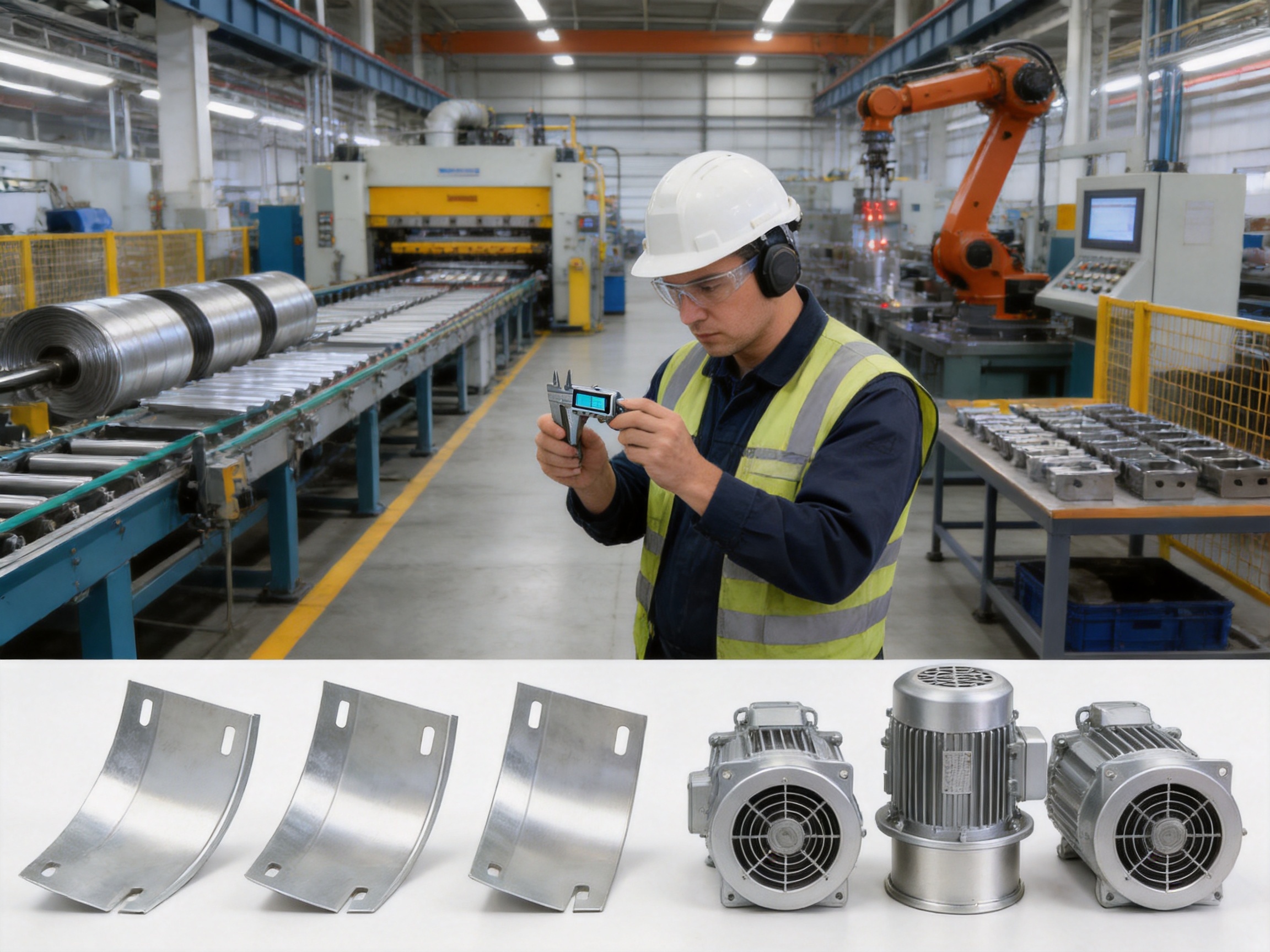
15. Frequently Asked Questions
Q1: What is the primary function of this air deflector?
The primary function is to guide and organize airflow. It helps redirect air toward a required area, reduce turbulent flow, limit vortex formation, and support improved ventilation or cooling performance.
Q2: What material is used for the product?
The standard product is stamped and formed from galvanized steel sheet. The exact sheet thickness and material specification can be selected according to the application, structural requirements, corrosion conditions, and customer standards.
Q3: Can the air deflector be customized?
Yes. The length, width, curvature, angle, thickness, mounting holes, fixing tabs, edge structure, and surface requirements can be customized. Customization is recommended when the component must fit a specific motor housing, outlet, duct, cabinet, fan, or appliance enclosure.
Q4: How is the product installed?
The product can support several fixing methods, including clips, screws, magnetic attachment, or other application-specific methods. The best choice depends on vibration, temperature, service access, surrounding materials, and the required level of retention.
Q5: Is galvanized steel suitable for humid environments?
Galvanized steel provides useful protection against general atmospheric moisture and humidity. However, highly corrosive, marine, chemical, or continuously wet environments may require additional evaluation, a different coating, or an alternative material such as stainless steel.
Q6: Can the product be used with a motor housing?
Yes. It can be used near motor-housing air inlets, outlets, fan covers, or cooling channels. It may be integrated with steel, heavy-wall steel, stainless-steel, or steel-tube motor-housing assemblies when the dimensions, material compatibility, and mounting method are properly defined.
Q7: Will the deflector reduce fan energy consumption?
It can contribute to improved energy efficiency by reducing unnecessary turbulence and directing air more effectively. The actual energy result depends on the fan, system resistance, airflow volume, operating speed, and complete equipment design. Testing is recommended for precise performance evaluation.
Q8: Can it reduce equipment noise?
The curved aerodynamic surface can help reduce noise associated with turbulent airflow, abrupt direction changes, and unstable discharge. It cannot eliminate noise from the motor, bearings, fan blades, or other mechanical sources, so the final acoustic result depends on the complete system.
Q9: Is this product suitable for mass production?
Yes. Stamping and forming are well suited to repeat production. Once the tooling and process have been validated, the design can be manufactured consistently for recurring equipment programs and high-volume orders.
Q10: What information should a customer provide for a quotation?
Useful information includes drawings or samples, material requirements, overall dimensions, airflow direction, mounting method, operating temperature, environmental conditions, estimated annual quantity, surface requirements, inspection standards, and packaging expectations.
Yes. The company specializes in motor housings and provides stamping, welding assembly, machining, surface treatment, and inspection capabilities. Related products may include steel motor housings, heavy-wall steel motor housings, stainless motor housings, steel tube motor housings, and other motor components.
Q12: How does the company support new product development?
The engineering team can review customer requirements, assess manufacturability, support prototype development, coordinate tooling, conduct sample evaluation, and prepare the process for mass production. Technical support can continue from initial product development through finished-product delivery.
16. Conclusion
The galvanized steel air deflector is a practical component for improving airflow control in motors, HVAC systems, ventilation equipment, industrial fans, server cabinets, household appliances, and special equipment. Its stamped and formed construction combines a lightweight structure with reliable strength, while the curved aerodynamic surface supports smoother airflow, lower turbulence, reduced pressure loss, and quieter operation.
Compared with flat plates, improvised guides, and certain plastic alternatives, the product offers a strong balance of durability, repeatability, corrosion protection, customization, and installation flexibility. It can be supplied as a standard component or developed around the specific requirements of a customer’s equipment.
The manufacturing capabilities of Jiangsu Yufeng Electric Co., Ltd. add value beyond the individual part. With integrated stamping, welding, machining, surface treatment, and inspection, the company can support both air-management components and complete motor-housing projects. Its engineering experience, production capacity, and background in motor-related manufacturing make it suitable for customers seeking dependable metal components from development through mass production.
For applications where airflow direction, thermal control, noise suppression, and energy efficiency are important, a properly designed air deflector can provide meaningful performance benefits with a relatively simple installation. When combined with accurate engineering and controlled manufacturing, this compact component becomes an effective part of a reliable and efficient equipment system.
References
1. ASHRAE Handbook—Fundamentals, chapters addressing fluid flow, air distribution, and system performance.
2. American Society of Mechanical Engineers, guidance on sheet-metal fabrication, dimensional control, and mechanical design practice.
3. ASM Handbook, Volume 14B, Metalworking: Sheet Forming.
4. ISO 9001, Quality management systems—Requirements.
5. ISO 2768, General tolerances for linear and angular dimensions without individual tolerance indications.
6. Technical literature on galvanized steel sheet, zinc coatings, corrosion protection, and formed-sheet applications.
7. Industrial ventilation engineering references covering pressure loss, turbulence, flow separation, and air-distribution design.
8. Manufacturer-provided technical information concerning stamped air deflectors, motor housings, sheet-metal processing, and integrated production capabilities.

 Previous